

Aluminum Cases Manufacturer: Expert Craftsmanship for Durable Protection
2026-10-01
Most aluminum cases look tough. Few are built to stay that way. At Peak Fasten, we combine old-school metalworking with modern precision to deliver durable protection without the weak points—so your gear stays safe whether it’s in transit, on site, or in storage. In the sections ahead, you’ll see exactly how expert craftsmanship turns a simple metal shell into a case you can rely on.
How Aerospace-Grade Aluminum Becomes a Nearly Indestructible Shell
The secret starts with the alloy itself. Pure aluminum is soft and easily dented, but aerospace grades like 7075 or 2024 are fortified with copper, magnesium, and zinc. These elements don't just mix in—they create microscopic intermetallic particles that act like rebar in concrete. When stress tries to deform the metal, these particles block the movement of dislocations, forcing the material to absorb far more energy before yielding. The result is a shell that laughs off impacts that would crumple ordinary sheet metal.
Then comes the thermal choreography. The alloy is heated to a precise temperature where the alloying elements dissolve into a solid solution, then quenched rapidly to freeze them in place. This leaves the metal supersaturated and unstable—which sounds bad, but it's exactly what you want. Over hours or days, tiny clusters of atoms precipitate out at the nanoscale. These precipitates are so fine they're invisible to the naked eye, yet they pin dislocations with ruthless efficiency. The shell gains tensile strength approaching that of structural steel, while still weighing a third as much.
Finally, the surface becomes armor. A hard anodizing bath converts the outer layer into aluminum oxide—a ceramic so tough it's used on grinding wheels. This oxide layer is only a few microns thick, but it shrugs off scratches, corrosion, and even low-caliber abrasion. Combined with precision forging that aligns the internal grain structure, the finished shell has no weak planes for cracks to follow. Drop it, drag it, bake it in the sun—the shell stays intact because every layer, from the atomic lattice to the outer skin, is engineered to refuse failure.
From Odd Shapes to Tight Tolerances: Building Cases Around Your Gear
Every gear set brings its own spatial personality—unexpected protrusions, recessed hubs, or asymmetric mounting points that refuse to follow a standard rectangle. Instead of forcing these components into a generic box, the case itself should be sculpted around them. That means starting with a detailed 3D scan or careful hand measurement of the gear assembly, noting not just the maximum envelope but also the clearance needed for rotating elements, cable routing, and heat dissipation. Odd shapes become less of a headache when you treat them as design cues rather than obstacles.
Tight tolerances are where a protective shell earns its keep. A gap of half a millimeter might sound trivial, but on a precision gear train it can let in dust, allow vibration to rattle components loose, or throw off alignment under load. Milling or 3D printing the case with internal ribs and locating pins keyed to the gear's own fastener holes keeps everything seated exactly where it should be. The goal is a fit that feels almost like the case was machined as part of the original machine, not added later as an afterthought.
Materials and finishing also play into this tight partnership. A rigid aluminum shell works well for heavy-duty industrial gears, while a glass-filled nylon print offers a lighter, cost-effective alternative for prototypes. Regardless of the medium, test-fitting the case repeatedly during fabrication—sanding just enough, shimming where necessary—turns a loose collection of odd shapes into a single, confident assembly. That level of attention is what separates a functional enclosure from one that simply covers the gears.
The Hidden Abuse Tests Every Case Must Survive Before Shipping
Behind every polished product lies a gauntlet of unforgiving tests that rarely get mentioned in launch announcements. Drop it from waist height onto concrete, twist it in a pocket full of keys, leave it in a hot car for six hours — these are the real rituals that separate durable design from fragile promises. Engineers don't just check a spec sheet; they simulate the clumsy, careless, real-world moments your customers will never admit to.
Then come the quieter tortures: repeated button mashing at double the expected lifespan, a week of constant vibration in a paint shaker, and the slow corrosion of salt-fog chambers that mimic years of coastal humidity in just days. If a hinge squeaks on cycle 27,000, it's back to the drawing board. If a screen flickers after a thermal shock from freezer to sauna, the whole batch gets flagged. These hidden abuse tests aren't about ticking boxes — they're about earning the right to ship something that won't embarrass you six months later.
The worst part? Most of these failures happen in silence, long before a single unit reaches a store shelf. The cases that survive aren't lucky; they've been bent, baked, soaked, and scraped until only the stubborn design remains. That's the real barrier to entry — not the marketing slide, but the moment a test engineer writes "pass" after a week of trying to kill it.
Why Latch Placement and Foam Density Matter More Than You Think
Most people glance at a car seat and focus on the fabric or the price tag. Yet the real work happens in places you don't see at first: where the lower anchor connectors sit and how the foam inside responds to force. Latch placement isn't just about convenience. A connector that sits slightly too far back can force you to use more muscle to get a tight install, and a loose install is the quiet enemy of crash protection. On the other hand, well-positioned latches let you cinch the seat down without kneeling on it, which means you're more likely to get that rock-solid fit every single time.
Foam density plays a different but equally critical role. Softer foam might feel plush in the store, but it compresses too quickly under sudden load, leaving less material to manage energy before the shell takes over. Denser foam, when matched to the seat's geometry, slows the deceleration of a child's body in a crash. That extra bit of resistance can reduce the force transferred to the chest and head. It's not about being hard; it's about being deliberate. The best seats pair high-density foam in high-impact zones with slightly softer layers only where comfort is essential, which is a balance you won't notice until you need it.
Protecting Instruments That Cost More Than Cars
When a cello or vintage guitar carries a price tag north of $50,000, a hard-shell case from the local shop doesn’t cut it. Owners of high-end instruments often commission custom flight cases with pressure relief valves, built-in hygrometers, and multi-layer foam calibrated to the instrument’s exact shape. The case itself becomes a second instrument, sometimes costing more than a used sedan, but it’s the only way to survive airline cargo holds and abrupt temperature swings.
Insurance for these instruments is a different animal from standard homeowners or renters policies. Most mainstream policies cap musical equipment payouts at a few thousand dollars and rarely cover accidental damage, mysterious disappearance, or gradual climate-related cracking. Specialized musical instrument insurers ask for appraisals, maintenance records, and sometimes even a photo archive to prove condition. Premiums usually run one to three percent of the insured value annually, which on a $75,000 bow might sound steep until you face a snapped head or a flooded studio.
Beyond cases and paperwork, serious players treat their instruments like high-maintenance cars. They log humidity and temperature in the room, never leave the instrument in a parked car, and use Bluetooth sensors that ping their phone if the case is moved without permission. Some add GPS trackers hidden inside the case lining. It’s not paranoia; it’s the same logic as keeping a Ferrari in a climate-controlled garage and never handing the keys to a valet.
Where Hand-Finishing Meets CNC Precision on the Factory Floor
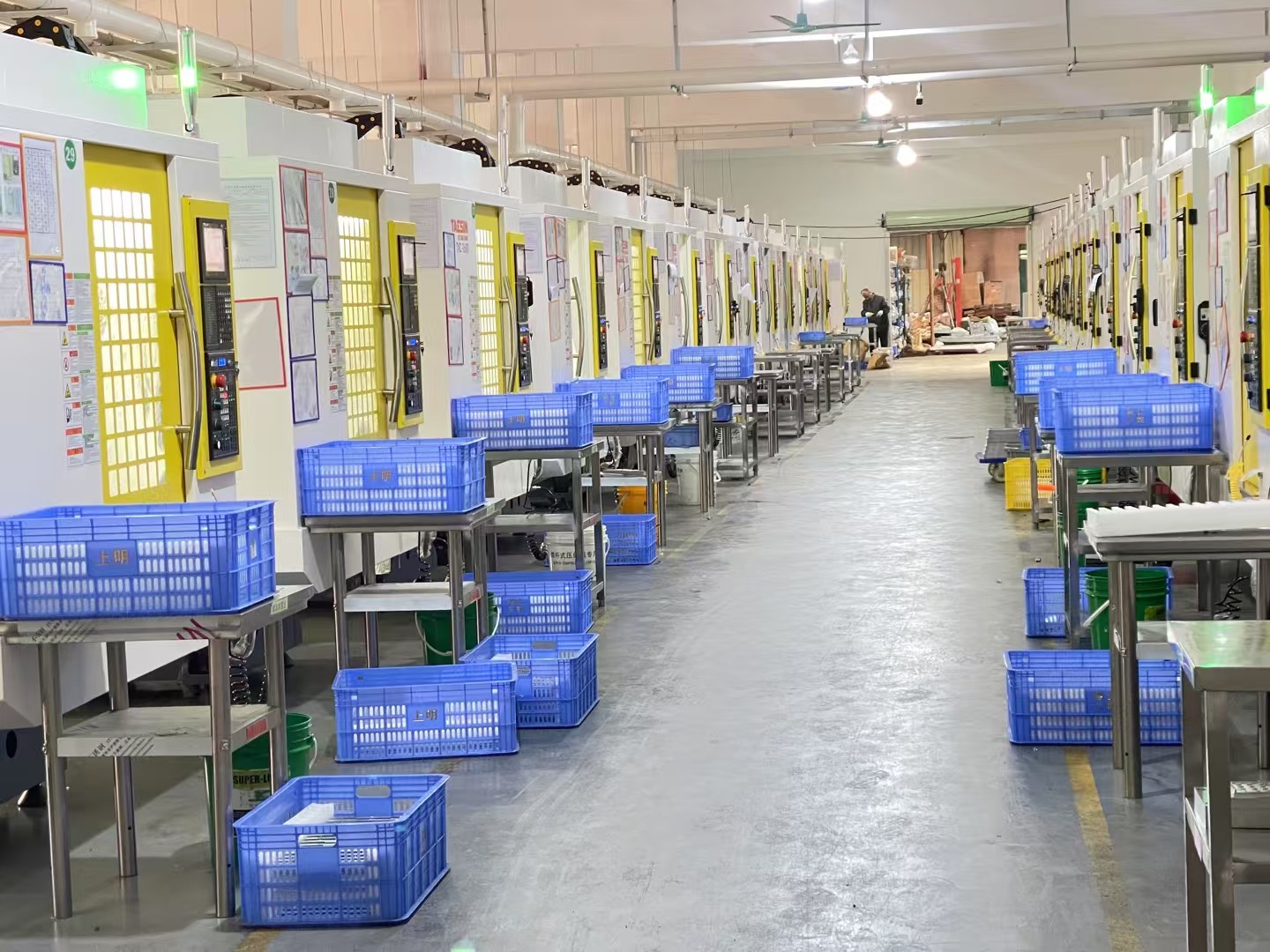
The CNC machines do what they are built for: repeatable cuts, tight tolerances, and fast material removal. After a batch comes off the mill, the parts don't go straight to inspection. They move to a row of benches where hand-finishers go over each surface, feeling for ridges the cutter left behind and softening edges that a drawing can't fully specify.
That hand pass isn't a correction for machine error. It's a separate step with its own logic. A brushed finish needs a certain pressure and direction. A polished chamfer has to catch light without looking mirrored. CNC gives the finisher a consistent starting point, so the hand work can stay focused on the details that actually change how a part feels in someone's hand.
The two ways of working sit side by side on the floor. One station runs coolant and chips; the next runs quiet, with a lamp pulled low over a vise. The handoff between them is where the final product picks up its precision and its character.
FAQ
Beyond the metal itself, it's the fit of every corner, the quality of the seals, and how the hardware is mounted. A case that feels solid when opened and closed tends to hold up for years.
Yes, we work from drawings, measurements, or even a sample of the item. Water-jet cutting and layered foam let us create snug pockets that prevent movement without squeezing delicate parts.
They're designed with reinforced edges, recessed latches, and shock-absorbing corners. Many are built to ATA standards, so they take hits, drops, and stacking without transferring damage to what's inside.
Often yes. We use corrosion-resistant alloys and anodized finishes, plus silicone gaskets for water resistance. It won't replace a true dive housing, but it handles rain, salt air, and dust well.
It depends on the load and travel conditions. For light gear, 0.040 inch may be fine. For heavy tools or frequent air freight, 0.063 inch or thicker with reinforced framing gives better long-term protection.
Absolutely. We offer powder coating in custom colors, screen printing, and laser engraving for logos or identification. The finish is baked on, so it resists scratches and fading.
After the design is approved, most orders ship within two to three weeks. Complex inserts or large quantities can add time, but we always give a clear schedule before production starts.
We keep common latches, handles, hinges, and gaskets in stock. If a case comes back with worn hardware, we can often replace those parts and extend its service life rather than building from scratch.
Conclusion
Inside a factory where aluminum cases take shape, raw aerospace-grade sheets undergo a transformation that borders on alchemy. Each blank is fed through CNC routers that shave tolerances down to a few thousandths of an inch, yet the process never feels cold or automated. A worker uses a fine abrasive pad to soften an edge that a machine could never quite mimic, blending hand-finishing with robotic precision. The goal is simple: produce a shell so rigid that it shrugs off drops onto concrete, sudden temperature swings, and the kind of vibration that loosens lesser screws. Odd shapes are welcomed here, from a microscope with an off-center eyepiece to a vintage keyboard with a curved profile. Rather than forcing gear into generic rectangles, the shop builds the case outward from a foam-lined cavity, letting latch placement follow the user's natural grip. Every seam gets a bead of sealant, every rivet a torque check, because the hidden abuse tests come later.
Before any case ships, it is dragged behind a truck, dropped from a loading dock, and left in a rain chamber overnight. These are not lab simulations but real punishments, repeated on random samples from every batch. The team knows that a touring musician's pedalboard might cost less than the case around it, but a medical imaging probe or a custom rifle scope can exceed the price of a new sedan. When foam density is chosen, it is not from a catalog guess but from compressing prototypes under a hydraulic press and measuring rebound curves. A case for a delicate brass instrument gets a softer, slower-rebound foam than one for a machined metal housing. Latch placement is tested with gloves on, with cold fingers, with one hand while the other holds a coffee. The result is a case that feels like it was made for your hands, not a generic pair. This is what separates a durable box from a protective instrument: the knowledge that tolerances, foam, and latches all fail together or not at all.
Contact Us
Contact Person: Mason Lv
Email: [email protected]
Tel/WhatsApp: +86 13027998452
Website: https://www.peakfastentech.com