

Bending Parts Wholesaler Tips for Getting the Best Bulk Pricing and Quality
2026-10-04
When you're sourcing bending parts at wholesale volumes, the gap between a good deal and a costly mistake often comes down to a few overlooked details. Price tags can be misleading, and quality varies more than most buyers expect. This guide breaks down practical tips for locking in the best bulk pricing without sacrificing the precision your projects demand. Along the way, we'll highlight what separates dependable suppliers like BOYIKUN from the rest—so you can negotiate with confidence and avoid the usual wholesale traps.
Compare Quotes by Total Cost, Not Just Unit Price
When you ask suppliers for quotes, it's easy to fixate on the per-unit price. But that number rarely tells the whole story. Shipping fees, setup charges, minimum order quantities, and even payment terms can swing the final bill dramatically. A quote that looks a few cents cheaper per item might actually cost you more once you add in handling or delivery from a farther warehouse.
Instead of comparing only the headline rate, ask each vendor for a detailed breakdown that includes all ancillary costs. Then calculate the total landed cost for the exact quantity you plan to order. This approach often reveals surprising differences—sometimes the higher unit price ends up being the better deal because it comes with lower freight or no tooling fee.
Make it a habit to request quotes in a consistent format, so you can line up the total costs side by side. Over time, you'll spot patterns: certain suppliers pad their shipping, while others bundle services into the unit price. Focusing on the full picture prevents budget overruns and helps you build relationships with vendors who are transparent about the real cost of doing business.
Ask for Bend Radius and Tolerance Samples Before Ordering
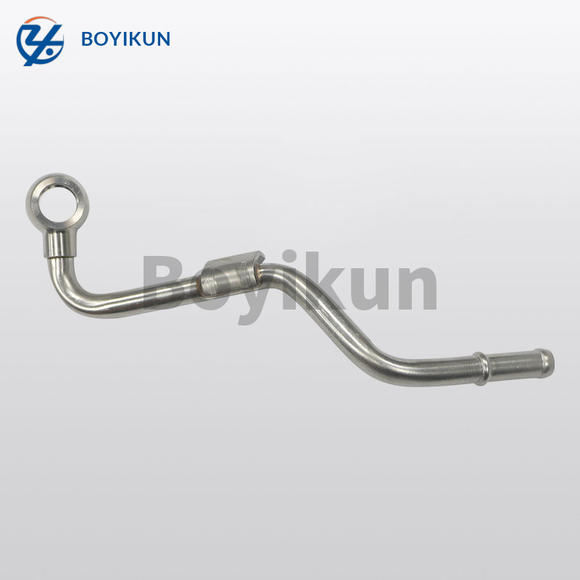
When sourcing custom bent parts or tubing, the stated bend radius and tolerance on a drawing rarely match what the shop actually produces. Request a physical sample or measured data from the supplier before you place the order. That sample shows how the material reacts to the tooling—springback, thinning at the outer wall, and any radius drift that accumulates across a batch.
Ask for samples that bracket the acceptable tolerance range, not just one nominally perfect piece. Having a tight and a loose sample in hand lets you test fit and function against your mating components. It costs a little time up front, but it prevents the expensive discovery that a whole run of parts only works when held to a tolerance nobody confirmed.
Negotiate Multi-Batch Discounts Instead of One Large Order
Locking in a single bulk purchase often feels like the simplest path to lower per-unit costs, but it quietly introduces hidden risks: storage fees, product obsolescence, and cash flow strain. By shifting the conversation toward multi-batch discounts, you gain leverage to secure comparable rates while spreading deliveries over weeks or months. Suppliers frequently welcome this structure because it smooths their production schedule and reduces warehouse pressure—and that goodwill can translate into deeper concessions on payment terms or customization.
A practical approach is to present your total projected volume for the quarter, then ask for a tiered discount that applies when each subsequent batch is released. For example, batch one might carry a 4% reduction, batch two 6%, and batch three 8%, contingent on your confirmed reorder dates. This keeps the supplier invested in your ongoing partnership while giving you the flexibility to adjust quantities slightly between batches based on actual demand. Crucially, you avoid the trap of being stuck with twelve months of inventory that may not move as expected.
The real differentiator comes from framing this as a risk-sharing agreement rather than a price negotiation. Mention your willingness to commit to a rolling forecast and pay a small deposit for each scheduled release—this signals reliability without overcommitting capital upfront. Suppliers who resist at first often reconsider when you compare the total landed cost of a single large shipment (including storage insurance and potential markdowns) against the modest premium of staggered batches. Done well, you end up with the same unit economics but far greater operational resilience.
Check the Wholesaler’s Material Source and Traceability
Before committing to a bulk order, ask the wholesaler for documented proof of where their materials originate. A reliable supplier should be able to name the specific mills, tanneries, or farms they work with, not just vague regions. Request lot numbers, batch invoices, or third-party certifications that link the finished product back to its raw inputs. This level of transparency is rare, so when you find it, you’ve likely located a partner who has nothing to hide.
Traceability goes beyond a single certificate on a website. Dig into how the wholesaler tracks goods through processing, manufacturing, and shipping. Do they use internal coding systems that survive dyeing, cutting, or assembly? Can they show you a chain-of-custody record for a recent order similar to yours? If the answer is a shrug or a promise to “check later,” treat that as a red flag. Real traceability requires infrastructure, not just intention.
Finally, compare the wholesaler’s claims against independent sources. Search for the supplier names they mention, look for recall histories, or ask for a sample batch you can send to a lab yourself. A wholesaler confident in their material source will welcome scrutiny, while one who deflects or offers only polished marketing sheets may be masking gaps in their supply chain. The extra hour you spend verifying now can prevent months of costly product failures later.
Use Blanket Orders to Secure Lower Rates Year-Round
Instead of buying on the spot market every time inventory runs low, a blanket order establishes a fixed price and delivery schedule upfront. Suppliers are often willing to cut per-unit costs because they can plan production and reduce their own sales overhead. That stability gets passed on to you, so you're not hit with sudden markups when demand spikes or raw material costs climb.
This arrangement also eliminates the need to chase quotes month after month. Once the agreement is in place, you simply issue release orders against the same terms. The predictable volume gives you leverage to negotiate extras like free shipping or extended payment windows. Over a full year, the difference between blanket pricing and spot buying can be substantial, especially for items you use in large quantities on a regular basis.
Of course, the key is accurate usage forecasting. Review past consumption, choose suppliers with dependable lead times, and leave room to adjust quantities within an agreed range. That way you keep the lower rates without overcommitting if demand shifts. Before renewal, bring your actual order data to the table—it's the strongest tool for pushing rates even lower next year.
Build a Direct Line to the Production Manager
Most bottlenecks on a plant floor don’t come from broken machines—they come from broken information flows. When floor supervisors have to route every question through three layers of email or wait for a weekly meeting, small delays compound into missed deadlines. Build a direct line to the production manager and those friction points disappear. It doesn’t have to mean bypassing the chain of command; it means agreeing on clear, real-time channels for urgent updates, material shortages, and schedule changes.
Start with one shared space—whether that’s a messaging thread, a whiteboard near the line, or a fifteen-minute stand-up at shift change. The key is that the production manager can see actual conditions, not filtered summaries. When a machine goes down or a key operator calls in sick, the person who can rebalance workloads or reorder materials hears about it while there’s still time to act. Over time, that direct line becomes less about escalation and more about rhythm: problems surface early, decisions happen closer to the work, and the whole team stops guessing what management already knows.
FAQ
Ask for a capability sheet that lists bend radii, material thickness range, and typical angular tolerance. Then request a first article inspection report from a recent job that matches your part's geometry. If they hesitate, move on.
It varies by material and tooling, but many wholesalers start discounting at 250 to 500 units for common steel or aluminum brackets. Below that, setup costs dominate and you're paying mostly for machine time.
Not if your downstream assembly relies on consistent angles. Cheap quotes often come from shops that skip in-process checks or use worn tooling. Compare quotes only after you've verified each supplier's quality control process, not just the unit price.
Offer longer lead times, combine multiple part numbers into one purchase order, or agree to blanket orders with scheduled releases. These give the wholesaler better production planning flexibility, which they can pass back as a discount.
Ask which mills they buy from and whether they can provide material certs for each heat or lot. Also check if they stock the exact gauge and alloy you need, because switching to an "equivalent" stock can change bend behavior.
Request a sample run of 10 to 20 parts from production tooling, not prototypes. Measure critical dimensions yourself or through a third-party lab. Also ask for their in-house inspection procedure—look for checks after bending, not just at final packing.
Usually yes for logistics, but not always for price. A shop optimized for high-volume simple brackets may struggle with tight-radius or multi-stage bends. Ask for examples of past jobs similar to your most difficult part before bundling everything.
Conclusion
Getting real bulk pricing on bending parts means digging past the surface number. Compare quotes by total landed cost—tooling, scrap allowance, freight, and packaging can swing the final figure more than the per-unit price. Before any order, request bend radius and tolerance samples that come straight from the wholesaler’s existing production run. That physical check shows whether they hold consistency when nobody is watching. It also gives you a benchmark to push back when a sales rep promises tighter numbers than the shop can actually hold.
Skip the one-shot huge order and negotiate multi-batch deliveries instead; many wholesalers will lock the same low rate for scheduled releases because it smooths their own workload. Ask about material source and traceability—if they cannot hand over mill certificates without being nudged, treat that as a red flag. Set up a blanket order with a fixed annual rate so you are not exposed to mid-year price jumps. Finally, get the direct line to the production manager, not just the account rep. When a tolerance question comes up, that direct contact can save days and stop a bad batch before it ships.
Contact Us
Contact Person: Xianchen Hu
Email: [email protected]
Tel/WhatsApp: 86-13248645200
Website: https://www.hexnb.com/