

Best Daily Chemical Label Manufacturer for Reliable and Compliant Packaging
2026-07-14
When it comes to daily chemical products, the right label does more than just deliver information—it builds trust and ensures compliance. A poorly designed or non-compliant label can lead to regulatory headaches and consumer doubt. That's where Xinsen steps in. As a leading manufacturer of reliable and compliant packaging, Xinsen specializes in crafting labels that meet industry standards while enhancing brand appeal. In this article, we'll explore what makes Xinsen the best choice for your daily chemical labeling needs.
Crafting Labels That Endure Harsh Daily Chemical Use
Every spray of cleaner and drip of solvent tests label durability in ways that go beyond simple wear. Ordinary labels fade, peel, or dissolve quickly when exposed to bleach, alcohol, or acidic solutions, leaving safety warnings and product info unreadable. Advanced substrate and adhesive combinations create a barrier that keeps print crisp and legible even after repeated chemical contact. Specialized topcoats resist corrosion, while flexible materials prevent cracks that let chemicals seep underneath, ensuring the label remains fully functional throughout the product's lifecycle.
Achieving this resilience isn't about a single miracle material but a calibrated system of layers and bonds. Face stocks engineered from polyester or polypropylene withstand chemical penetration better than paper, while aggressive adhesives maintain grip on curved or textured containers even when saturated. Digital or flexographic printing with UV-curable inks locks information into the label surface, stopping it from washing away. In rigorous lab simulations, these constructions repeatedly survive submersion in harsh agents without lifting or clouding, proving their worth in real-world environments.
Beyond survival, label design must remain intuitive and scannable. Barcodes, batch codes, and hazard symbols need sharp contrast that doesn't degrade. Matte finishes can hide micro-abrasions, while gloss coatings make warnings pop. Manufacturers can also incorporate tamper-evident features that react to chemical exposure by changing color, adding an extra layer of user safety. The end result is a label that acts as a silent safeguard, never compromising communication no matter how aggressive the daily chemical onslaught becomes.
Navigating Regulatory Maze with Precision and Ease
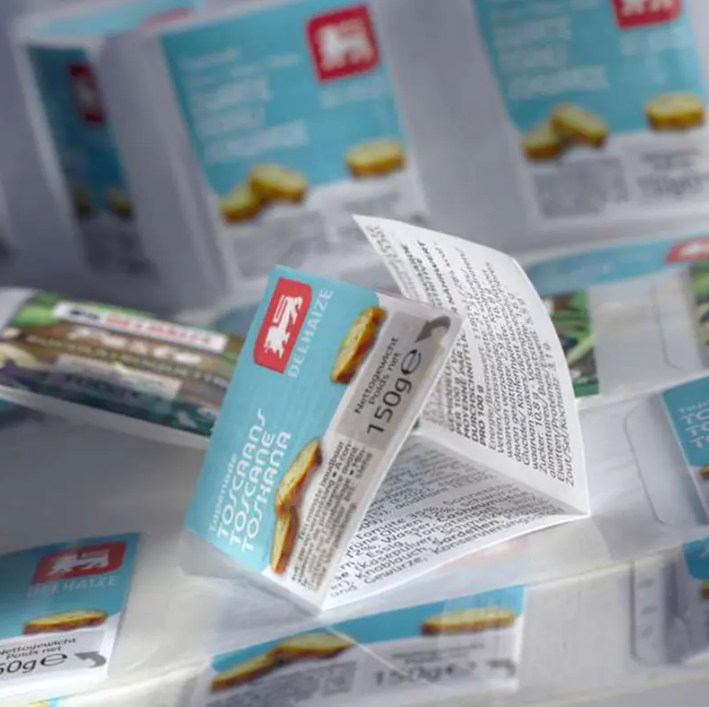
Unraveling the complexity of compliance demands more than just a surface-level understanding—it requires a keen eye for how rules intersect across jurisdictions. True precision emerges when you move beyond generic checklists and develop tailored frameworks that anticipate shifting enforcement priorities. By embedding compliance into daily operations as a living practice rather than a static hurdle, teams can spot ambiguous gray areas early and respond with confidence, turning what feels like a maze into a well-charted network of paths.
Ease comes not from cutting corners but from designing internal processes that absorb regulatory change without constant upheaval. When you treat compliance as a dynamic dialogue—engaging with regulators proactively, cross-referencing informal guidance, and iterating on real-world feedback—the path forward clarifies naturally. This fluency lets you translate dense legal language into actionable steps that align with your actual risk appetite, so you're not just reacting to the latest headline but steadily steering through the labyrinth with minimal friction.
Tailored Designs That Make Your Product Stand Out
Generic templates can only take you so far—true distinction comes from design choices that reflect your brand's personality. By crafting every visual element around your product's unique value, you create an immediate connection with your audience that feels intentional, not mass-produced. From color palettes to typography, each detail works together to tell a story that resonates with the people you want to reach.
Custom illustrations and thoughtful iconography can transform how your product is perceived. Instead of relying on stock imagery that blends into the background, bespoke visuals give your offering a recognizable identity. This kind of originality builds trust, because customers sense the extra effort and authenticity behind what they see.
Even subtle design variations can dramatically shift user experience. By studying how your specific customers interact with similar products, you can introduce intuitive layouts and micro-interactions that solve real pain points. These tailored solutions not only make your product easier to use but also memorable, turning casual visitors into loyal advocates.
From Concept to Shelf: A Streamlined Production Process
Turning an idea into a physical product might seem straightforward, but the path from initial sketch to store shelf is often littered with delays and miscommunication. By stripping away unnecessary handoffs and building cross-functional teams that work from the same brief, we compress the typical timeline without cutting corners on quality. Designers, engineers, and sourcing leads sit together from day one, aligning on feasibility before detailed work begins.
Once the concept is captured, digital prototyping replaces weeks of back-and-forth on physical samples. Real-time feedback loops allow adjustments to be made in hours, not days, so the final design is locked down faster. Parallel processing—where packaging, merchandising, and compliance testing happen alongside product development—keeps everything moving without bottlenecks. Only when the prototype passes a rigorous but rapid review does the process move to scaled production.
The final mile involves a tight collaboration with manufacturing partners who understand our non-negotiable standards. Instead of relying on multiple rounds of sampling, we use a “first batch right” approach where pilot runs are monitored in real time, with immediate corrections. This means less waste, fewer last-minute surprises, and a product that lands on shelves exactly when we said it would.
Material Science Behind Long-Lasting Adhesion and Print
At the heart of durable adhesion and crisp, long-lasting prints lies a sophisticated interplay of material properties that govern interfacial behavior. The bond between an adhesive or ink and a substrate isn't merely a surface phenomenon; it's a dynamic balance of chemical affinity, mechanical interlocking, and environmental resilience. By engineering polymers with specific functional groups, manufacturers can promote covalent or hydrogen bonding at the interface, while micro-roughness on the substrate boosts mechanical anchoring. This synergy ensures that the printed layer resists peeling, scratching, and fading even under harsh conditions, making material selection a critical design parameter.
Modern formulations rely heavily on polymer chain architecture to tune both cohesion and adhesion. Elastomeric binders with carefully controlled crosslink density provide the necessary flexibility to maintain contact without fracturing, while high-molecular-weight chains enhance internal strength. In UV-curable inks, for instance, the rapid formation of a dense polymer network upon curing locks pigments in place and creates a barrier against moisture and abrasives. Additives such as silane coupling agents further bridge the inorganic-organic divide, reinforcing the interface and extending the lifespan of the adhesive joint or printed graphic well beyond conventional limits.
Surface science dictates that long-term performance starts with optimal wetting. A properly formulated ink or adhesive must spread just enough to maximize contact area, yet resist running or bleeding. This balance is achieved by fine-tuning rheological modifiers and surfactants that lower surface tension without sacrificing stability. On the substrate side, plasma or corona treatments can introduce polar groups, dramatically improving adhesion without altering bulk properties. Combined with photoinitiators that respond predictably to specific wavelengths, these material innovations create prints and bonds that remain vivid and intact through years of thermal cycling, UV exposure, and mechanical stress—all rooted in a deep understanding of interfacial chemistry and polymer physics.
Decades of Trust: How We Built an Unshakable Reputation
Trust isn’t something that simply appears overnight. It grows out of quiet consistency, the kind that shows up every single day without fanfare. From the beginning, we understood that reputation is built in the small moments—keeping a promise when it would be easier not to, showing up on time even when no one is watching, and always choosing the harder right over the easier wrong. Over the years, these choices stacked up, forming a foundation that no crisis or competitor could easily shake.
We also learned that true reliability means putting people ahead of transactions. Instead of rushing to scale or chasing shortcuts, we invested in understanding the people we serve. Every piece of feedback was treated as a gift, every misstep an opportunity to get better. Our team didn’t just follow processes; they took personal ownership of every outcome. This human-centered approach turned satisfied partners into lifelong advocates, and that word-of-mouth advocacy became the most durable pillar of our reputation.
Perhaps most importantly, we never stopped asking how we could be more worthy of the trust placed in us. Even as we grew, we held onto the humility of a small operation, recognizing that reputation must be re-earned with each new day. That’s the secret no one talks about: an unshakable reputation isn’t a wall you build and forget—it’s a garden you tend, season after season, through steady care and unwavering integrity.
FAQ
The key is consistent quality control, use of durable materials, and on-time delivery. A reliable partner also offers responsive support and flexible order handling to meet production schedules without delays.
We stay updated with global and regional standards for chemical labeling, including hazard communication, material safety data, and durability testing. Every label design undergoes thorough compliance checks before production.
Waterproof, chemical-resistant, and abrasion-proof labels work best. Materials like polypropylene or vinyl with strong adhesives keep the labels intact even when exposed to moisture or frequent handling.
Absolutely. We tailor labels to fit curved, tapered, or irregular containers using precise die-cutting and digital printing. Our team collaborates with clients from concept to final sample to ensure a perfect fit.
We use a mix of digital, flexographic, and screen printing depending on the run length and design complexity. This allows for sharp graphics, vibrant colors, and fast turnaround without compromising durability.
Standard lead times are 7-10 business days, but we often accommodate rush orders within 3-5 days. We maintain buffer stock of common materials to speed up the process when needed.
Yes, we offer sustainable choices like recyclable facestock, bio-based adhesives, and liner-less labels. These meet environmental standards without sacrificing resistance to chemicals or moisture.
We implement automated inspection systems and statistical process control throughout printing and finishing. Each batch is tested for adhesion, color accuracy, and durability against chemicals to ensure uniformity.
Conclusion
In the daily chemical sector, labels face constant exposure to moisture, chemicals, and rough handling—yet they must remain legible and intact throughout a product’s life. Our manufacturing approach begins with scientifically selected adhesives and face stocks, engineered to resist peeling, smudging, and fading even after repeated contact with household cleaners, detergents, or personal care solvents. This material expertise is paired with a deep understanding of regional and global regulatory frameworks, so every label we produce is GHS, CLP, or FDA-compliant without the back-and-forth that often delays launches. We don’t treat compliance as a checkbox; it’s woven into the initial artwork review and pre-press stage, saving you from costly missteps.
Yet durability and rules alone don’t capture attention on crowded shelves. Our design team collaborates closely with clients to create visually striking labels that align with brand identity while accommodating all mandatory hazard symbols, ingredient lists, and multilingual text. From prototyping to full-scale production, we’ve streamlined every step—digital proofs arrive in days, and our flexographic and digital presses handle complex orders with consistent color accuracy. That efficiency rests on decades of building trust with businesses of all sizes, from startups needing short runs to multinationals requiring just-in-time delivery. When you partner with us, you get more than a label: you get a packaging ally who understands that reliability and compliance are the quiet backbone of your brand’s promise.
Contact Us
Contact Person: Yara
Email: [email protected]
Tel/WhatsApp: +86 13505426090
Website: https://www.qdxspack.com/