

Chemical Equipment & Technology Procurement Strategies for Industrial Efficiency
2026-08-26
The gap between average and exceptional industrial efficiency often starts long before the plant floor—at the procurement desk. Yet chemical equipment and technology sourcing rarely gets the strategic attention it deserves. This article explores procurement approaches that go beyond price comparison, revealing how smarter equipment choices and technology adoption cut waste, reduce downtime, and sharpen competitive edge. Whether you’re optimizing a single line or an entire facility, the right sourcing mindset matters. For up-to-date equipment trends and supplier insights, ICIF offers a practical gateway to the chemical industry’s evolving toolset.
Why Legacy Procurement Models Stall Chemical Plant Modernization
Chemical plant upgrades often die in the gap between engineering intent and purchasing habit. Legacy procurement was built for bulk commodities and repeat orders: multi-stage bid cycles, rigid vendor lists, and capex/opex splits that treat a new control system as a one-time purchase rather than a living platform. When a plant tries to modernize, the same process that once kept valve and pipe costs predictable now forces a six-month detour through pre-qualification questionnaires, paper RFQs, and legal review for every sensor, gateway, and software license. The result is not just delay—it's a quiet re-scoping of the project toward whatever the approved supplier catalog already contains.
Another drag comes from how legacy models measure success. Procurement is rewarded for unit price reduction and compliance, not for interoperability, upgradeability, or total lifecycle cost. A modernization team may select an open automation architecture, only to watch purchasing swap it for a cheaper closed alternative that meets the written spec but locks the plant into another decade of proprietary integration. Each swap looks defensible on a spreadsheet, but collectively they erode the very flexibility the modernization was supposed to deliver. The plant ends up with new components bolted onto old procurement logic, and the expected step-change in uptime, data visibility, or process control never materializes.
Finally, the risk profile of legacy procurement discourages the small, iterative bets that modernization requires. Traditional chemical plant sourcing treats every purchase as a discrete transaction with fixed requirements, so pilot-scale software, modular skids, or vendor co-development agreements are forced into the same bidding apparatus as raw materials. When approval chains are long and failure is penalized more than stagnation, plant managers default to deferring upgrades rather than sponsoring a purchase that might need adjustment mid-flight. Breaking this pattern means separating modernization spend from routine MRO procurement and allowing technical teams to buy capability, not just components.
Mapping Equipment Lifecycle Costs Before Signing Supplier Contracts
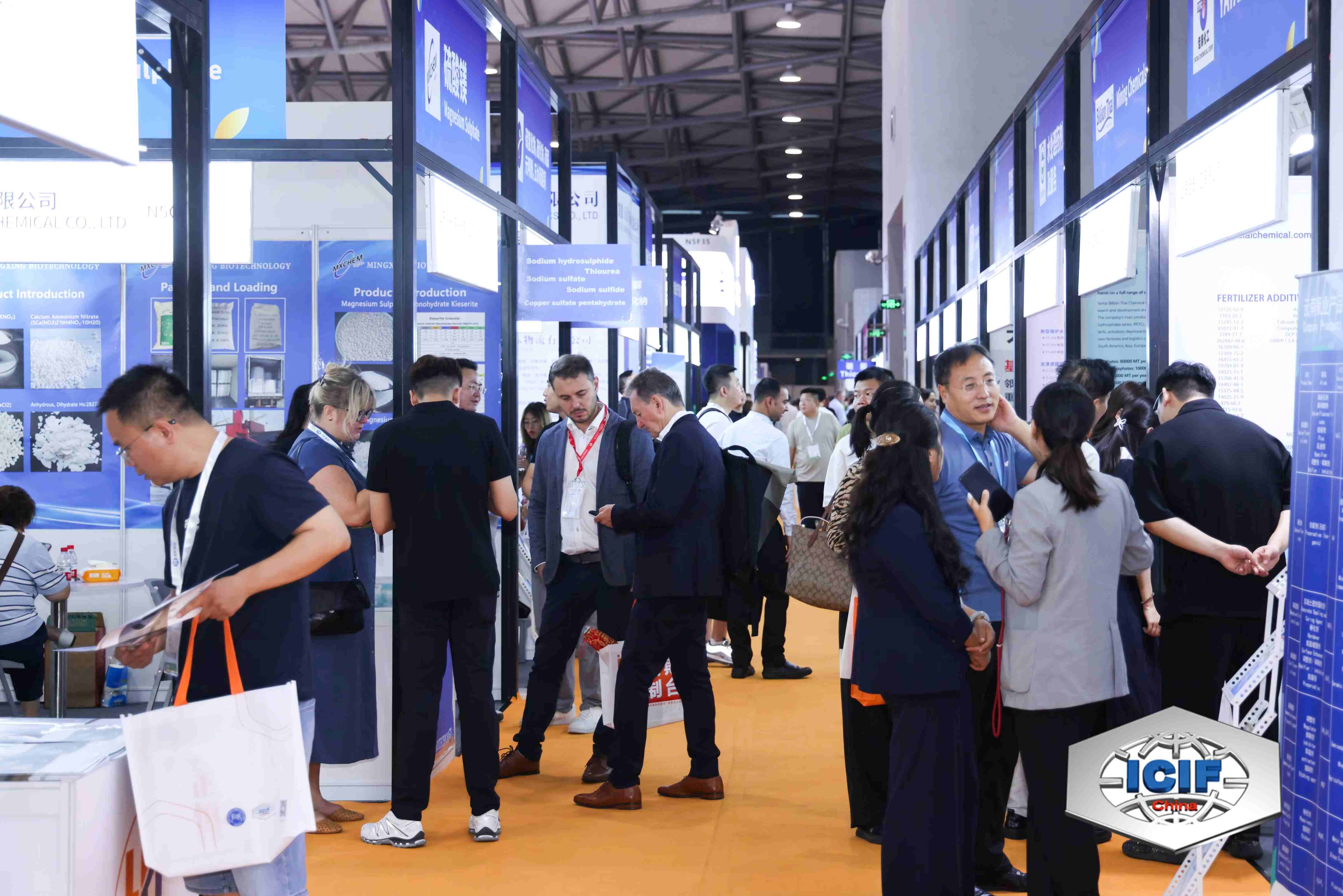
Most procurement teams still anchor their decision to the sticker price, yet a machine's true financial footprint only becomes visible once you factor in energy draw, consumables, scheduled servicing, and the cost of unplanned downtime. Mapping these lifecycle expenses before any contract is signed prevents the common trap of buying a cheap asset that quietly drains the maintenance budget for a decade. It shifts the conversation from upfront spend to total operating cost per productive hour.
A practical way to build this map is to pull historical data from similar equipment already running in your facilities, then ask the vendor to provide component durability curves under your specific load profile. Combine that with local energy rates, labor costs for routine upkeep, and realistic failure rates for critical spare parts. Discount those future cash flows back to present value, or simply divide the projected ten-year total by expected running hours. This gives you a single comparable figure that is far more revealing than any invoice price.
With that number in hand, negotiations become sharper. You can push for extended warranties on known failure points, lock in a multi-year spare parts pricing schedule, or even adjust the payment terms to reflect when the equipment actually starts paying for itself. Suppliers who resist this level of transparency often signal that their real margins are hidden in the after-sales stream. Walking away from those deals early saves not just money, but months of operational headache later on.
Negotiating Technology Transfer Clauses That Protect Operational Margins
The first mistake negotiators make is accepting a royalty structure tied directly to gross sales. That model quietly destroys margins as volume grows, because the licensor captures upside without sharing your cost risks. A better approach: push for a declining royalty rate that steps down at agreed revenue thresholds, combined with an annual cap. This keeps the technology provider motivated but prevents the deal from becoming a permanent tax on your operational efficiency.
Beyond pricing, scope control is where margins are truly defended. If the transfer agreement allows the licensor to sell the same technology into adjacent markets or product lines you use, your competitive advantage erodes. Insert field-of-use restrictions that specify exactly which applications, customer segments, or geographic regions the transferred technology can serve. Don't accept vague language like "substantially similar fields." Define boundaries with product codes or customer categories. This prevents your supplier from becoming your competitor using your own licensed processes.
Finally, tie payment milestones to operational performance, not just delivery of documentation. Require that the technology achieve specific yield, throughput, or defect-rate targets in your actual production environment before the final tranche is released. Also negotiate a multi-year support clause that includes software updates, troubleshooting, and process refinements at no additional cost beyond an inflation-adjusted maintenance fee. Transferring technology without guaranteed operational support often means you end up paying again for fixes that should have been included from the start.
Using Predictive Maintenance Data to Drive Smarter Procurement Decisions
Maintenance teams have long collected sensor readings, error logs, and failure histories without realizing how valuable that information is beyond the shop floor. Procurement often operates in a parallel world, negotiating contracts based on historical spend and supplier promises. The gap between these two functions means replacement parts are ordered too late, warranties expire without being exercised, and equipment that should have been retired keeps draining budgets. Predictive maintenance data closes that gap by revealing exactly which components are degrading early, how often specific failures occur, and what those failures cost in downtime.
When procurement has access to predicted failure timelines and root-cause frequency, it can shift from reactive buying to condition-based sourcing. Instead of stocking every possible spare, teams use failure probability scores to prioritize long-lead items and negotiate vendor-managed inventory only for high-risk assets. Contract terms can be tied to actual mean time between failures rather than generic service level agreements. This also changes supplier conversations: procurement can challenge inflated pricing on parts that rarely fail and push for lifecycle-based pricing on components with known wear patterns.
The most immediate win is cash flow. Reducing emergency purchases and expedited shipping cuts costs by double digits in many operations. But the longer-term advantage is strategic. Procurement starts using asset health data to inform make-versus-buy decisions, evaluate total cost of ownership with real failure data, and plan capital replacement cycles before catastrophic breakdowns force hasty purchases. Companies that connect these dots treat maintenance data not as an IT byproduct, but as a procurement planning tool that improves supplier performance and asset utilization simultaneously.
Balancing Modular Equipment Standardization Against Process-Specific Customization
The push for modular equipment standardization often collides with the reality that no two production lines are exactly alike. A standard skid-mounted mixing unit can slash capital costs and simplify spare parts inventory, but a process engineer facing a shear-sensitive emulsion or a highly exothermic reaction will quickly point out where the off-the-shelf design falls short. The real challenge is not choosing one side over the other, but deciding which elements of the equipment truly benefit from uniformity and which must bend to the chemistry or the product's physical behavior.
A practical approach is to treat the modular platform as a foundation rather than a finished solution. Core structural components, utility connections, control interfaces, and safety interlocks can remain standardized to preserve economies of scale. Around that fixed backbone, process-specific subassemblies—such as agitator blade geometry, nozzle placement, heat transfer surface area, or material wetted parts—can be configured or swapped without disrupting the overall architecture. This creates a tiered system where customization lives at the periphery, not in the heart of the equipment, allowing engineers to tailor performance without triggering a complete redesign.
The danger comes when customization bleeds into every layer of the machine. Multiple one-off nozzles, non-standard flange ratings, or bespoke control logic may solve an immediate process headache, but they quietly erase the advantages of modularity: longer lead times, higher engineering overhead, and a maintenance team struggling with documentation that no longer matches the hardware. The most successful projects map process needs early against the modular platform's limits, then protect those boundaries during design reviews. Standardization should be treated as a living constraint, not a rigid rule—flexible enough to accommodate a genuine process demand, but firm enough to prevent convenience-driven deviations from becoming the new normal.
How Regional Supply Chain Risks Reshape Chemical Equipment Sourcing
For years, chemical equipment sourcing followed a simple logic: find the lowest-cost supplier, often in a distant manufacturing hub, and optimize freight around predictable lead times. That logic has cracked. Port closures, trade restrictions, and sudden regional lockdowns now hit with enough frequency that a single-source strategy built on faraway suppliers looks less like efficiency and more like exposure. When a polymer plant in Germany waits eleven extra weeks for reactor components stuck at a transshipment point, the financial pain outweighs any upfront savings.
The response has been a quiet but decisive shift toward regionalized supplier networks. Procurement teams are no longer asking only “what does it cost per unit?” but also “what happens to my project if this region goes dark for a month?” This has pushed chemical producers to qualify second and third sources in nearby countries, even when bids come in 8–15 percent higher. Long-term framework agreements with regional fabricators, once dismissed as unnecessary overhead, are becoming standard practice because they lock in capacity and shorten recovery time after a disruption.
Beyond supplier selection, the ripple effects touch equipment specifications and inventory philosophy. Standardizing on modular designs that can be fabricated by multiple regional shops reduces dependency on a single plant's tooling. Safety stock for long-lead items like high-alloy heat exchangers has risen from barely enough to cover transit time to several months of buffer. Digital monitoring of supplier risk—tracking port congestion, political instability, or energy shortages in key manufacturing zones—now feeds directly into purchase order timing. What started as a scramble during acute crises is hardening into a permanent, structurally different approach to sourcing chemical equipment.
FAQ
Beyond the invoice, look at energy consumption per unit produced, spare parts availability, corrosion-related maintenance frequency, and the cost of unplanned downtime. A low purchase price often hides higher utility bills and shorter service intervals, especially with pumps or heat exchangers in aggressive chemical environments. Ask vendors for reference sites running similar chemistry, not just similar capacity.
Separate the evaluation into two tracks: one for commodity items where price competition makes sense, and one for process-critical assets where a reference check and failure history matter more. For critical items, weight reliability and parts lead time as heavily as purchase price. Some firms use a simple scoring matrix with lifetime maintenance cost estimates from three independent service providers.
Instead of a transactional bid process, pick two or three suppliers for early design reviews and shared risk-reward milestones. This usually shortens commissioning because the vendor's engineers understand your process constraints before installation. Jointly agreed performance tests with clear acceptance criteria also prevent finger-pointing later.
Modular systems allow you to add capacity in smaller increments, reducing the need to overbuild and then run at partial load. They also cut on-site construction time and make it easier to relocate or repurpose lines when product demand shifts. The trade-off is higher engineering cost upfront, so the strategy works best for processes with foreseeable scale-up steps.
Treat digital capability as a separate line item, not a free add-on. Ask what data the equipment can export, whether it uses open protocols, and how software updates are handled over a ten-year lifecycle. A sensor suite that only works with the vendor's proprietary platform can lock you in, so require proof of integration with your existing historian or maintenance system before purchase.
Total cost of ownership shifts the decision from replacement cost to avoided losses. Calculate current energy waste, maintenance overtime, and product quality deviations over the next five years, then compare that against the new system's purchase, installation, and training costs. Often the older system is not free to keep running—it is quietly consuming margin through inefficiency.
Avoid single-source dependency by qualifying alternative materials or equipment configurations early, even if you don't buy from them immediately. Maintain a buffer of critical spares as a separate budget line tied to risk rating rather than general inventory. For long-lead items, negotiate capacity reservations with suppliers in exchange for volume commitments, but keep the reservation fee proportionate to the actual risk.
Conclusion
Many chemical plants still run on procurement models designed for a slower era, where unit price dominates and long-term performance gets overlooked. That approach quietly stalls modernization because new equipment often arrives without the digital interfaces or energy profiles needed to integrate with upgraded control systems. Before signing any supplier contract, mapping the full lifecycle cost—not just the purchase price—reveals hidden expenses like spare parts availability, energy consumption under partial loads, and expected downtime during retooling. A pump that looks cheap upfront can become the most expensive asset on the line if replacement seals take weeks to arrive or if its efficiency drops sharply outside a narrow operating range.
Technology transfer clauses deserve as much attention as the hardware itself, since they determine whether in-house teams can modify software, access performance logs, or train on failure modes without paying recurring fees. Procurement teams are also starting to pull predictive maintenance data into sourcing decisions, favoring vendors whose equipment generates usable vibration, temperature, and pressure trends rather than closed black boxes. Modular standardization helps control inventory and speeds installation, but forcing every process into the same footprint can sacrifice yield; the skill lies in separating genuinely repeatable skids from reaction-specific vessels and heat exchangers. Finally, regional supply chain volatility now shapes sourcing maps, with buyers weighing dual sourcing, local fabrication capacity, and logistics buffers against the temptation of single low-cost suppliers. Together these shifts turn procurement from a transactional afterthought into a lever for operational margin.
Contact Us
Contact Person: Shaozhen Zhou
Email: [email protected]
Tel/WhatsApp: 0086-18612117599
Website: https://en.icif.cn/