

China Slate Flexible Stone Veneer Delivers Natural Stone Beauty Without the Heavy Lifting
2026-10-29
Natural stone has always been a dream finish, but the weight, cost, and labor usually turn it into a headache. Enter China slate flexible stone veneer—a game-changer that delivers real stone texture without the heavy lifting. And when it comes to quality and variety, Magic Stone stands out. Read on to see how this slim, flexible material can transform your space with authentic slate beauty, minus the backache.
The Flexible Veneer That Makes Slate Feel Weightless
Real slate carries a reputation for heft and stubbornness, yet this veneer flips that expectation entirely. Its supple backing allows it to follow gentle curves and wrap around edges without cracking, so surfaces that once demanded rigid support now accept a whisper-thin layer of stone. The material flexes under your fingertips, almost like thick leather, but the surface still delivers the cool, irregular grain of natural slate.
What makes the weightless feel convincing is not just thinness—it is the way light plays across the cleft texture without the dense shadow of a full slab. Installers can lift an entire panel with one hand, reposition it repeatedly, and trim it with a simple utility knife. That ease changes the workflow on walls, cabinet fronts, or even curved reception desks, where traditional slate would require heavy framing and special tools.
Because the veneer is sliced from genuine stone, no two pieces share the same stratification or tonal drift. The result is a surface that reads as authentic slate to the eye, yet behaves more like a forgiving textile during installation. It lets designers treat stone as an accent rather than a structural burden, opening up applications that would otherwise be impractical.
Natural Stone Texture Without the Structural Overhead
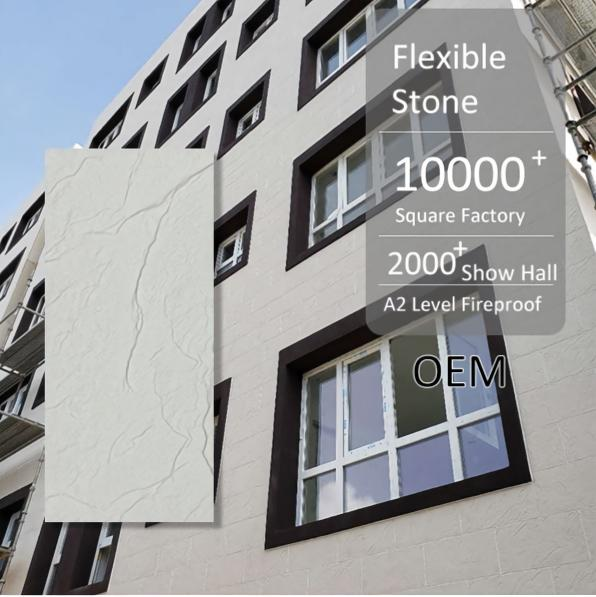
Achieving the look of quarried stone usually means dealing with weight, thickness, and installation complexity. But today's surface technologies let you capture that rough-hewn character in a fraction of the space.
Thin-profile panels, flexible veneers, and advanced printing methods reproduce everything from slate's split-face grain to limestone's soft pitting. These materials bond directly to drywall, plywood, or existing tiles, so there's no need for reinforced framing or masonry support.
The result is a tactile, visually layered surface that reads as authentic stone up close, yet behaves more like wallpaper or laminate during construction. It opens up design possibilities for accent walls, retail displays, and even curved surfaces where real stone would be impractical.
Why Installers Are Choosing Bending Stone Over Breaking Their Backs
For years, installers accepted back strain and repetitive heavy lifting as part of the job. Bending stone changes that equation entirely. Instead of wrestling solid slabs into position, you guide a flexible surface that follows the wall's contours with minimal effort. One installer compared it to hanging thick wallpaper—except this wallpaper won't tear, crack, or leave you sore the next morning.
The difference comes down to weight distribution and handling technique. Traditional stone demands careful balance and awkward angles, often requiring two people and a strong dose of luck. Bending stone flexes just enough to let you tilt, adjust, and press it into place single-handedly. That means fewer callbacks for misaligned seams, less time off for injuries, and more jobs completed in a day.
Field feedback points to a quiet revolution in how crews approach stonework. Experienced installers who once dreaded large-format projects now volunteer for them. They mention not just the physical relief, but the creative freedom—being able to wrap corners, curve around niches, and finish edges without cutting a dozen extra pieces. It's less about avoiding the heavy lifting and more about finally working with the stone instead of against it.
Slate Character, Simplified Install, Zero Compromise
Slate comes across as a working finish, not a showroom gimmick. The surface has a micro-texture that breaks up reflections and hides fingerprints, while faint charcoal undertones keep it from looking flat or plastic.
The install side is refreshingly boring. A top lip grabs the rail first, then the base clicks into a pre-set catch. No shims, no spacers, no third hand. The screws bottom out at the right torque, so you don't have to baby the drill.
And still, nothing got cut. The panel shrugs off impact, heat, and cleaning chemicals without losing its edge. The fit stays tight after repeated removal and re-seating. If you'd installed it blindfolded, you'd never guess it went in this fast.
Thin-Profile Stone That Still Reads as Hand-Chiseled
The slim cut doesn't sacrifice the imperfect, hand-worked surface that usually disappears when stone gets thinner. You still catch the faint tool marks along the edges, the slight variations in depth that make each piece feel like it was worked by someone who knew where to stop.
Because the profile stays lean, the chiseled texture reads as a deliberate accent rather than heavy rustication. Light moves across the face unevenly, picking up small ridges and shadows that shift through the day. It gives a wall enough character to hold its own without shouting over the rest of the room.
There's a balance here that's easy to miss in thinner materials: the stone stays crisp and modern in scale, but the surface keeps that old-world, carved-by-hand honesty. It doesn't try to mimic a rougher, thicker block. It just keeps the essential marks and lets the reduced thickness frame them differently.
A Lightweight Slate Look That Opens Up New Design Possibilities
Slate has always carried a certain weight—both visually and in the literal sense. But when that rugged, split-face texture arrives in a format that doesn’t demand reinforced framing or specialized installers, the rules change. You can wrap a kitchen island in it, clad a powder room wall, or carry the same surface up and over a fireplace without worrying about load-bearing limits. The look stays honest: subtle tonal shifts, a matte finish, that quiet unevenness that makes natural stone feel alive.
What makes the lightweight version interesting is how it loosens the hold of traditional applications. Because the panels are easier to handle and cut, they invite experimentation. Run them horizontally across a headboard wall for a grounded, linear effect. Use them inside alcoves or on the back of a shelving unit where real slate would be too cumbersome. The material stops being a statement reserved for exterior facades and becomes something you can treat almost like wallpaper—only with far more depth.
There’s also a tactile payoff. Lightweight slate tends to be warmer to the touch than real stone, which can feel unyielding and cold. That small shift opens the door to spaces that want the mood of slate without the chill. Pair it with warm woods, soft linens, and low, indirect lighting, and you get a room that feels grounded but not heavy. In the end, the design possibilities aren’t about mimicking slate perfectly. They’re about borrowing its texture and freeing it from the constraints that used to define where it could go.
FAQ
It's made by slicing real slate into thin layers and bonding those layers to a flexible backing. The surface you see is genuine natural stone, just thin enough to bend, so it keeps the texture, color shifts, and small surface irregularities you'd expect from a full-thickness slate tile.
A standard slate cladding panel can run around 10 to 15 pounds per square foot, while this flexible version usually lands between 1.5 and 2.5 pounds per square foot. That weight difference means you often don't need to reinforce the wall or add special support framing.
It genuinely bends. You can wrap it around rounded columns, arched entryways, or curved kitchen islands without cracking the stone surface. The backing handles the flex while the thin stone layer follows the curve, so it works well for shapes that would be difficult with rigid tiles.
It works both indoors and outdoors. People often use it for feature walls, fireplace surrounds, bathroom accent walls, exterior facades, and reception desks. Because it's light and flexible, it's also a good fit for furniture fronts and curved display walls where heavier stone would be impractical.
Many DIYers can manage it with basic tools. You can cut the panels with a utility knife or tin snips, and you don't need a wet saw or heavy lifting equipment. The main things to get right are surface preparation, adhesive choice, and sealing the seams properly, especially in wet areas.
Slate is naturally resistant to moisture and UV damage, so the color won't fade quickly and the surface won't warp in humid conditions. For exterior use, a quality sealant on the edges and joints helps protect against water getting behind the panel, and it handles freeze-thaw cycles better than rigid stone because the flexible backing allows slight movement.
No two panels are exactly the same. Because the surface is real slate, you'll see natural variation in color, veining, and texture from one sheet to the next. That's part of the appeal—it gives walls a handcrafted, layered appearance rather than a flat, printed pattern.
It's fairly low maintenance. Routine cleaning with water and a mild detergent is usually enough. If used in a high-traffic or exterior area, you might reseal the surface every few years, but you won't need to polish, wax, or replace individual stones the way you might with some other cladding systems.
Conclusion
China Slate Flexible Stone Veneer flips the script on natural stone cladding. Instead of thick, back-breaking slabs, you get a thin, pliable layer that still carries the rough, hand-chiseled character of real slate. Installers are reaching for this because it bends around curves, tucks into tight corners, and goes up with simple adhesive—no steel reinforcement, no heavy lifting crews. The texture reads authentic up close, with all the subtle clefts and shadows you'd expect from quarried rock, yet it weighs a fraction of traditional stone. That weightlessness means less structural overhead, faster timelines, and fewer sore shoulders.
The real payoff, though, is design freedom. Wall sections that couldn't support stone before—accent panels, ceiling details, curved reception desks, even cabinetry faces—suddenly become fair game. You keep the moody, organic slate aesthetic without the engineering headaches. For architects and contractors tired of choosing between visual depth and practical buildability, this veneer closes the gap. It lets you deliver that timeless, rustic slate character in places where heavy stone simply never made sense. No compromise on the look, just a lot less effort to get it there.
Contact Us
Contact Person: Vito
Email: [email protected]
Tel/WhatsApp: 86 13088879266
Website: https://www.magicstonemcm.com