
China Warehouse Forklift Buying Guide for Modern Warehouses
2026-09-28
Picture this: your warehouse racks are stacked to the ceiling, orders are flying in, but your aging forklift just coughed its last breath. In China's fast-moving logistics landscape, the difference between seamless throughput and costly downtime often comes down to one decision—which forklift you choose. This guide is built for modern warehouses that can't afford guesswork. We skip the fluff and dive straight into what actually matters: load capacity, energy efficiency, smart navigation, and total cost of ownership. And while you're weighing options, keep an eye on brands like HANGCHA, which has been quietly setting benchmarks for reliability and innovation across Chinese warehouses. But does it fit your specific operation? That's what we're here to unpack. Read on for straight talk and actionable insights—not brochures.
Narrow Aisle Reach Trucks vs. Counterbalance Models
In tight warehouse environments, the choice often comes down to where you need to maneuver. Narrow aisle reach trucks earn their name by fitting into lanes barely wider than the machine itself, thanks to their extending forks and compact stabilizer legs. Counterbalance models, on the other hand, rely on their own weight at the rear to offset the load, which means they need much more room to swing and turn. That extra turning radius might sound like a drawback, but it translates to rock-solid stability when lifting heavy pallets out in open docking areas.
When you start comparing vertical reach, the narrow aisle design often takes the advantage. These machines can stretch up to 11 meters or more, making them ideal for high-density racking where every cubic foot counts. Counterbalance trucks usually top out lower, but they compensate with raw lifting power at ground level. If your operation involves moving dense, oversized loads over short distances, that rear counterweight becomes your best friend. The reach truck's lighter frame, while agile, tends to struggle with loads beyond a couple of tons.
Maintenance costs and operator training also tell very different stories. Reach trucks have more complex mast and fork mechanisms, which means more potential failure points and a steeper learning curve for new drivers. Counterbalance trucks are simpler by design and often cheaper to service, but they demand wider aisles that eat into storage density. For a facility paying premium per square foot, the reach truck's ability to double racking depth usually wins. For a general-purpose warehouse with varied load types, the counterbalance remains the workhorse that never asks for tight-quarter precision.
Battery Swap Logistics for Multi-Shift Warehouses
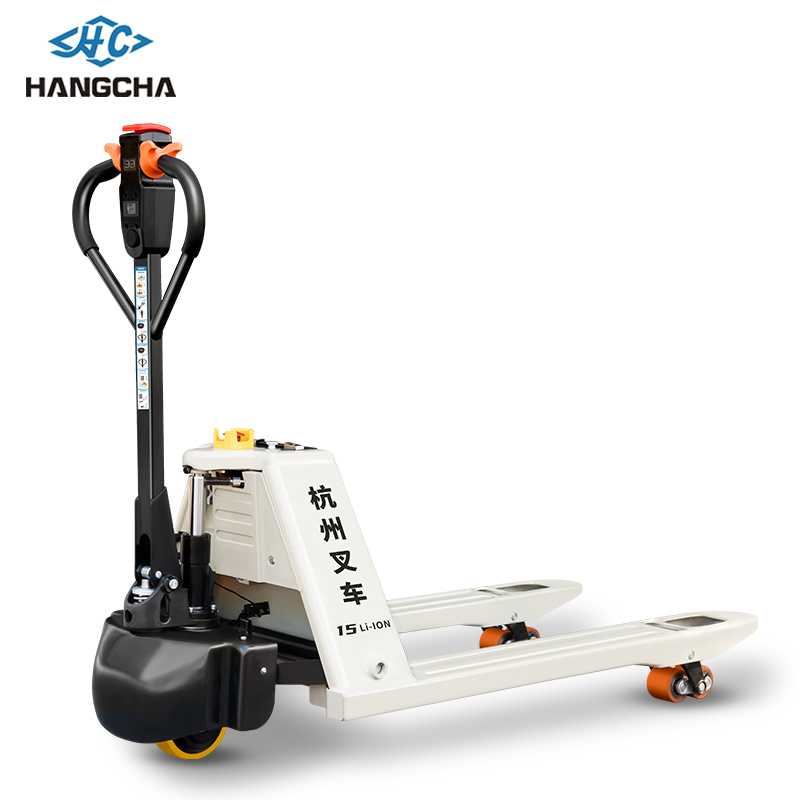
In multi-shift warehouse operations, battery swap logistics often become the invisible bottleneck that throttles throughput. When forklifts run nearly continuously across three shifts, waiting for a full charge is not an option. Instead, the flow depends on having charged batteries staged at the right dock doors, at the right times, and in the right sequence. A disjointed approach leads to operators hunting for batteries, swapping at random intervals, or leaving partially charged units on the floor—all of which quietly erode the shift handoff.
A practical rhythm emerges when battery swaps are tied to shift changeovers and break windows rather than individual battery percentages. For example, designating the final thirty minutes of each shift as the primary swap window reduces overlap and confusion. Pallets of charged batteries can be pre-positioned near high-traffic aisles, while depleted units are routed to a charging area that follows a first-in, first-out rotation. This keeps the swap itself under two minutes per truck and prevents the cascading delays that occur when one operator waits on another.
The real differentiator is treating battery inventory like perishable capacity. A battery sitting fully charged on a rack is not idle waste; it is buffer stock against demand spikes. Multi-shift warehouses that map swap rates against order volume can adjust charging schedules weekly instead of daily. This pulls the conversation away from battery count and toward available amp-hours per shift, which is the metric that actually determines whether the night crew inherits a functional fleet or a row of dead equipment.
Decoding Chinese Safety Standards Before You Import
Importing goods into China means facing a regulatory maze where safety standards often differ sharply from those in Western markets. Many first-time importers assume that CE or UL certifications will be accepted, only to discover that China requires its own compulsory certification marks, such as CCC, for a wide range of product categories. Without a clear grasp of which standards apply to your specific goods, shipments can be held at customs, incur hefty fines, or even be destroyed. The key is not to treat Chinese safety requirements as an afterthought but as a foundational part of your sourcing and compliance strategy.
One of the most overlooked aspects is the difference between national GB standards and industry-specific or local regulations. A product that passes a generic safety test may still fail because it does not meet the exact GB standard for its material, voltage range, or intended user group. For example, children's toys must comply with GB 6675, while electrical appliances fall under GB 4706. Moreover, labeling and documentation requirements—such as Chinese-language manuals, voltage and frequency markings, and importer information—are often stricter than what foreign suppliers expect. Failing to decode these details early leads to expensive rework or even a total ban on future imports.
Practical decoding starts with identifying the correct HS code for your product, then mapping it to the mandatory certification catalog published by the Certification and Accreditation Administration of China. Working with a local testing laboratory or a qualified agent can save months of trial and error, but even then, importers should personally verify the specific GB standard version, as standards are revised frequently. A smart approach is to request a pre-compliance assessment from the Chinese factory or a third-party lab before mass production, using samples that exactly match the final shipped goods. This not only reduces border risks but also builds trust with distributors who know that your products have already passed the real gatekeepers: China's safety regulators.
Specialized Forks for Palletless Loads and Odd Shapes
When a load doesn't sit neatly on a standard pallet, regular forks often can't get a reliable grip. Specialized forks designed for palletless loads and odd shapes close that gap by using contoured arms, added supports, or adjustable clamping surfaces. Whether it's a bundle of pipes, a stack of flat panels, or an irregularly shaped machine part, these attachments let the forklift hold the item securely without relying on a pallet underneath.
The real advantage shows up in day-to-day handling. Extra padding or rubber-coated contact points cut down on scratches and dents, while side-shift or rotation features help position the load precisely. Some versions use telescoping tines or independently moving arms to adapt to varying widths and contours. This means fewer damaged goods, less time spent improvising with straps or wooden blocks, and safer movement through tight aisles or outdoor yards.
Warranty Fine Print and Local Service Center Density
Warranty documents often hide critical details in the fine print, and one of the most overlooked factors is how the nearest service center affects your coverage. A product might come with a generous multi-year warranty, but if the nearest authorized repair facility is hundreds of miles away, the practical value of that warranty drops sharply. Shipping costs, long wait times, and the risk of damage during transit can make even a free repair feel expensive. Always check the warranty's fine print for clauses about parts availability, labor coverage, and whether you must use an authorized center — then cross-reference that with a map of local service locations.
Local service center density varies dramatically by brand and region, and this directly shapes the user experience long after the purchase. In urban areas, you might find three or four authorized centers within a short drive, while rural customers often face a single regional hub. This disparity means the same warranty can feel like a premium perk in one zip code and a practical dead end in another. Smart buyers pull up the manufacturer's service locator before buying, not after a failure, and they pay attention to whether the fine print allows independent repair shops or locks them into a sparse proprietary network.
Beyond the basic repair promise, the fine print often hides rules about preventive maintenance, transferability, and what counts as 'normal wear.' For instance, some warranties require annual service at an authorized center to remain valid — a clause that becomes burdensome if the nearest location is two hours away. Others offer loaner units or on-site service only within a certain radius of a service center, a detail rarely highlighted in marketing materials. Comparing warranty fine print alongside local service density gives you a far more accurate picture of long-term ownership costs than the headline coverage period ever will.
Making Forklifts Talk to Your Warehouse Management System
Direct integrations often fail because forklifts generate messy, real-time signals that a typical WMS wasn't designed to parse. Instead of forcing a rigid sync, treat the forklift as a roaming data node. Mount a small gateway that listens to CAN bus or hydraulic sensor traffic and emits compact status events—lift height, load weight, travel speed, fork presence. Let the WMS subscribe to those events rather than polling for them.
The real value comes from contextualizing movement. A pallet putaway in aisle 7 means little unless the WMS knows which bin, which batch, and which operator. Pair the forklift's position feed with barcode scans or RFID reads at the fork tips, then push a single "move complete" message carrying a location ID, timestamp, and optional exception flag. That keeps WMS records clean without forcing drivers to key in data.
Edge cases matter more than happy-path demos. If connectivity drops mid-task, the onboard unit should queue events and replay them in order once the network returns. Also add a subtle in-cab display that confirms the WMS accepted each transaction, so operators aren't guessing whether a putaway actually registered.
FAQ
For narrow aisles, a standard counterbalance forklift often struggles. Reach trucks or three-way stackers are built for aisles as tight as 2.5 to 3 meters. If your racks exceed 9 meters, man-up or man-down turret trucks boost picking efficiency. Articulated forklifts also work well in very tight spaces and suit high-density storage.
Indoor warehouses almost always call for electric forklifts because there are no exhaust fumes and noise stays low. Lead-acid batteries cost less upfront but need regular watering and equalizing. Lithium-ion packs can be opportunity-charged and fit multi-shift operations. Diesel or LPG units only make sense in very well-ventilated spaces or outdoors.
Don't just use the average pallet weight. Base the rating on your heaviest load plus a safety margin. A good rule is to pick a forklift rated at least 15 to 20 percent above your actual maximum load. Also check the load center distance. Long or irregular loads reduce real capacity. For lift height, measure the top beam of your highest rack and confirm the mast's lowered height clears your door openings.
Chinese forklift brands have improved a lot over the last decade. Heli, Hangcha, and BYD have built solid reputations in export markets, especially in low- to mid-tonnage electric models. Key components like controllers, motors, and hydraulics often come from international suppliers, which helps reliability. Still, it's wise to arrange a factory visit or third-party inspection and confirm your local dealer stocks spare parts and offers service.
Total cost of ownership goes well beyond the sticker price. Battery upkeep or replacement is the biggest hidden expense, especially with lead-acid batteries that need watering and equalization. Tires, brakes, and hydraulic hoses are wear items. Budget around 5 to 8 percent of the purchase price per year for these. Lithium-ion may cost more initially, but lower energy and labor costs often pay back within two to three years.
At a minimum, look for automatic speed reduction on turns, speed limiting, blue safety lights, and a reverse alarm. If you do high-level picking, cameras or laser positioning aids are worth adding. Overhead guards and load backrests are standard, but make sure they meet ISO or ANSI standards. Some low-cost Chinese models skip basic protections, so explicitly require emergency stop, power interruption protection, and operator presence sensing.
Even if you're not automating now, it's smart to think ahead. Forklifts with CAN bus communication and electronic steering are easier to retrofit with navigation and anti-collision systems later. Some Chinese manufacturers now offer factory automation retrofit kits, which are usually more reliable than third-party integration. If AGVs are in your future, ask whether the model supports drive-by-wire conversion or has pre-installed sensor mounts.
Conclusion
A modern warehouse in China rarely runs on a single forklift type. Narrow aisle reach trucks shine in high-density racking with aisles under three meters, while counterbalance models remain the workhorse for loading docks and heavy palletized freight. Before committing, measure your narrowest aisle, door heights, and floor load limits; a reach truck's mast height and straddle width can silently kill a layout plan. For multi-shift operations, battery swap logistics decide uptime more than motor power. Lithium packs with opportunity charging reduce the need for dedicated swap rooms, but lead-acid still wins on upfront cost if you build a ventilated charging bay. Chinese suppliers increasingly offer modular battery trays and quick-connect cables, so ask for a real-world swap time test, not a brochure number.
Importing from China means decoding safety standards beyond a CE mark. Look for GB 10827 compliance, an emergency stop within reach from the seat, overhead guard certification, and a nameplate with rated capacity and load center stamped in Chinese and English. Specialized forks matter when pallets disappear: telescopic forks, carton clamps, and fork positioners let you handle rolls, bales, or odd-shaped crates without custom pallets. Warranty fine print often excludes wear items like tires, forks, and battery degradation after the first year, so map the density of local service centers and parts depots before you sign. Finally, connectivity makes or breaks modern fleet management. Demand CANbus output, telematics-ready hardware, and an open API or Modbus/MQTT bridge so your WMS can track location, battery state, and impact events without manual data entry. A supplier that treats the forklift as a data node, not just a lift truck, will save you more than the purchase price over five years.
Contact Us
Contact Person: Liuxue
Email: [email protected]
Tel/WhatsApp: +86-19084200370
Website: https://www.hf-ec.com/