

Curved Treadmill Wholesale: Unlocking Fitness Business Efficiency and Innovation
2026-05-09
In the competitive fitness industry, efficiency and innovation are not just buzzwords—they are the keys to staying ahead. One piece of equipment making waves is the curved treadmill, a manual, self-powered machine that challenges users while requiring no electricity. For gym owners and distributors, sourcing these treadmills through wholesale channels can dramatically cut costs and elevate your offerings. But how do you choose the right partner? Enter Yingruis, a brand that combines durability, smart design, and competitive pricing to help your business thrive. In this post, we’ll explore how curved treadmill wholesale can transform your fitness venture, from streamlined operations to attracting a broader clientele.
Rethinking the Treadmill: The Curved Design Difference
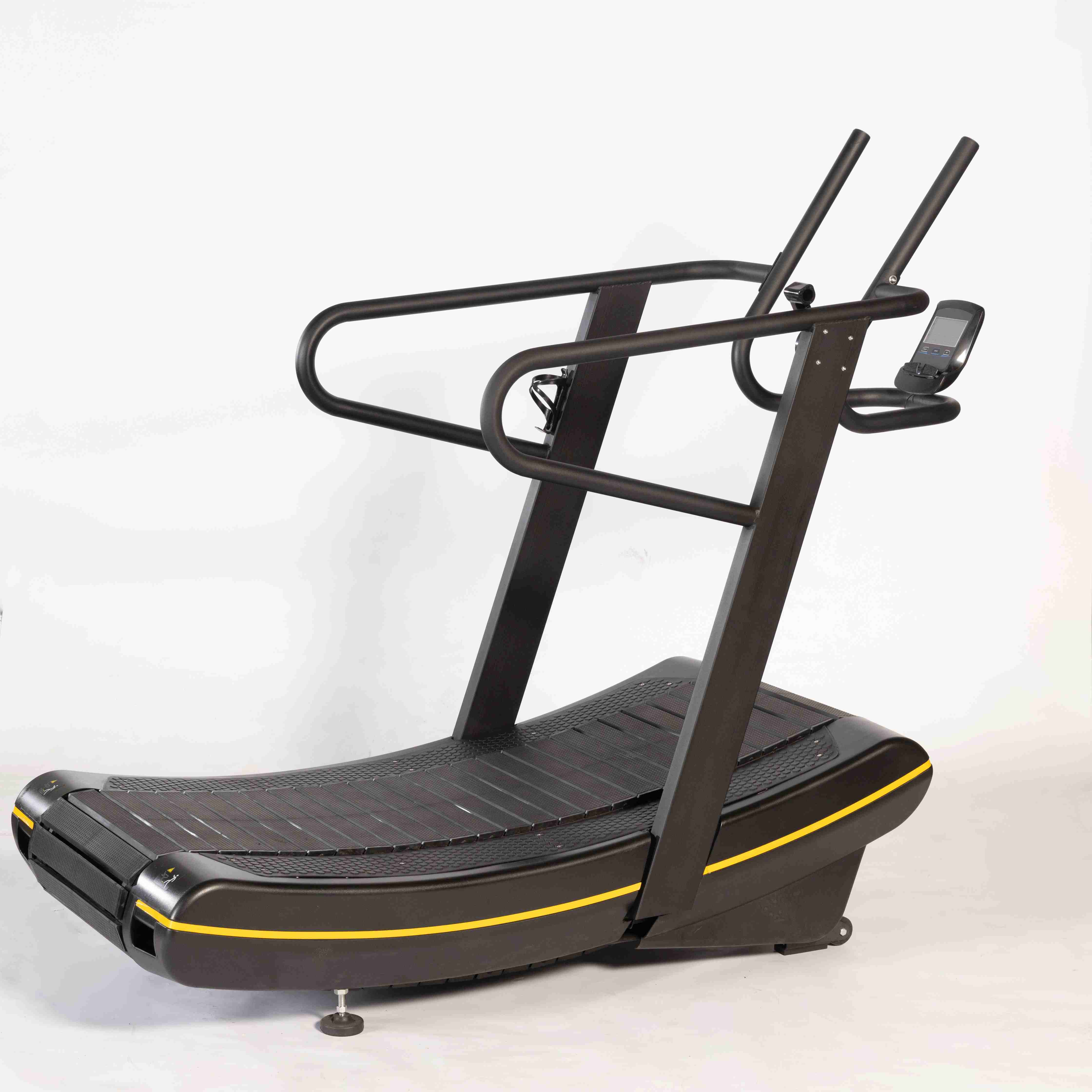
Traditional treadmills have long dominated gyms, but their flat, motorized belts often force an unnatural gait and limit user control. The curved design turns that concept inside out—literally. With no motor, the concave running surface responds solely to your footstrike and momentum, mimicking outdoor running mechanics. This self-powered nature not only reduces energy waste but also engages posterior chain muscles more effectively, making each stride feel more purposeful and grounded.
What truly sets the curved treadmill apart is how it hands the reins back to the runner. Speed adjusts intuitively: move toward the front curve to accelerate, step back to slow down. There’s no frantic button jabbing mid-sprint, just a fluid conversation between body and machine. Because you generate the belt movement, the workout inherently burns more calories—research suggests up to 30% more than on a motorized deck—while also sharpening balance and proprioception.
Beyond raw performance metrics, the curved treadmill reshapes the entire training experience. It’s quieter, requires no electricity, and demands full-body coordination, which can break the monotony of steady-state plodding. For sprinters, rehab patients, or anyone tired of feeling like a hamster on a wheel, the curved design offers a refreshing path to functional fitness that actually feels like running, not just keeping up with a machine.
Buying in Bulk: The Financial Upside for Gym Owners
Running a gym means constantly restocking everything from cleaning supplies to paper towels, but the smartest owners know that the unit price is never the whole story. When you buy in bulk, you’re not just cutting the per-item cost—you’re also slashing the frequency of orders, which means fewer shipping fees and less administrative time lost to reordering. Over a year, those saved hours and compounding discounts can quietly add up to the equivalent of a couple extra months of profit that don’t rely on bringing in a single new member.
There’s a secondary advantage that rarely makes it into the pitch: predictability. Bulk buying lets you lock in a price for months at a time, insulating your gym from the small but persistent price fluctuations that eat away at margins. In an industry where every dollar counts and membership fees are sensitive to hikes, that kind of stability isn’t just convenient—it’s a subtle form of financial protection that keeps your budget honest.
Of course, storage and upfront cash can be concerns, but most gyms have unused corners or utility rooms that can house an extra pallet of protein bars or disinfectant. And if you negotiate well, suppliers may even offer net-60 terms, meaning the bulk order can generate revenue from members before the bill is due. This approach transforms a simple purchasing decision into a cash-flow tool, turning the stockroom into a quiet engine of profitability rather than just a place to stash extra stuff.
Self-Powered Systems and Lower Operational Overhead
Imagine infrastructure that fuels itself, tapping into ambient energy from vibrations, light, or temperature differences. These self-powered systems eliminate the constant need for batteries or wired power, shrinking maintenance trips and cutting long-term costs. By harvesting what's already around them, they quietly redefine reliability—fewer interruptions, almost invisible upkeep, and a natural fit for remote or hard-to-reach spots where sending a technician feels like an expedition.
The real magic lies in the simplicity that follows. Without power cables to route or battery schedules to track, teams can redirect their focus toward refining core operations rather than babysitting hardware. It's a shift from reactive scrambling to steady, uninterrupted flow—machines that essentially look after themselves. This leaner approach means fewer spare parts stocked, less downtime logged, and a workforce freed to tackle challenges that actually deserve human ingenuity.
Of course, building such systems isn't just about slapping on a solar cell and calling it a day. It demands clever engineering to match energy intake with consumption, along with thoughtful design that survives real-world wear. But when it clicks, the payoff is tangible: systems that run almost forgotten in the background, chipping away at operational drag. For organizations already stretched thin, that kind of quiet efficiency isn't just convenient—it's transformative.
How Non-Motorized Equipment Elevates Client Workouts
Non-motorized gear strips away the guided pathways of machines, forcing the body to self-stabilize and recruit deeper muscle chains. A kettlebell press, for instance, challenges the shoulder girdle far more than a seated machine press because every inch of the movement demands balance and joint integrity. The result is a workout that builds practical strength instead of just pumping up prime movers in isolation.
These tools mirror natural human movement—lifting, twisting, carrying—which translates directly into daily life and athletic performance. When a client powers through a sandbag carry or a battle rope wave, they aren’t just burning calories; they’re teaching their nervous system to coordinate effort across the entire body. This integration not only improves agility and resilience but also uncovers weak links that predictable machine circuits tend to mask.
Another game-changer is the built-in scalability. A dumbbell or resistance band can be regressed or progressed almost infinitely, keeping workouts fresh and pushing past plateaus without needing a wall of high-tech equipment. The client stays mentally engaged, because no two sessions feel scripted, and the body continuously adapts to shifting loads and angles. In a world of quick-fix fitness, these simple tools foster a deeper connection to movement—and that’s where lasting transformation hides.
Built to Last: Durability That Cuts Long-Term Costs
We’ve all experienced products that start strong but degrade faster than expected—hinges loosening, finishes dulling, components failing under normal strain. True durability isn’t just about surviving a few stress tests; it’s about resisting the slow, cumulative wear that eventually forces a replacement. By selecting materials that inherently resist corrosion and fatigue, and engineering joints and stress points to distribute loads evenly, we create items that remain reliable year after year. This upfront attention to resilience means you’re not quietly bleeding money on repairs, replacements, or downtime.
It’s easy to overlook how minor degradations add up. A seal that weakens slightly might lead to moisture intrusion later; a surface treatment that wears thin exposes the core to accelerated damage. Our approach involves simulating years of real-world use—temperature swings, vibration, frequent handling—to identify and reinforce weak links before production. The payoff is straightforward: fewer service interruptions, lower maintenance costs, and a longer replacement cycle. In many cases, the total cost of ownership drops by double-digit percentages simply because the product refuses to quit.
Beyond the numbers, there’s a practical peace of mind in owning something that doesn’t demand constant attention. Think of the equipment that keeps humming through its third decade of service, or the everyday tool that still performs like new after daily use. That kind of lifepan isn’t accidental—it’s designed in from the first sketch, validated through rigorous trials, and delivered without relying on fragile, short-lived trends. When durability is the foundation, long-term savings become a natural, almost invisible benefit.
Fitness’s Next Frontier: Why Curved Treadmills Are Gaining Ground
Walk into a modern gym and you might notice a crescent-shaped machine that’s rapidly replacing rows of traditional belts. Curved treadmills are not just a design tweak—they represent a fundamental shift in how we think about running indoors. Unlike motorized versions that dictate pace, these self-powered curves respond to every stride, forcing the body to drive the belt forward rather than simply keeping up. The result is a more natural gait and an instant, tangible connection between effort and motion.
The biomechanical advantage is hard to ignore. Because there’s no motor, runners must engage their posterior chain—glutes, hamstrings, and calves—far more than on a flat deck. Studies suggest this can lead to a higher calorie burn and improved running economy over time. It’s a workout that feels less like submitting to a machine and more like an honest run outdoors, minus the weather. That’s why everyone from elite sprinters to physical therapists is taking notice.
Beyond performance, the curved treadmill is reshaping commercial fitness spaces. Without the need for electricity or complex maintenance, facilities can slash energy costs while offering a durable, low-impact training tool. For users, the simplicity is the selling point: hop on, and your effort determines the speed. There’s no pressing buttons, no adjusting settings, just raw propulsion. It’s fitness stripped back to its essence, and that’s exactly why it’s gaining ground.
FAQ
Their self-powered, non-motorized design encourages natural running form and burns up to 30% more calories, which instantly attracts members seeking efficient workouts. Plus, the low maintenance and lack of electricity needs slash operational costs, making them a smart long-term investment for gym owners watching their bottom line.
Buying in bulk brings per-unit costs down significantly, and since these treadmills require no electrical hookups, you can place them anywhere without costly rewiring. Their durability means fewer service calls, and staff spend less time on upkeep, freeing them up to focus on client engagement and class programming.
Absolutely. The responsive belt that speeds up or slows down based on the user's foot strike creates an immersive, self-paced experience. Many models also feature Bluetooth connectivity and performance tracking displays, which feed into members' fitness apps and keep them coming back to beat personal records.
Look beyond price and scrutinize the warranty—particularly bearing and belt coverage. A supplier with accessible replacement parts and a dedicated support team in your region will minimize downtime. Also, check if they offer volume discounts with flexible drop-shipping or warehousing to align with your studio's cash flow and space limitations.
Since they run entirely on human power, they draw zero electricity, which can meaningfully reduce a facility's utility bills and carbon footprint. This energy-free operation also aligns with green certifications and appeals to eco-conscious clientele, giving your marketing a genuine, sustainable edge without added effort.
Yes, they unlock high-intensity, self-regulated running classes that are perennially popular. You can package them into tiered memberships, specialized bootcamps, or one-on-one performance coaching sessions. Even during off-peak hours, they serve as a draw for personal trainers renting floor space by the session.
Without a motor, controller board, or tension electronics, the failure points drop dramatically. Routine care boils down to cleaning the belt and deck and occasionally lubricating bearings—tasks that staff can handle in minutes. This simplicity means fewer surprise repair bills and less equipment downtime that frustrates members.
Their compact, sculptural look fits perfectly into smaller, design-forward studios that prioritize aesthetics and open floor plans. The curved form naturally draws the eye, becoming a visual centerpiece that suggests innovation. This draws in a demographic that values experience and style as much as a good workout, pushing boutiques to design entire brand identities around this unique equipment.
Conclusion
Curved treadmills fundamentally shift how we think about running equipment, replacing motors with a responsive belt that moves only as fast as the user does. This design not only mimics natural outdoor stride patterns more accurately but also engages more muscle groups, particularly the hamstrings and glutes, resulting in a higher calorie burn per session. For gym owners buying wholesale, the financial case is compelling: bulk purchasing slashes per-unit costs, and the self-powered mechanism eliminates electricity expenses and complex motor maintenance, dramatically lowering operational overhead. Without relying on power cords, these machines can be placed virtually anywhere within a facility, optimizing floor layout and freeing up prime space for other revenue-generating activities.
Beyond the immediate savings, non-motorized treadmills elevate client workouts by putting complete control in the user’s hands, allowing for instant speed changes without button presses and thereby supporting more dynamic, interval-based training that appeals to both rehab clients and elite athletes. The robust build quality—often featuring reinforced frames and thick, durable belts—means these treadmills withstand heavy commercial use for years, cutting long-term replacement and repair costs. As demand for functional, high-intensity training grows, curved treadmills are rapidly gaining traction, representing a forward-thinking investment that differentiates a gym from competitors while aligning with the industry’s push toward sustainable, user-driven fitness solutions.
Contact Us
Contact Person: Owen Wu
Email: [email protected]
Tel/WhatsApp: 86-15376736259
Website: https://www.yingruisfit.com/