

Custom Stainless Steel Protective Film Solution: Shield Surfaces with Precision
2026-06-04
Stainless steel surfaces demand perfection—but scratches, debris, and daily wear can quickly ruin their flawless finish. Whether it’s in transit, on the production line, or during installation, keeping that pristine look is tough without the right shield. That’s where custom protective films step in, offering a tailored guard that fits your project like a second skin. At Shire, we’ve turned protection into a precision craft, merging advanced materials with exact-fit solutions so your stainless steel stays spotless—from the first cut to the final reveal. Intrigued? Let’s peel back the layers on how a film can change the way you think about surface care.
Precision-Engineered Films for Flawless Protection
The essence of flawless protection lies in the meticulous control of film thickness, clarity, and surface energy. Each layer is formulated to bond seamlessly with substrates ranging from delicate optical lenses to rugged architectural glass, ensuring no weak points compromise the shield. Material selection—whether it’s a self-healing elastomer or a hard-coated polyester—is driven by the specific threat, be it abrasion, impact, or chemical exposure.
In practical terms, this means a single film can be tailored to reject fingerprints on a smartphone display, resist gravel strikes on a vehicle’s hood, or maintain sterility in medical device packaging. The engineering behind these films often involves multi-layer co-extrusion and nano-scale coatings, processes that demand cleanroom conditions and real-time quality sensing to eliminate defects invisible to the naked eye.
What sets these films apart is their capacity to endure without degrading clarity or adhesion over time. Accelerated weathering tests simulate years of UV and humidity exposure, verifying that the film won’t yellow, peel, or cloud. The result is a nearly invisible barrier that performs consistently, from sub-zero cold to desert heat, preserving the underlying surface as though it were still untouched.
Custom Cut Solutions for Complex Stainless Steel Shapes
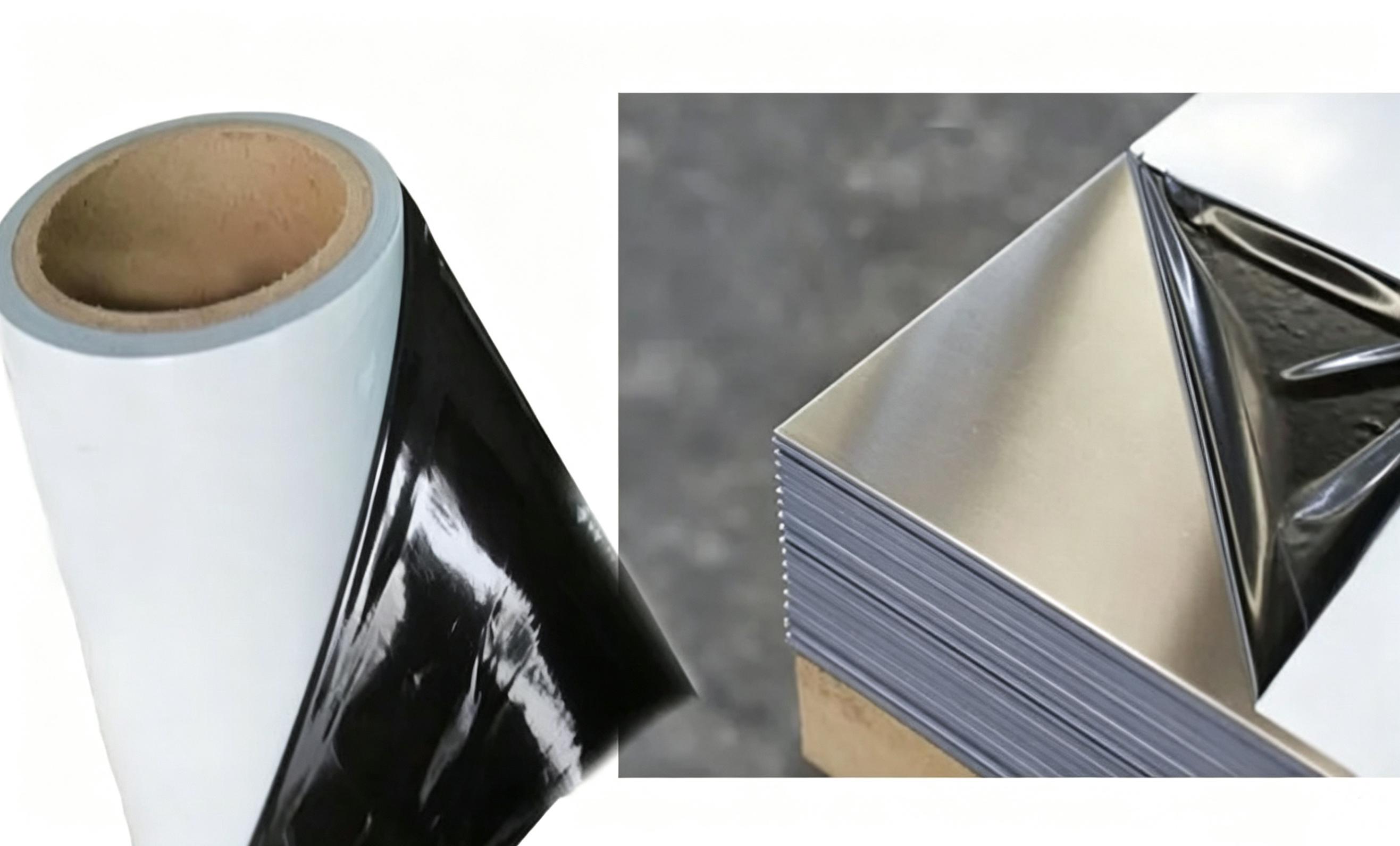
Every stainless steel fabrication project has its own quirks—tight curves, odd angles, and profiles that standard cutting methods simply can’t handle. When you’re working with complex geometries, off-the-shelf solutions often fall short, wasting material and time. That’s where custom cut solutions step in, matching the exact contours and specifications of your design without forcing compromises.
Precision is non-negotiable for intricate stainless steel components. Advanced cutting technologies like fiber lasers and high-pressure waterjets interpret digital blueprints directly, translating CAD files into flawless physical parts. This isn’t about generic processing; it’s about selecting the right technique for each alloy grade and thickness, ensuring clean edges and tight tolerances on every piece, even for jobs with nested patterns or multiple bend locations.
Beyond accuracy, a tailored cutting strategy also streamlines production. By optimizing tool paths and minimizing setup, shops can deliver rapid turnarounds without sacrificing quality. You get parts that fit perfectly the first time, reduced scrap rates, and a partner who understands that complex shapes don’t have to mean complicated logistics—just a smarter approach to stainless steel fabrication.
Durable Adhesion That Survives Extreme Environments
In settings where conventional bonds quickly fail, adhesives engineered for extreme durability maintain structural integrity despite relentless thermal cycling. Materials exposed to cryogenic cold or scorching heat require formulations that resist brittleness and softening. Advanced polymer chemistries, including toughened epoxies and high-temperature silicones, crosslink into networks that absorb stress without cracking. This reliability proves vital in satellite components orbiting through shadow and sunlight, as well as deep-well drilling tools facing downhole pressures and corrosive fluids.
Chemical and environmental resistance separates short-lived fixes from permanent joins. Strong adhesion means little if exposure to solvents, salt spray, or intense UV light causes gradual peeling or weakening. Specialized adhesives incorporate backbone structures and additives that repel moisture and neutralize acid attack, preserving bond strength over years of outdoor exposure. Offshore wind turbines, chemical processing equipment, and automotive under-hood assemblies all benefit from bonds that hold firm while shedding water and withstanding fume-laden atmospheres.
Real-world success hinges on more than lab-perfect conditions; surface preparation and joint design must work with the adhesive’s properties. Grit blasting, plasma treatment, and precise mixing ratios help achieve molecular-level contact even on low-energy substrates. When bonded properly, these adhesives distribute loads evenly, eliminating the stress concentrations that cause mechanical fasteners to fatigue. The result is a longer service life for everything from jet engine nacelles to fire-resistant building panels, where failure is not an option.
Invisible Shielding Without Sacrificing Aesthetics
The challenge of integrating protective measures into design has long been a tug-of-war between safety and visual appeal. In spaces where an unobstructed view or a sleek profile is paramount, traditional shielding methods often fall short—bulky enclosures, visible grids, or tinted films that alter the natural light. The new wave of invisible shielding sidesteps these compromises by embedding protective layers directly into transparent materials, using nano-mesh conductors or optically clear coatings that remain imperceptible to the naked eye. Rather than hiding behind clunky hardware, the architecture itself becomes the barrier, preserving the original aesthetic intent without a trace of interruption.
Consider a glass balcony railing that doubles as a signal-blocking surface, or a museum display case that wards off electromagnetic interference while disappearing into the backdrop. These solutions rely on precision-engineered coatings or micro-patterned films that are measured in microns, not millimeters. The result is a surface that reads as ordinary glass or acrylic, yet performs as a robust shield. By pushing the protection into the material’s composition, designers are free to maintain clean lines and luminous clarity, turning a functional requirement into an invisible feature.
Beyond the technical marvel, the real triumph is the way these advancements reshape how we think about integration. Instead of starting with a shield and then camouflaging it, the process begins with the design language—the soft reflection of a storefront, the crisp edge of a modern interior—and lets protection emerge from within. It’s a quiet fusion where safety doesn’t announce itself, and beauty isn’t asked to step aside. In the end, the most effective shielding is the kind you never notice at all.
Easy Application, Zero Residue Removal
Applying and removing product shouldn't feel like a chore. Our formula glides on effortlessly, delivering even coverage without the need for excessive rubbing or specialized tools. The real difference is in the cleanup — when it’s time to take it off, it lifts cleanly without leaving behind any sticky film, powdery dust, or greasy residue. You won’t be scrubbing at your skin or surfaces; just a quick, simple removal process that respects your time and comfort.
We designed this with real life in mind. No more struggling with stubborn leftovers that require harsh cleansers or multiple washes. Whether you’re switching up your look, removing a protective coating, or just tidying up after a project, the absence of residue means you’re ready for whatever comes next — no extra steps needed. It’s a more thoughtful approach to application and removal that fits seamlessly into your routine.
Tailored Thickness for Light-Duty to Heavy-Use Demands
Finding the right thickness isn’t just about numbers on a spec sheet—it’s about matching the material’s core strength to the real-world stress it will face. Our range spans from slim, agile profiles that handle daily light tasks without adding bulk, to robust, reinforced options built to absorb continual impacts and heavy loads. Each variant is specifically engineered to deliver lasting performance without over-engineering, so you pay for exactly the durability you need.
Behind every gauge is a careful balance of raw material integrity and forming techniques that enhance toughness without sacrificing flexibility. Lighter-duty versions maintain resistance to punctures and tears during regular use, while our heaviest constructions incorporate impact-dissipating layers that shrug off repeated abuse in demanding industrial settings. The result is a thickness lineup that feels intuitive: thin where finesse matters, thick where brute resilience counts.
FAQ
Custom films are precision-cut to match your exact dimensions and contours, ensuring full coverage without overhang or gaps. They use advanced adhesives designed specifically for stainless steel, so they bond securely yet peel off cleanly without leaving residue, even after extended use.
Start by cleaning the surface thoroughly with isopropyl alcohol to remove dust and oils. Peel back a corner of the liner and align the film carefully. Use a soft squeegee to press the film down from the center outward, pushing air to the edges. If small bubbles remain, they usually dissipate within a day or two.
Yes, the film is engineered for durability in harsh environments. It resists UV exposure, moisture, and temperature swings from -40°F to 250°F, making it suitable for both indoor and outdoor applications without yellowing or cracking.
Absolutely. The adhesive is pH-neutral and non-corrosive, specifically formulated to protect sensitive surfaces. It won't etch, stain, or discolor brushed, mirror, or hairline finishes, and it removes without a trace.
Under normal conditions, the film can stay in place for up to two years. After that, it still peels away easily thanks to the clean-release technology. For outdoor use, we recommend checking it annually to ensure optimal performance.
Yes, we provide digital die-cutting and laser cutting based on your CAD files or templates. Whether you need intricate cutouts, rounded corners, or odd geometries, we can produce films that fit perfectly with minimal manual trimming.
Absolutely. The film acts as a sacrificial barrier, absorbing impacts and abrasions from tools, debris, and handling. It’s widely used to keep stainless steel panels, appliances, and architectural elements pristine from fabrication through final installation.
Simply reach out with your project details—dimensions, quantity, and surface finish. We’ll send you a free sample kit and a tailored quote within 24 hours. No complicated forms, just direct communication with our support team.
Conclusion
For industries that rely on stainless steel—from architecture to industrial equipment—surface integrity is paramount. A truly tailored protective film solution does more than just cover; it conforms with absolute precision to every contour, including complex laser-cut shapes and curved panels. Advanced engineering ensures the film clings flawlessly without bubbles or edge lift, even on brushed or mirrored finishes. This level of precision means the original surface remains pristine through fabrication, transport, and installation, despite harsh handling or environmental exposure. The adhesion is formulated to withstand extreme temperatures, UV radiation, and chemical washdowns, yet it leaves behind no residue when removed weeks or months later. Unlike generic films, this approach treats protection as a seamless extension of the stainless steel itself, maintaining the material’s intended visual appeal without yellowing or clouding.
Equally important is the ease of application—technicians can apply the film quickly and reposition it without compromising bond strength. When it’s time for removal, the film peels away cleanly in a single piece, eliminating costly cleanup and rework. Thickness options range from ultra-thin films for delicate decorative pieces to robust, heavy-gauge materials for high-traffic surfaces or abrasive environments. This versatility allows businesses to match the level of protection precisely to the use case, avoiding over-engineering while ensuring durability. In essence, the solution transforms protective film from a temporary afterthought into a strategic component of quality control, preserving the value and appearance of stainless steel at every stage from production to end-use.
Contact Us
Contact Person: Jack Xu
Email: [email protected]
Tel/WhatsApp: 8615257328825
Website: https://www.temporaryprotectivefilm.com/