

Diesel Portable Air Compressor Supplier: Key Factors for Choosing Reliable Equipment
2026-08-05
Finding a diesel portable air compressor that won't let you down starts with choosing the right supplier. It's not just about specs on a sheet—it's about durability, support, and real-world performance under pressure. At Seize Air, we know the difference a well-built machine can make on your job site. Before you commit, let’s explore the critical factors that separate a wise investment from a costly gamble, so you can breathe easy knowing your equipment is up to the task.
Why Durability Matters More Than Ever in Jobsite Compressors
The shift toward tougher operating conditions on modern jobsites has made compressor durability a frontline concern. Exposure to extreme weather, dust, and constant relocation demands equipment that can withstand repeated stress without failures. In environments where downtime directly impacts project timelines and profitability, a rugged machine isn't just a preference—it's a necessity.
Contractors are increasingly relying on compressors in remote or off-grid locations where service support is limited. A breakdown in such settings can cause cascading delays across multiple trades. Selecting a unit built with reinforced frames, sealed electrical systems, and heavy-duty cooling components becomes a strategic decision to maintain continuity in punishing conditions.
Durability also translates into long-term value. Robust construction minimizes the frequency of part replacements and unplanned maintenance, allowing crews to focus on the job rather than equipment repairs. Over the lifecycle of a compressor, the initial investment in a durable model pays off through higher utilization rates and reduced total cost of ownership.
The Truth About CFM and PSI: Matching Output to Your Tools
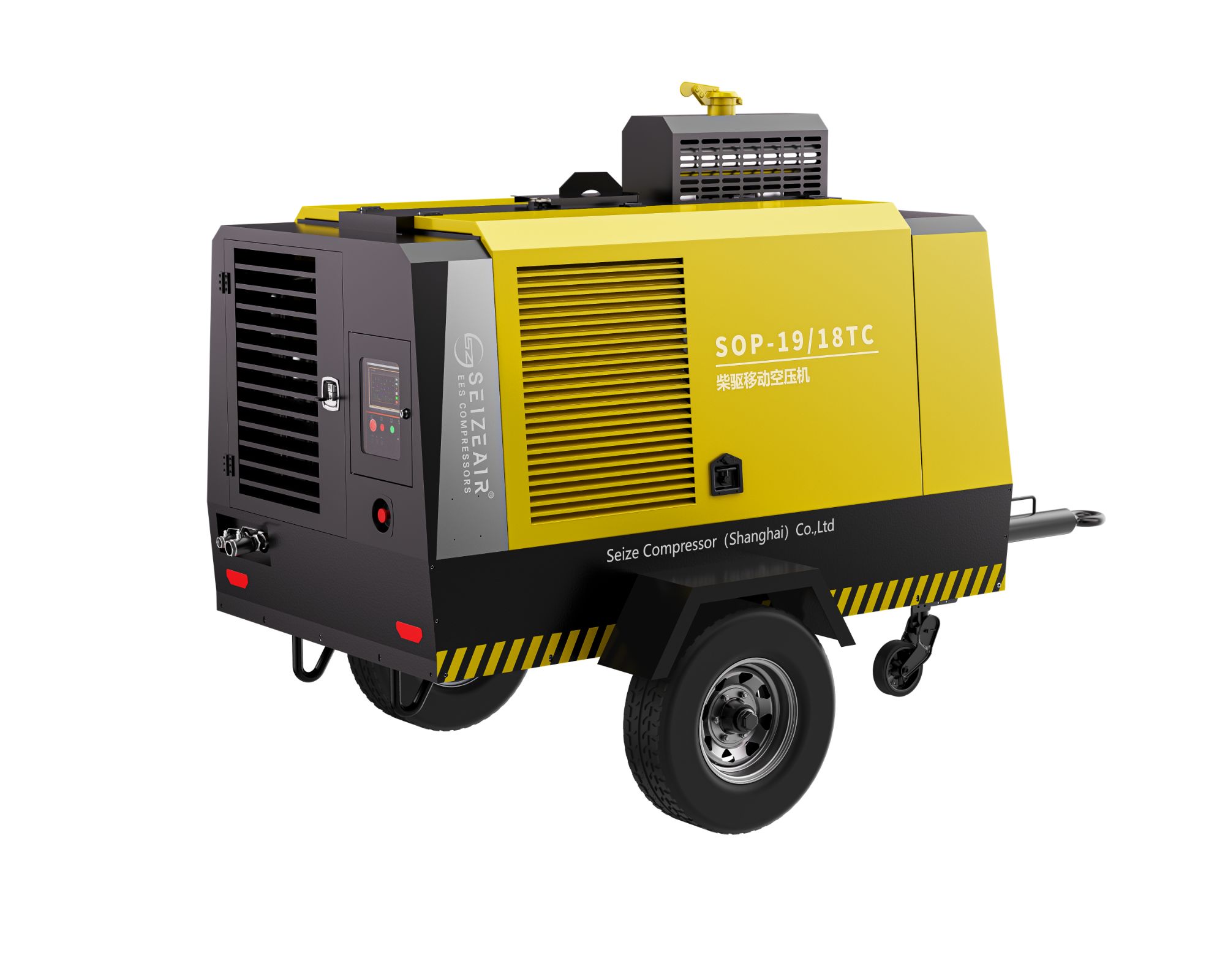
Most people assume a higher PSI means more power, but in the world of air tools, that's only half the story. PSI essentially dictates the pressure at which your tool operates, but without sufficient CFM—the actual volume of air delivered—your tool will choke, no matter how much pressure your compressor claims to crank out. It’s a common mistake: you look at a compressor's max PSI rating and think it’ll handle anything, only to find your impact wrench stuttering helplessly. The reality is that many tools demand a steady, high volume of air at a specific pressure, and if your supply can't keep up, performance tanks immediately.
Matching your compressor’s output to your tool’s requirements isn’t rocket science, but it does demand attention to the fine print. Check your tool’s required CFM at a given PSI—often labeled right on the body or in the manual—and compare it to your compressor’s delivered CFM at that same pressure. A lot of small compressors boast 150 PSI, but at 90 PSI they might only push 2 CFM, while your die grinder guzzles 5 CFM. The mismatch leads to constant cycling, overheating, and weak performance. You’re not just looking for a number that’s barely adequate; factor in a cushion of about 20-30% above the tool’s minimum requirement to keep things running smoothly under continuous use.
Duty cycle adds another layer. Even if your compressor’s CFM rating technically meets the need, a low-duty-cycle pump can’t sustain that output without frequent rest periods, leaving you frustrated and waiting. For intermittent tools like a brad nailer, you can get away with a marginal match, but for grinders, sanders, or sandblasters, consistent air delivery is everything. Think of it less as chasing a single big number and more as balancing a reliable stream. Get that pairing right, and your tools will perform exactly as designed—snappy, precise, and without that aggravating lag that makes you doubt your whole setup.
Engine Brands and What They Mean for Long-Term Reliability
When you start digging into the world of engines, brand names often carry a certain weight—sometimes based on legacy, sometimes on clever marketing. A badge like Honda or Toyota might instantly evoke thoughts of bulletproof reliability, but what does that actually mean in terms of long-term ownership? The truth is that engine longevity often comes down to design philosophy rather than the emblem on the hood. Some manufacturers prioritize simplicity and conservative tuning, which naturally leads to fewer stress points over hundreds of thousands of miles. Others chase performance or fuel economy with complex technologies that can become liabilities as the years pile on. So while a brand’s reputation can guide you, it’s the underlying engineering choices that truly determine whether your engine will quietly tick past 200,000 miles or start nickeling-and-diming you before the odometer hits six figures.
Take two seemingly similar powertrains from different badges: a small turbocharged engine from a European brand versus a naturally aspirated counterpart from a Japanese competitor. On paper, both might deliver comparable horsepower and efficiency. But pop the hood after a decade of use and the differences become stark. The European unit might rely on direct injection, integrated exhaust manifolds, and timing chains that stretch—each adding layers of potential failure points. Meanwhile, the simpler engine sticks with port injection and a timing chain design built with proven tensioner systems. This isn’t to say one approach is always superior; it’s about matching your priorities. The complex engine might reward you with crisp throttle response and better fuel economy when it’s working perfectly, but the simpler one often earns its stripes by just continuing to run with minimal fuss.
Beyond just the hardware, brand meaning shifts when you consider how engines are implemented across a lineup. A manufacturer known for rugged trucks might use a detuned version of its diesel engine in a passenger car, inadvertently creating a legend of longevity because the block was overbuilt for the task. Other times, a brand’s entry-level engine—rushed to market to meet emissions standards—barely resembles the tried-and-true mills from its larger siblings. So rather than taking the brand name at face value, it pays to look at the specific engine family and its track record in the real world. Forums, owner surveys, and independent mechanic insights often tell a more honest story than any brochure. Ultimately, long-term reliability isn’t a brand trait; it’s a sum of careful engineering, appropriate maintenance, and a bit of luck with how well that particular engine holds up under your own driving habits.
Tank Size and Portability: Balancing Capacity with Mobility
Finding the sweet spot between a generous tank and easy handling defines a compressor’s real-world usability. A larger tank stores more compressed air, letting you run tools longer without the motor kicking in, but it quickly turns a portable unit into a stationary beast. For quick trim jobs or inflation tasks, a compact 1- to 3-gallon model slips into the car trunk without a second thought, yet it cycles frequently under continuous load. Stepping up to a 6-gallon pancake or twin-stack design adds enough reserve for finish nailers and stapling, while still being something you can carry up a ladder with one hand.
The trade-off becomes sharper once you cross the 10-gallon mark. Wheeled hot-dog compressors in the 15 to 30-gallon range introduce roll-around convenience but demand dedicated floor space and often a second pair of hands to muscle into a truck. At this tier, you gain the ability to spray paint, impact wrench, or run small cut-off tools with far fewer pressure dips, yet the machine anchors itself to the garage or shop. The mobility equation shifts from “can I carry it” to “can I maneuver it over thresholds and around corners.” Rubber tires, upright designs, and well-placed handles make all the difference when you’re dragging a heavy tank across uneven ground or up a ramp.
Power source plays into this balance too. Cordless, battery-powered compressors in the 1- to 2-gallon range redefine portability by cutting the cord entirely, ideal for remote punch-list fixes or roadside emergencies. But their smaller tanks and limited runtime mean you trade endurance for the freedom to roam. Matching the tank size to the most demanding tool on your list prevents overbuying a beast you’ll dread moving or underbuying a lightweight unit that stalls you mid-project. In the end, the right compromise feels effortless—big enough to hold its own, small enough to live with every day.
Hidden Costs That Catch Buyers Off Guard
The final price tag on your dream home often looks nothing like the number you agreed to. Beyond the obvious mortgage payments, buyers get blindsided by expenses that quietly pile up during and after the purchase. Property taxes, for instance, might seem predictable until a reassessment hikes them overnight. Then there’s the inevitable maintenance—roofs leak, boilers fail, and suddenly you’re writing checks you never budgeted for.
Closing costs are another silent budget-eater. Attorney fees, title searches, and lender charges can add thousands you didn’t see coming. Even the moving process itself has a way of bleeding cash: packing supplies, truck rentals, and the temptation to upgrade furniture once you’re in. These aren’t one-time surprises either—homeowners association dues and utility spikes can turn a cozy mortgage into a monthly strain.
What makes these costs so jarring is how they slip past the excitement of buying. No one warns you about the drainage issue in the backyard or the aging HVAC system that will need replacing before summer hits. The lesson? Assume nothing. Factor in a buffer for the unknowns, because the hidden price of ownership isn’t in the listing—it’s waiting in the fine print of your new life.
Questions to Ask Before You Sign the Purchase Order
Diving into a purchase order without asking the right questions can lock you into terms that don’t fit your needs. Start by clarifying the total cost breakdown—not just the headline price, but add-ons like shipping, duties, and any recurring fees that might not jump out at first glance. A simple “Is this the final number I’ll see on my invoice?” can save you from surprise charges down the line.
Next, get granular about timelines and flexibility. Delivery dates look neat on paper, but real-world hiccups happen. Ask what happens if products arrive late or damaged—will they rush a replacement, or are you stuck waiting? Understanding the supplier’s true capacity to handle volume spikes or custom requests can keep your operations humming when things get unpredictable.
Finally, don’t skip the fine print on payment and termination. A seemingly standard net-30 term might come with early payment discounts or late fees that shift your cash flow calculations. Equally important: what does it take to walk away without penalty if the relationship sours? A candid chat about exit clauses before you commit can prevent a minor disagreement from turning into a legal tangle.
FAQ
Reliability often comes down to a supplier's track record for consistent product performance and responsive support. Look for companies that have been in the industry for years and can provide case studies or references from similar applications.
It's absolutely critical. Even the best equipment can encounter issues, so you need a supplier that offers prompt technical support, readily available spare parts, and a clear warranty policy. A supplier that treats your purchase as the start of an ongoing relationship is worth their weight in gold.
Examine the engine brand, pump type, and overall construction. Ideally, the compressor should use well-known, globally serviced engines and robust pumps designed for demanding conditions. Heavy-gauge steel enclosures and quality fasteners also indicate a machine built to last.
Focus on the air delivery (CFM) and pressure (PSI) needed for your tools. Beyond that, consider the compressor's duty cycle and whether it can handle constant operation without overheating. Fuel efficiency and noise levels are also practical concerns that affect day-to-day usability.
The initial price only tells part of the story. Calculate expected fuel consumption, routine maintenance costs, and the availability and price of spare parts over the machine's lifespan. A slightly more expensive compressor with lower operating costs can save you a bundle in the long run.
A supplier with strong inventory means you're not left waiting for weeks when you need a unit or a critical part. Ask about typical lead times for both full machines and common replacement parts. A local or regional stock can be a game-changer for minimizing downtime.
Conclusion
On today’s demanding construction sites, a diesel portable air compressor is only as good as its weakest component. Durability isn’t a buzzword—it’s the difference between finishing a job on schedule and watching your crew stand idle while a machine gets patched up. The frame, fasteners, and cooling system need to withstand daily vibration, dust, and rough handling. Pair that with a proven engine brand, and you’re already miles ahead in long-term reliability. Many buyers focus solely on the upfront price tag, but the real costs surface later: unexpected maintenance, poor fuel efficiency, or parts that take weeks to ship. A supplier that offers transparent service intervals and local parts support helps you avoid those budget-busters before they happen.
Of course, numbers matter too. Matching CFM and PSI to your specific tools isn’t about getting the highest figures—it’s about avoiding constant cycling that wears out the compressor prematurely. Tank size presents a classic trade-off: larger tanks mean fewer pressure drops but trickier mobility. On a tight jobsite, a unit that’s easy to tow and reposition can save hours of labor. Before you sign any purchase order, grill the supplier about real-world performance data, warranty coverage, and what maintenance actually requires. Ask how the machine behaves at high altitudes or in extreme heat. A trustworthy diesel compressor supplier won’t just quote specs—they’ll walk you through the hidden gotchas so you’re buying capability, not just a list of features.
Contact Us
Contact Person: Mia
Email: [email protected]
Tel/WhatsApp: +86 19821985894
Website: https://www.seize-air.com