

Digital Inkjet Marking System Company Drives Efficiency in Modern Manufacturing
2026-07-16
In today’s fast-paced manufacturing landscape, staying competitive means embracing tools that streamline operations without compromising quality. Digital inkjet marking systems have emerged as a game-changer, and one company is leading the charge. Danmajet has redefined what’s possible on the factory floor, turning complex coding and marking tasks into seamless, high-speed processes. But how exactly does a marking system company drive efficiency across entire production lines? The answer might surprise you.
Precision Marking Techniques Redefining Production Lines
Manufacturing floors are witnessing a quiet revolution as precision marking techniques shift from being a finishing step to an integral part of production intelligence. Laser, dot peen, and inkjet systems now embed not just serial numbers but traceable data that feeds directly into quality control and logistics platforms.
One standout example is the use of ultrafast lasers that can mark medical devices without creating heat-affected zones, preserving material integrity while adding UDI codes visible only under specific lighting. This isn't just about aesthetics—it's about meeting regulatory demands at speed without compromising the item’s surface.
The real redefinition comes from connectivity. Modern markers act as data nodes on the production line, verifying each product’s identity and routing it accordingly. A component that fails a pre-marking check can be automatically redirected for rework, reducing waste and downtime in ways that traditional lines couldn't manage.
How Digital Inkjet Systems Minimize Downtime
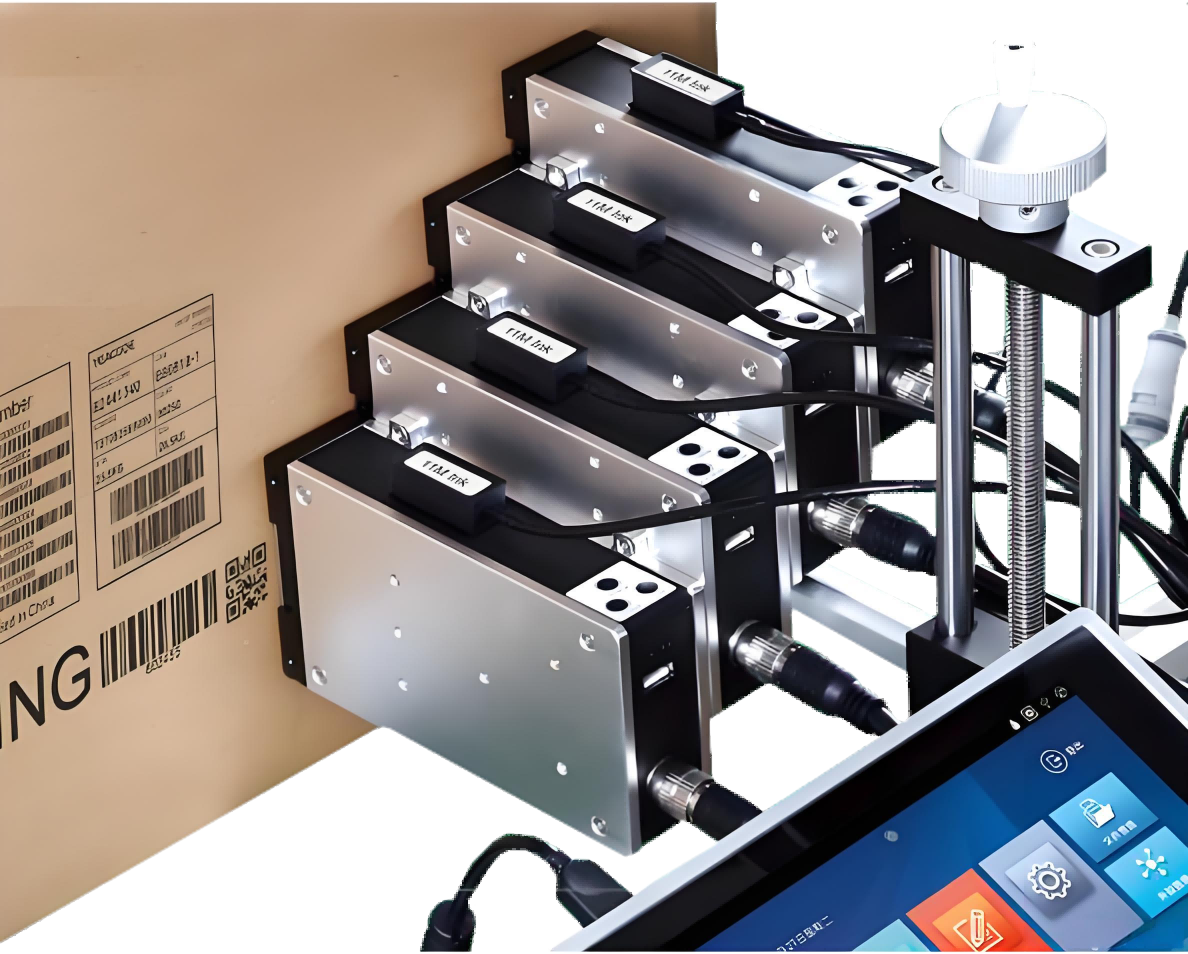
Traditional printing setups often grind to a halt for routine maintenance, but modern inkjet technology has flipped that script. Instead of lengthy manual cleaning cycles, these systems use automated self-cleaning printheads that purge and wipe during natural pauses in production. The result is a seamless rhythm where upkeep happens in the background, barely interrupting the workflow. It’s the kind of quiet efficiency that keeps operators focused on output rather than troubleshooting.
Another overlooked advantage lies in real-time nozzle monitoring. Each printhead continuously checks for clogs or misfiring and can instantly compensate by rerouting ink through adjacent nozzles. This on-the-fly correction means a single faulty jet won’t force a full stop; the machine simply adjusts and keeps running until a scheduled service window. It’s a shift from reactive panic to proactive poise, dramatically cutting unexpected idle time.
Finally, the modular design of these systems allows for hot-swapping components without shutting down the entire press. Ink tanks, dampers, and even entire printhead arrays can be replaced mid-run, so a quick swap avoids cascading delays. Pair that with predictive alerts that flag wear items before they fail, and you get a production line that practically schedules its own maintenance around your deadlines, not the other way around.
From Traceability to Branding: Multifaceted Uses
Traceability has evolved into a cornerstone of modern supply chain transparency, enabling consumers to scan a product's QR code and instantly access its journey from raw material to store shelf. This digital footprint not only builds trust but also allows companies to verify sustainability claims, making it harder for greenwashing to go unnoticed. When integrated seamlessly, traceability transforms from a back-end necessity into a front-facing narrative that shapes how a brand is perceived.
Beyond logistics, these traceability features become powerful branding tools. A fashion label, for example, can highlight the exact Italian mill that wove its fabrics, turning a simple garment into a story of craftsmanship. Similarly, a coffee brand might share farm-gate images and farmer profiles, forging an emotional connection that no traditional ad campaign can replicate. This layer of authenticity differentiates the brand in crowded markets, where consumers increasingly reward openness with loyalty.
The multifaceted nature of this technology also opens doors to interactive customer experiences and community building. Some brands create loyalty programs tied to scanned products, unlocking exclusive content or rewards. Others invite customers to trace the environmental impact of their purchase, turning data into a shared value system. In this way, traceability stops being a mere feature—it becomes an ongoing dialogue between the brand and its audience, deepening engagement at every touchpoint.
Cost-Effective Upgrades for Legacy Equipment
Not every upgrade requires investing in brand-new machinery. Often, the most impactful improvements come from strategically refreshing existing systems. Something as simple as swapping out outdated control interfaces for modern, intuitive panels can drastically reduce operator errors and training time. It’s about targeting the bottlenecks that slow down production without demanding a complete line overhaul. By focusing on modular swaps, facilities can extend the functional life of their legacy equipment while gradually aligning it with current technological standards.
Another often overlooked area is the power and energy management side. Retrofitting older motors with variable frequency drives (VFDs) or integrating smart sensors to monitor consumption can translate into immediate utility savings. These enhancements don't just cut costs; they provide real-time data that was previously invisible, enabling predictive maintenance and preventing costly unscheduled downtime. The key is to identify which components are draining resources or failing most frequently, and address those first with targeted, affordable solutions that offer a fast return on investment.
Eco-Friendly Inks and Sustainable Practices
Switching to eco-conscious inks isn't just a trend—it's a quiet revolution in how we approach printing and packaging. Soy and vegetable-based alternatives have stepped up as genuine replacements for petroleum-derived formulas, offering cleaner degradation without sacrificing color intensity. They seep into substrates more naturally, and when it's time to recycle, they detach with less chemical fuss. It's a small pivot in material choice that ripples outward into waste reduction and cleaner recycling loops.
Sustainability extends far beyond the ink itself. Progressive operations are auditing their entire workflow—capturing and reusing solvents, leaning on water-based cleanup systems instead of harsh chemicals, and sourcing papers from mills that prioritize closed-loop water cycles. Some printers even run their presses off renewable energy. It's this holistic mindset that transforms a single eco-friendly material into a genuinely restorative production model.
Designers play a crucial role, too. By opting for layouts that use less ink coverage without compromising impact—think strategic whitespace and halftones—they cut down on waste before a job even hits the press. Pair that with responsible disposal guidance for clients, and what emerges is a full-circle practice where every stage respects the planet. The beauty of it is that these methods often align with cost savings, proving that mindful decisions can be both ethical and economically sharp.
The Next Wave: Smart Integration and IoT
The convergence of smart integration and IoT is quietly reshaping how environments around us respond in real time. Rather than isolated gadgets, we now see systems that learn from each other—lighting that adjusts not just to occupancy but to natural daylight shifts, or climate controls that anticipate weather changes without manual input. This isn’t about adding more screens or apps; it’s about embedding intelligence into the fabric of everyday spaces, where the technology fades into the background and simply works.
What makes this wave different is the shift from reactive to proactive orchestration. Sensors, edge computing, and cross-device protocols allow buildings, factories, and even cities to make decentralized decisions. For example, a manufacturing line can reroute production based on real-time supply chain data, or a retail space can subtly alter ambiance based on customer flow patterns. The real breakthrough isn’t just connectivity—it’s context, where devices interpret situations rather than just execute commands.
The long-term value lies in how these integrated systems chip away at resource waste and operational friction. When energy, water, and logistics are managed through a mesh of small, intelligent adjustments, the cumulative effect is profound. We’re moving beyond the novelty of “smart” labels toward genuinely adaptive environments that prioritize efficiency and user well-being in ways that feel intuitive, not intrusive.
FAQ
By integrating advanced printhead technology and real-time data processing, these companies help manufacturers slash changeover times and eliminate bottlenecks, so lines keep moving without interruption.
Instead of relying on pre-printed labels or mechanical stamping, they deliver high-resolution, on-demand coding directly onto products, which cuts inventory costs and reduces material waste significantly.
It prints scannable barcodes, QR codes, and batch numbers with microscopic precision, making every component trackable from raw material to end user, which strengthens recall readiness and quality control.
The process uses solvent-free, UV-curable inks and eliminates consumables like ribbons and labels, drastically reducing landfill waste and energy use compared to traditional methods.
Absolutely—many systems now run at line speeds exceeding 300 meters per minute while maintaining crisp text and machine-readable codes, thanks to intelligent ink management and on-the-fly nozzle cleaning.
Robust software allows for centralized control across multiple lines, automated code changes for different product variants, and instant error detection, enabling lights-out operation and minimizing manual oversight.
Thermal and piezoelectric platforms offer faster drying times, better edge definition on porous surfaces, and lower maintenance requirements, boosting overall equipment effectiveness on the factory floor.
They design modular systems with upgradeable firmware, support for GS1-recommended serialization, and compatibility with cloud-based verification to easily adapt to new regulations and customer mandates.
Conclusion
Modern production environments demand tools that blend speed with accuracy, and digital inkjet marking systems are rising to that challenge. These systems embed precision directly into high‑speed lines, printing crisp codes, graphics, and variable data on virtually any surface without slowing throughput. By eliminating mechanical contact and cumbersome changeovers, they slash downtime—operators can switch jobs in moments rather than minutes, keeping lines running smoothly. That same agility opens the door to multifaceted uses: a single machine might apply a batch code for traceability in the morning, then shift to vibrant branding logos or regulatory labels later in the day, all while maintaining consistent quality. Manufacturers are finding that this versatility consolidates equipment and simplifies workflow, turning what was once a bottleneck into a streamlined, value‑added process.
Beyond the production floor, digital inkjet technology is proving to be a smart investment for companies modernizing legacy assets. Retrofitting older conveyors or packaging machines with compact, intuitive print heads costs a fraction of a full replacement, yet delivers immediate gains in readability and reliability. At the same time, the shift to eco‑friendly inks—water‑based and low‑VOC—addresses sustainability goals without compromising performance, reducing waste and eliminating hazardous solvent handling. Looking ahead, the integration of IoT capabilities is transforming these markers into intelligent nodes on the factory network. Real‑time monitoring, predictive maintenance alerts, and seamless data exchange with ERP systems mean that a simple code on a carton now carries a digital thread from production to supply chain, enabling deeper insights and more responsive operations. This convergence of affordability, green chemistry, and smart connectivity is quietly reshaping what's possible in everyday manufacturing.
Contact Us
Contact Person: Jacky
Email: [email protected]
Tel/WhatsApp: 086 15000607053
Website: https://www.danmajet.com