

Known Sheet Metal: Your Ultimate Guide to Master the Craft
2026-06-14
Metal shaping isn't just a trade—it's a creative journey. From crisp bends to seamless joins, sheet metal work fuses precision with imagination. This guide draws on insider knowledge and TPS expertise to help you turn flat stock into functional art, whether you're refining your skills or starting fresh.
Bending Without Breaking: The Subtle Science of Metal Memory
Imagine a paper clip that always springs back to its original shape, no matter how you twist it. That’s the quiet magic of shape memory alloys—metals that remember their form. Unlike ordinary steel, which stays bent if you push it too far, these materials can undergo extreme deformation and yet, with a bit of heat, return to a pre-set shape. It’s not sorcery but a dance of crystal structures at the atomic level, where a reversible martensitic transformation lets the metal flip between two rigid states without permanent damage. The real subtlety lies in how this “memory” is trained into the metal through thermal cycling, almost like teaching an old wire new tricks.
What makes this bend-without-breaking behavior so captivating is its defiance of everyday intuition. We’re used to materials that fatigue and fail—bend a spoon too many times, and it snaps. But shape memory alloys, like nitinol, operate on a different principle: stress-induced phase changes absorb the energy that would normally create dislocations and cracks. Instead of accumulating damage, the metal’s crystal lattice shears in a way that’s fully recoverable. It’s a bit like having a floor that rearranges its tiles when you jump on it, then puts them back once you step off. That’s why these alloys can endure millions of cycles with barely a hint of wear, making them perfect for stents that flex with every heartbeat or eyeglass frames that survive a trample unscathed.
Behind this resilience is a delicate balance of metallurgy and thermodynamics. The secret ingredient isn’t just the composition—though tweaking the nickel-titanium ratio matters—but the precise control of transition temperatures. Too low, and the memory effect vanishes; too high, and you need a furnace to trigger it. In practice, engineers tailor these temperatures to match the environment, so a medical device snaps back at body temperature, while an actuator in a jet engine waits for much hotter conditions. It’s a field where slight adjustments in heat treatment yield dramatic changes in performance, turning a brittle intermetallic into a superelastic marvel. The result is a material that doesn’t just endure—it practically thrives under strain, quietly bending without breaking, over and over again.
Hammers, Dollies, and the Gentle Persuasion of Steel
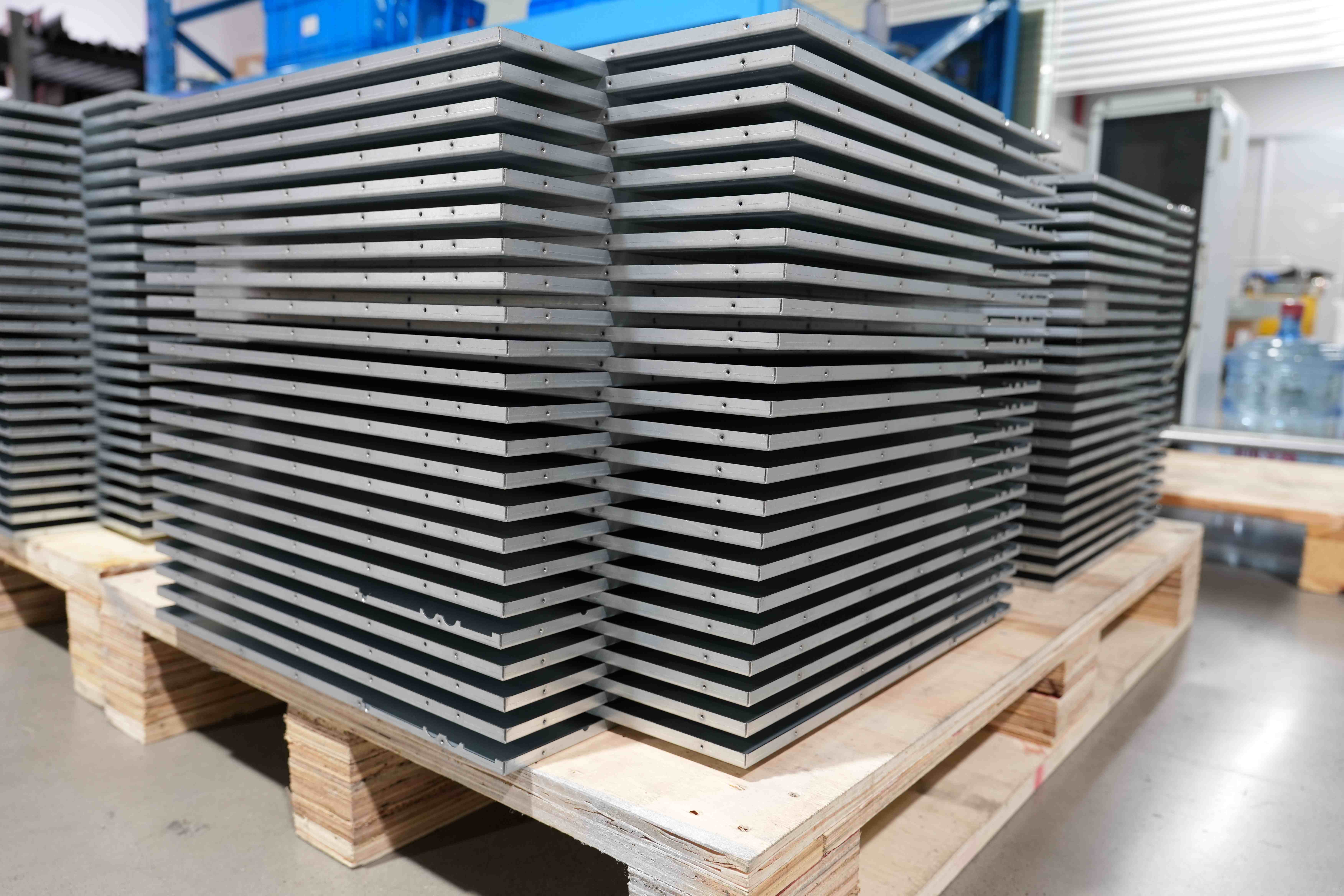
There's a quiet rhythm to shaping metal by hand—an unhurried dance between force and finesse. The hammer swings not to bludgeon, but to whisper creases into existence, each strike a careful question posed to the steel. Behind the panel, a dolly waits, curved and dense, catching the blow's energy and redirecting it. Together they negotiate, millimeter by millimeter, the stubborn refusal of a flat sheet to become something more.
It’s easy to mistake this for brute work. Yet watch a seasoned panel beater, and you'll see an almost surgical precision. The hammer face might kiss the metal flat, then tilt just so, nudging a low spot upward without stretching the surrounding area. The dolly, held against the back side, isn't a passive anvil—it’s an active partner. Shift its weight, alter the pressure, and the same hammer stroke creates a completely different effect. The steel remembers every touch; it yields not to power, but to patience.
The real art lies in knowing when to stop. Overworking a panel is like over-explaining a joke—the life goes out of it. The goal isn't to erase every trace of the process, but to leave the surface fair and true, with a tension that holds its shape. In that delicate balance, the hammer and dolly become instruments of persuasion, convincing a rigid material to flow and curve without ever losing its soul.
From Flat to Form: Designing Projects That Defy the Sheet
Most architectural thinking begins with lines on a page—neat rectangles, sharp corners, a world flattened into two dimensions. But the real challenge kicks in when you have to pull those drawings into three-dimensional space, coaxing surfaces into volumes that actually breathe and hold weight. Moving from flat to form isn’t just about translating plans; it’s about questioning why we default to the sheet in the first place. A wall doesn’t have to be a line, a roof doesn’t end at the eave, and a floor can ripple upward into seating or landscape. Once you treat the drawing as a temporary crutch rather than a final script, the design starts to defy the very paper it was born on.
Think of a simple pavilion structure: on paper, it’s a grid of columns and a flat roof plane. But in the hands of someone pushing past the sheet, that roof might warp to channel rainwater into a sculptural basin, the columns might twist to guide movement, and the floor might slope so subtly that you only notice your body leaning into the space. These moves aren’t decorative flourishes—they’re honest responses to gravity, light, and human posture that no 2D view can fully capture. The trick is to stay loose during early sketches, letting the design mutate as you mock it up in clay, folded paper, or quick digital volumes. The moment you treat a sketch as sacred, you’re already trapped by the sheet.
To truly break free, you have to build a feedback loop between abstraction and reality. Start messy, with a rough idea of massing, then distort it—pull a corner, pinch a surface, let a form slump as if physics had a say. Test it physically; a small chipboard model can teach you more about shadow and proportion than a dozen polished renderings. Finally, circle back to the drawing to document, not dictate. When the built thing tells the flat diagram what to do, you’ve achieved something rare: a design that remembers its origins in the sheet but no longer answers to it.
The Hidden Dance of Heat: Annealing and Work-Hardening Unlocked
Picture a blacksmith rhythmically hammering a glowing piece of metal. With each strike, the surface hardens, growing stubborn and resistant—a phenomenon known as work-hardening. Inside the metal, a chaotic ballet unfolds: dislocations tangle and pile up, blocking each other’s movement like dancers stumbling into a traffic jam. This internal struggle makes the metal stronger but also more brittle, setting the stage for an invisible transformation.
Now, let that same metal rest in the gentle embrace of a furnace, slowly heating and then cooling. This is annealing—the secret reset button. As the heat seeps in, the tangled dislocations begin to wiggle free, rearranging themselves into orderly patterns. It’s as if a conductor has stepped onto the stage, granting the tired dancers a moment of calm. The metal softens, regaining its ductility, ready to be shaped anew without cracking under pressure.
The true magic lies in the push and pull between these two processes. Too much hammering without annealing, and the metal will snap in protest. Too much annealing, and you lose the strength you so carefully built. Mastering this hidden dance is what turns raw ore into precision gears, resilient springs, and the delicate parts that keep our world ticking—all without ever seeing the quiet battle being waged within.
Rivets, Seams, and Silent Joinery: Connecting Pieces Without Fanfare
In a world obsessed with bold statements and visible fastenings, it's easy to overlook the quiet elegance of a rivet, a seam, or a well-fitted joint. These are the connectors that don't demand attention; they simply hold things together with a kind of quiet integrity. A rivet doesn't boast about its strength—it just sits there, a small metal pockmark on a bridge or a pair of jeans, doing its job decade after decade. A seam isn't meant to be decorative (though it can be); its primary task is to bring two edges into alignment and keep them there, through stress and tension and wear. And a silent joinery—like a dovetail or a mortise and tenon—requires no glue, no nails, just the precise interlocking of wood, a testament to the maker's patience and skill.
There's a lesson here for how we build nearly everything, from furniture to relationships. The most enduring connections aren't the ones that scream for recognition; they're the ones that disappear into the background, letting the whole become greater than its parts. Think of the hidden brackets inside a cabinet, the invisible zipper on a dress, the welds in a steel frame that you'll never see once the building is complete. This silent joinery doesn't lack ambition—it simply channels that ambition into cohesion rather than display. It's an art form that values integration over exhibition, and in doing so, creates things that last not because they're flashy, but because they're solid.
Perhaps we could all use a bit more of this philosophy: connecting pieces without fanfare. In an age of constant self-promotion, there's something radical about making things that don't announce themselves. A rivet doesn't need a logo; a seam doesn't come with a user manual. They just work, and they remind us that sometimes the most important bonds are the ones you feel without ever seeing.
Patina Alchemy: Coloring Metal With Fire, Chemistry, and Time
There’s a quiet magic in watching bare metal bloom with unexpected hues—not from paint, but from the elements themselves. Fire, in particular, can coax a titanium or steel surface into shifting rainbows, each shade tied to a precise temperature. It’s a dance of heat and oxidation, where a torch becomes a brush and the metal a canvas that never lies.
Chemistry pushes the palette further. A copper sheet left to breathe in a sealed jar of ammonia and salt will slowly sprout a crystalline blue-green crust that feels both alien and ancient. Liquids, gels, even household items like vinegar and sawdust can etch patterns and deep patinas that no two attempts ever quite repeat. The unpredictability is the point—each piece carries the fingerprint of the precise conditions it endured.
Time, the most patient alchemist, doesn’t just age metal—it layers it with character. A bronze sculpture outdoors might take years to settle into a velvety dark brown, while a buried iron plate returns pocked and rust-streaked, telling a story of the soil it slept in. Combining these three forces—fire’s immediacy, chemistry’s controlled chaos, and time’s slow whisper—turns a simple metalworker into something closer to a collaborator with nature.
FAQ
Sheet metal is simply metal that's been formed into thin, flat pieces. Its versatility comes from how easily it can be cut, bent, and shaped without losing its structural integrity. From auto bodies to decorative art, it strikes a balance between durability and workability that few other materials can match.
Early metalworkers hammered raw ore into sheets for armor and utensils. The Industrial Revolution brought rolling mills that could produce uniform thickness at scale. Today, CNC lasers and water jets let us achieve precision that would've been unthinkable centuries ago, yet many hand-forming techniques remain unchanged.
Start with a good pair of tin snips, a ball-peen hammer, a sturdy bench vise, and a set of files. A basic brake for clean bends and a few sandbags for shaping will take you far. Don't overlook safety gear—gloves that allow dexterity and reliable eye protection are non-negotiable.
Cutting is usually done with shears, plasma torches, or saws. For shaping, hammering over forms, wheeling with an English wheel, and planishing are staples. Bending can be as simple as clamping between boards and using a mallet, or as precise as a press brake. Each method leaves a unique finish, so experiment to find your style.
Sharp edges are the obvious hazard—deburr every cut immediately. Beyond that, always support large sheets to prevent whipping, and be mindful of heat when welding or grinding. Ventilation matters, especially with galvanized steel, which releases toxic fumes. A pair of sturdy leather gloves might save you from a nasty slice.
A simple tool tray teaches basic folding and riveting. Candle holders or small decorative boxes let you practice precise cutting and joining. If you're up for a challenge, a miniature shield or a set of custom brackets introduces curves and planishing without overwhelming you.
Aluminum is lightweight and corrosion-resistant, ideal for outdoor pieces. Cold-rolled steel is easy to weld and holds a finish well. Copper's workability makes it perfect for artistic projects, though it's pricier. Think about weight, strength, rust potential, and whether you'll be welding or soldering before committing.
Once you've mastered the basics, try repoussé and chasing for detailed relief work. Gas welding lets you fuse thin panels with controlled heat. Incorporating patinas or anodizing can transform a piece's appearance entirely. The real leap comes from designing with assembly in mind—making joints hidden and seams flawless.
Conclusion
Known Sheet Metal: Your Ultimate Guide to Master the Craft demystifies the nuanced world of metalworking, where rigidity meets malleability. It begins with the counterintuitive wisdom that metal can be bent without fracturing, exploring the "memory" that allows it to spring back or hold form. The book explores the essential tools—hammers and dollies—and the delicate finesse required to coax steel into submission, treating each blow as a dialogue rather than a battle. Readers will learn how flat sheets transform into complex three-dimensional projects through strategic design, overcoming the material's stubborn flatness. This journey is illuminated by a deep understanding of heat: the hidden dance of annealing that softens work-hardened metal, granting it a second life for further shaping.
Beyond forming, the guide teaches the quiet art of assembly. Rivets and seams become silent joinery, connecting pieces without the glare of modern fasteners, celebrating structural honesty. The final chapter reveals patina alchemy, where fire, chemicals, and time collaborate to paint metal surfaces with rich, organic hues—turning corrosion into an aesthetic ally. Throughout, the book balances scientific insight with hands-on practice, making it a valuable resource for anyone seeking to master the craft of sheet metal.
Contact Us
Contact Person: Lily
Email: [email protected]
Tel/WhatsApp: +49 (0) 2161 49526-0
Website: https://tps-elektronik.com/en/