

Stainless Steel Hex Socket Cap Screw Manufacturer Guide for Smart Sourcing
2026-09-24
Sourcing stainless steel hex socket cap screws shouldn’t feel like a gamble. Yet too many buyers learn the hard way that a low price often hides inconsistent threads, weak heads, or rust-prone material. Whether you’re replacing a failing supplier or scaling up production, the right manufacturer changes everything. Wanluo has spent years refining exactly what that looks like—from raw material traceability to torque-tested finishes. Before you send another RFQ, let’s break down the smart way to evaluate your options without falling for the usual traps.
The job of the screw comes before the part number
Chasing a part number before understanding what the screw actually has to do is a common trap. The number is only a label; it says nothing about how the fastener behaves when it's buried in an assembly, fighting vibration, thermal cycling, or shear loads. Once the job is clear—what's being clamped, how often it moves, what materials are involved—the part number almost picks itself from a much shorter list.
A screw that holds a light cover in place and a screw that locks a bracket against constant vibration may look nearly identical in a catalog. But their performance splits quickly under real conditions. Thread engagement, head style, coating, and even the tolerance on the shank all respond to the demands of the job, not to the digits in a database. Ignoring that order leads to parts that fit the drawing but fail in the field.
Treat the part number as the final step, not the starting point. Define the load, the environment, the access for installation, and the expected service life first. Then let those requirements filter the options. What remains is a part number you can trust, because it was chosen by the work it has to do rather than by habit or convenience.
Not all 304 is the 304 your last batch used
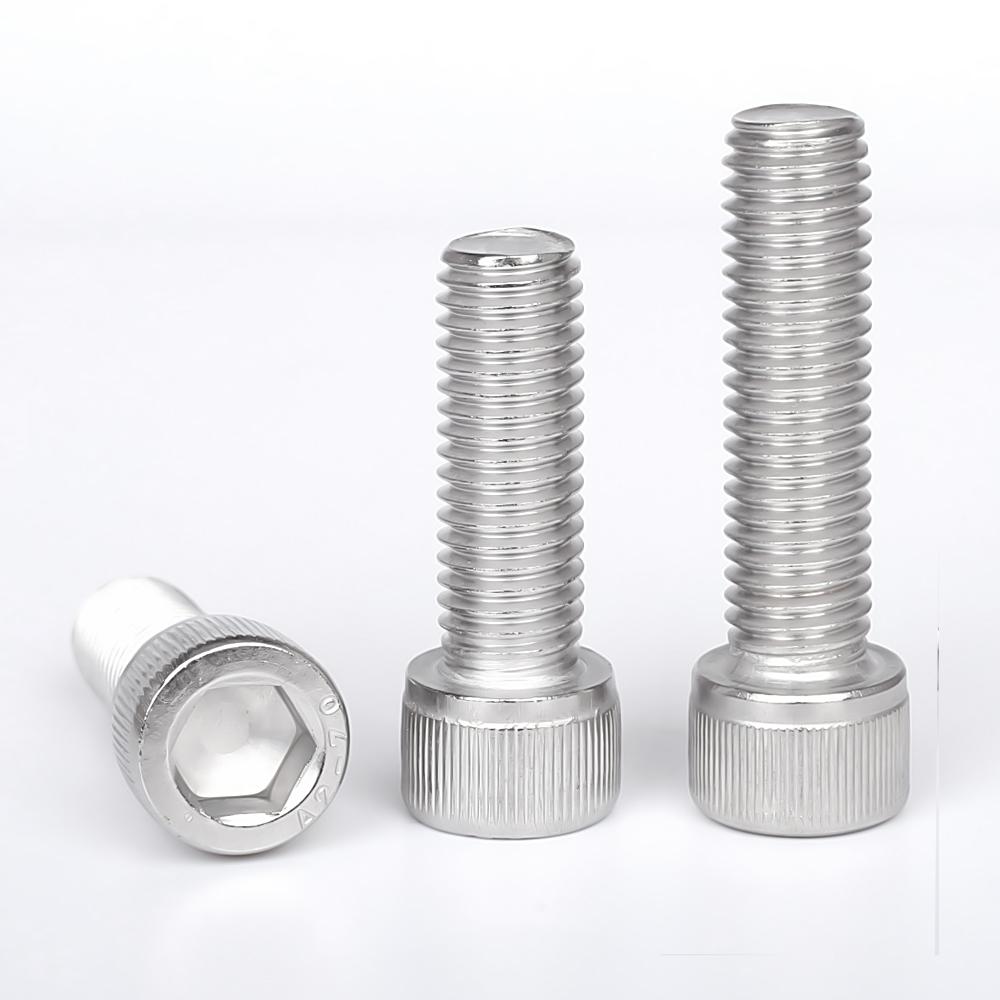
A material spec that says “304” is not a guarantee that every coil, bar, or sheet will behave exactly like the one you ran last month. The UNS designation allows for a range in nickel and chromium content, and mills often aim for the lower end to keep costs down. That means your new batch might have a slightly different work-hardening rate or a duller response to pickling, even though it still meets the textbook chemistry. If your process was tuned to the upper end of the range, you’ll feel the difference in bend radius, springback, or weld puddle fluidity before the cert ever shows it.
Then there’s the matter of residual elements and surface condition. Two heats of 304 can vary in sulfur, copper, or molybdenum content—well within spec, but enough to change how the material cuts or polishes. One batch might have come from a mill that uses a bright anneal, while the next has a standard 2B finish with a slightly heavier oxide layer. Neither is defective; they’re just not interchangeable without adjusting your parameters. The takeaway is simple: treat every new batch as its own animal, even if the name on the sticker hasn’t changed.
Follow the wire back to the melt shop
Tracing the path of a finished wire coil often leads past rolling mills, cooling beds, and coiling stations, but the real story starts much earlier. Follow the wire back through the drawing and annealing steps, and you eventually reach the melt shop, where scrap and alloys are transformed under intense heat. That journey isn't just a physical route; it's a map of every decision that shaped the final product's strength, surface, and consistency.
In the melt shop, chemistry is everything. The furnace operators adjust carbon, manganese, and trace elements based on what the downstream wire will need to endure. A slight shift in temperature or pouring speed can ripple through the entire process, showing up later as a hard spot or a surface defect. By the time the wire is coiled and shipped, it carries the signature of that molten beginning, even if most buyers never think about it.
Walking the line backward also reveals where waste and energy hide. A melt shop that runs too hot or holds the ladle too long burns through power and shortens refractory life. When you follow the wire back and question each stage, you often find that improving the final product means first fixing the heat, the slag control, or the timing at the very start. It's a reminder that no downstream polish can fully correct a poor melt.
Check the hex socket before you check the box
Most people open the toolbox and give it a quick glance, maybe checking that the lid closes properly. The hex socket, though? It's often left untouched until the moment you need it. That's a mistake. A worn or slightly oversized hex socket will slip under torque, rounding off the fastener head before you even realize something's wrong.
Put this into practice with any assembly job. If you're putting together flat-pack furniture or working on a bicycle, that little hex socket is doing the real work. Check its edges for shine or deformation, test it on a spare bolt if you have one. Ten seconds of inspection now can save you from a stripped screw and a trip to the hardware store later.
There's a broader lesson here too. We tend to judge things by their container, by the box, while ignoring the tool that actually gets the job done. Whether in the workshop or in daily decisions, paying attention to the working part first saves you from discovering the failure only after everything else looks fine.
Your lead time is set by someone else's line shutdown
When your supplier's production line goes down, every scheduled delivery on your board quietly slips. You don't get a warning email until the morning the parts were supposed to ship. That's the moment your lead time stops being a number you promised your customer and becomes a hostage to someone else's maintenance crew, shift scheduling, or raw material shortage.
The frustrating part is that your own manufacturing floor might be fully staffed and ready. You've cleared space, sequenced jobs, maybe even pre-printed labels. But none of that moves a single unit if a component two tiers upstream is stuck behind a machine that won't restart until Tuesday. You can't negotiate with a broken hydraulic press.
This is why experienced buyers build buffer inventory around the most fragile nodes in their chain. They map which suppliers have single points of failure, then stock extra for exactly those parts—even if it ties up cash. Because the real cost isn't the extra inventory. It's the phone call where you explain to your customer that their order is delayed because a factory you've never visited had a power outage last Thursday.
Incoming inspection that a new hire can run on day one
Instead of shadowing someone for weeks, a new hire should be able to pick up a one-page incoming inspection checklist and start checking the first shipment. The key is designing the process around yes/no questions and physical references, not tribal knowledge. For example, compare the supplier label against the purchase order, confirm the part number matches the box, check for obvious carton damage, and sign off. If any answer is no, the parts go to the quarantine shelf. That's it.
We keep a laminated photo guide at the receiving bench showing common defects—crushed corners, torn bags, illegible date codes, wrong finish. The new person doesn't need to know what the part does or how it's made. They just match what they see to the photo and mark the form. Because the acceptance criteria are visual and the tolerance is binary, there's no judgment call left to a beginner. This means day-one staff can actually protect the line from bad material, not just push paperwork.
FAQ
Ask for material traceability beyond a generic certificate. Request heat numbers, actual dimensional inspection reports, and samples from the same batch you would receive. A manufacturer that hesitates to share raw material sourcing details or testing data is often hiding inconsistencies.
Look at the raw material source, not just the grade label. Reputable suppliers use steel from known mills and can provide chemical composition reports. Also request salt spray test results for corrosion resistance. Cheap 304 sometimes behaves like 201 in challenging environments, so verify rather than assume.
304 works for general indoor or mild outdoor use. 316 offers better resistance to chlorides and marine conditions. For extreme chemical exposure or seawater, consider 904L or duplex grades. Always match the grade to the specific environment, including temperature and chemical concentration, instead of defaulting to 316 for everything.
Watch for mixed material lots, inconsistent surface finish, vague markings on packaging, and reluctance to provide samples from production stock. Another warning sign is a price that seems far below market without a clear explanation, such as overstock or simplification of the supply chain.
Focus on total cost rather than unit price. Discuss batch sizes, delivery schedules, and whether the manufacturer can hold inventory or offer consignment. Ask about tooling life and scrap rates. A supplier that understands your production rhythm may offer better terms than one that simply discounts the fastener price.
Ask for a material certificate with heat numbers, hardness test results, dimensional inspection reports, and salt spray or corrosion test data if the application requires it. Also request batch traceability so any field failure can be linked back to a specific production lot.
Cold heading is generally preferred over turning because it preserves grain flow and improves strength. Rolled threads are stronger than cut threads. Check that the socket depth is consistent and the drive does not strip easily. Proper passivation after cleaning also matters for corrosion resistance.
Use a combination of inexpensive checks and third-party verification. A magnet can give a quick clue, though some stainless grades are slightly magnetic. Handheld XRF analyzers confirm alloy composition on the spot. For critical applications, send samples to an independent lab and audit the manufacturer's process rather than relying on paperwork alone.
Conclusion
Smart sourcing of stainless steel hex socket cap screws starts well before you compare quotes. The first question is not which part number is cheapest, but what the fastener actually has to survive in use—clamping force, temperature swings, corrosion exposure, or assembly torque. A screw spec that works fine in a dry indoor bracket can fail quickly in a washdown line, so the application has to drive the grade and dimensions, not the other way around. Even staying within a familiar grade like 304 offers false comfort, because 304 is a family, not a single recipe. Two heats of A2 stainless can differ enough in work hardening, thread finish, and corrosion resistance to affect installation on your line. That is why serious buyers follow the wire back to the melt shop, asking for heat numbers, mill certificates, and the actual chemical composition rather than trusting a generic datasheet.
Once the material story is clear, the physical details separate useful suppliers from box movers. If the hex socket is shallow, off-center, or slightly oversized, your operators will slow down and your scrap rate will climb before the first pallet is finished. Checking the socket geometry—not just the carton label—has to become a standard gate. The same applies to lead time logic: your promised delivery date is not controlled by the manufacturer's sales team but by their wire drawing schedule, heading capacity, and whether a plating line at a subcontractor has shut down for maintenance. A good source will tell you which outside step is the bottleneck and how they buffer it. Finally, incoming inspection does not need a metrology lab. A new hire with a go/no-go thread gauge, a socket plug gauge, a magnet, and a simple nitric acid spot test can catch most bad lots on day one, which is exactly what smart sourcing should aim for.
Contact Us
Contact Person: Shane
Email: [email protected]
Tel/WhatsApp: 8613357785029
Website: https://www.wanluohardware.com