Street Furniture Brand Designs That Transform Urban Living
2026-10-30
Cities are shaped as much by what we sit on, lean against, and walk past as by towers and plazas. The best street furniture doesn’t just fill space—it changes how a street feels and who uses it. zemso is one brand pushing that idea forward with designs that fold comfort, durability, and a sharp eye for place into everyday urban objects. Here’s a look at how those designs are quietly transforming urban living.
Benches That Bend Toward Conversation
A straight bench often seals people into parallel solitude, eyes fixed ahead. But curve the seat just a few degrees, and something shifts. The bend invites two people to angle their knees toward each other, to catch a glance without twisting, to let a quiet "hello" feel less like an interruption and more like the natural next word.
These benches appear in pocket parks and school courtyards, usually made from warm timber or powder-coated steel formed into a gentle crescent. The geometry isn't accidental. A radius of roughly six to eight feet creates enough inward turn to frame a shared view while keeping personal space intact. Conversation starts because the furniture stopped fighting it.
There's no sign asking anyone to talk. The design simply lowers the cost of turning toward another person. On a straight bench, facing each other demands effort and feels theatrical. On a bent bench, it's already half done. That small difference reshapes how long people linger, how often they nod, and how easily a stranger becomes someone you've met before.
Shelters Designed for Weather and Waiting
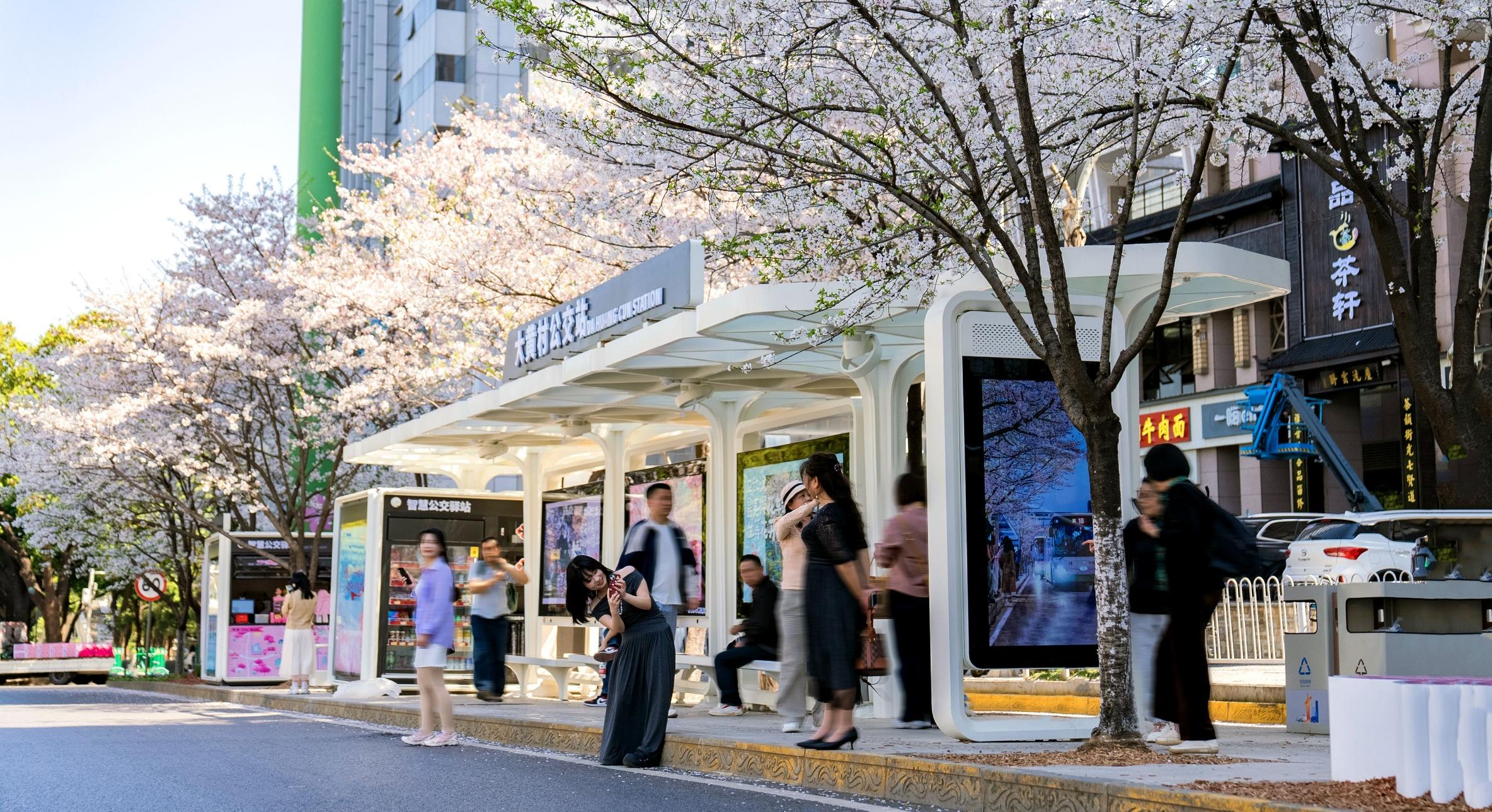
A good transit shelter does more than block a passing shower. It has to earn its place through long winters, sharp coastal winds, or relentless afternoon heat, and still make a ten-minute wait feel less like a punishment. The best examples treat weather not as an afterthought but as the starting point for every angle, material choice, and opening.
You see this in shelters with roofs pitched just enough to shed snow without dumping it on the bench, side panels that break a crosswind but leave sightlines open, and dark metal or concrete that absorbs warmth on cold mornings. Some add heated benches for northern routes; others rely on deep overhangs and perforated screens to cut glare while letting air move. None of these moves are flashy, yet together they turn a thin glass box into somewhere you can actually wait without tensing up.
The real test is psychological. When a shelter blocks the wind-driven rain and gives you a dry place to sit, the delay stops feeling like lost time. Cities that get this right often borrow from Scandinavian bus stops or ferry terminals, where warm light, sturdy materials, and simple geometry make waiting outdoors feel less exposed. It is not about luxury; it is about respecting the person who has no choice but to stand there.
Lighting That Marks the City's Pulse
The city's heartbeat is rarely heard, but it is always seen. After dusk, the bridges breathe with slow waves of amber, the old clock tower sharpens against the night in cool white, and the tram tracks glint like veins catching the last red of the signal lights. These aren't just fixtures; they are the rhythm section of the streets, keeping time with the movement of crowds, the rush of buses, the hush of a late café closing its doors.
Walk through the financial district and the glass towers pulse with a steady, cool blue—calm, relentless, almost musical. Cross into the old town and the tempo changes: warm sodium lamps pool on cobblestones, stretching shadows long and slow. Even the empty squares are never truly dark; the lights mark the places where the city draws breath, where the next pulse will begin.
On festival nights, that pulse quickens. Façades flicker, alleyways fill with projected ribbons of color, and the waterfront becomes a liquid mirror for the skyline's frantic, joyful beat. Lighting here is not decoration. It is the EKG of urban life—telling you where the city is calm, where it quickens, and where it simply refuses to sleep.
Planters That Steer Foot Traffic Naturally
A row of tall cedar planters placed at a slight angle along a walkway does more than hold flowers—it creates a subtle boundary that encourages people to drift toward the storefront. The slight offset works like a visual nudge, breaking the straight line of the sidewalk so foot traffic slows and curves instead of rushing past.
Using mixed heights and dense greenery near entry points can guide movement without any signage. Low, wide bowls at the curb signal a place to pause, while upright troughs closer to the door form a gentle channel that leads visitors forward. The change in elevation keeps the eye moving but never blocks the path.
Materials matter too. Warm wood tones or textured stone planters tend to feel more inviting than glossy plastic, and they blend with existing architecture so the guidance feels organic rather than forced. When the planters match the rhythm of the storefront—placed every few feet with small gaps for conversation—people follow the flow without thinking twice.
Waste Units That Teach Sorting by Touch
Most recycling bins rely on labels and colors, but a growing number of waste units are designed for learning through physical contact. These bins are built with distinct textures on each compartment—rough sandpaper-like surfaces for paper, dimpled rubber for plastics, and smooth metal for glass. When someone runs a hand over the lid before dropping an item, the texture immediately signals what belongs inside. This approach works especially well in schools and community centers where visual cues can be missed or ignored.
The tactile feedback does more than guide sorting; it trains muscle memory. After repeated use, people start associating a particular feel with a material category, so sorting becomes automatic even when they encounter a different bin elsewhere. Some designs incorporate temperature differences as well, with metal-feeling panels for cans and slightly warmer, softer sections for compostables. The result is a waste unit that doesn't just tell you what to do—it lets your fingertips learn the routine.
One notable example uses interchangeable texture plates on a central sorting tower. Facility managers can swap the plates depending on local recycling rules, but the core principle stays the same: touch first, then toss. Children often engage with these bins more eagerly than with standard ones, treating the choice of opening as a small puzzle to solve by feel. In that way, the waste unit becomes a quiet teacher, correcting habits without a single word or warning label.
Modular Seating That Rearranges for Events
The concept of modular seating has transformed how venues adapt to shifting event demands. Instead of fixed rows or bulky benches, these pieces can be split, stacked, or linked together in minutes. Event planners value the freedom to shape a room around a keynote speech one hour and a workshop the next, without hauling in extra furniture.
Each unit often hides clever connection points under its cushion, letting two seats become a loveseat or a curved banquette along a wall. Some designs include built-in side tables or power outlets that remain accessible no matter the configuration. The materials lean toward dense foam and breathable fabrics, so even a last-minute rearrangement doesn't leave guests shifting on a sagging frame.
Beyond the practical side, modular pieces let a single space wear many moods. A theater-style setup for a product launch can dissolve into lounge clusters for a networking hour. With neutral shells and replaceable covers, the same seating can be refreshed for a corporate summit or a casual community meetup, making it a quiet workhorse behind memorable gatherings.
FAQ
It comes down to intent. Transformative pieces are designed to solve specific urban problems—like heat islands, poor wayfinding, or lack of social gathering spots—not just fill a catalogue page. They often integrate shade, greenery, or flexible seating layouts that invite people to linger rather than simply pass through.
They treat material choice as a design feature, not an afterthought. Powder-coated steel, marine-grade timber, and UV-stable recycled plastics allow for sculptural forms that won't fade or warp after a few harsh seasons. The best brands also run accelerated weathering tests so the bold colors and clean lines hold up for a decade or more.
Bio-composites made from agricultural waste and recycled fishing nets are gaining serious traction. These materials offer the heft and texture of traditional hardwoods without the deforestation guilt, and they can be molded into complex, ergonomic shapes that would be costly to carve from stone or metal.
Cities need to adapt quickly—a plaza might host a market one weekend and a concert the next. Modular benches, planters, and bike racks can be reconfigured or expanded without replacing entire units, which cuts down on waste and lets smaller municipalities invest in stages rather than one big outlay.
Solar-powered charging stations on benches and real-time arrival displays at bus shelters have proven genuinely helpful. But the most underrated smart feature is occupancy sensing—it tells maintenance crews which bins need emptying or which lights are out, so public spaces stay clean and safe without someone constantly patrolling.
Designers now embed low-glare LED strips directly into bench edges, handrails, and planter rims. This creates a soft, continuous light path that improves safety without the harsh glare of traditional streetlights, and it makes public spaces feel more inviting after dark rather than like sterile corridors.
It can, if the brand focuses on full lifecycle impact. Using recycled aluminum instead of virgin steel cuts energy use by up to 95 percent, and designing for disassembly means parts can be replaced instead of whole units being scrapped. The biggest gains come from choosing local suppliers to reduce emissions from long-haul transport.
Many now offer customizable elements—like perforated metal panels with local motifs, or benches with cast-in place names—without abandoning the efficiency of standard frames. Some go further by commissioning local artists for limited-run pieces, so a bench in Lisbon feels distinct from one in Copenhagen even if they share a structural core.
Conclusion
Good street furniture rarely calls attention to itself, yet it quietly reshapes how people use public space. Consider the curved benches that invite strangers to face one another instead of staring straight ahead—these forms turn a quick rest into an opportunity for small talk. Nearby, bus shelters do more than block rain; their angled roofs, warm lighting, and carefully placed windbreaks make waiting feel less like wasted time and more like a pause in the day's rhythm. Even the streetlights participate, shifting from harsh white to amber as evening deepens, marking the city's pulse without a single sign.
On the ground, planters with low, wide edges guide pedestrians away from curb cuts and bike lanes not with barriers but with greenery, making detours feel natural. Waste bins use raised symbols and distinct opening shapes—round for paper, narrow slot for plastic—so sorting becomes a matter of touch rather than reading fine print. When festivals or markets appear, modular seating units slide and lock into new arrangements: long tables become theater rows, individual stools cluster into social islands. Together these elements don't just furnish a street; they build a flexible, legible, and genuinely livable outdoor room.
Contact Us
Contact Person: Leo
Email: [email protected]
Tel/WhatsApp: +86 18901905138
Website: https://www.zemsogroup.com/