

Thermal Printable Wristband Company: Streamlining Event Access and Patient Identification
2026-06-18
Picture a packed festival entrance or a bustling hospital ward—every second counts. Fumbling with paper tickets or misread patient charts can cause chaos. That’s where BAOBI steps in, transforming chaos into seamless flow with thermal printable wristbands that marry speed and clarity. Whether it’s scanning a wristband for instant event access or verifying patient details at a glance, this isn’t just about printing—it’s about redefining identification. So, what makes these wristbands the unsung heroes behind the scenes? Let’s dive in.
Why Event Organizers Are Switching to Thermal Printable Wristbands
Event organizers are increasingly drawn to thermal printable wristbands because they simplify on-site operations in ways traditional methods can't match. With direct thermal printing, there's no need for ink, toner, or ribbons—just load the wristbands into a compact printer and produce crisp, custom credentials in seconds. This eliminates the pre-event stress of ordering pre-printed bands with fixed designs, allowing last-minute changes to logos, barcodes, or attendee tiers without waste or delay. For festivals, conferences, and multi-session venues, the ability to print on demand means smoother check-in flows and far less clutter at registration tables.
Beyond logistical ease, these wristbands offer a level of durability and aesthetic precision that boosts brand visibility while withstanding real-world wear. The thermal coating bonds directly to synthetic materials like Tyvek or polypropylene, resulting in smudge-proof, water-resistant text and graphics that stay legible through sweat, rain, or poolside use. Organizers can incorporate sequential numbering, QR codes, or vibrant patterns that remain sharp under UV light, giving each band a professional finish that stands out in photos and social media—without the fading or peeling associated with ink-jet alternatives. It’s a low-maintenance way to merge practicality with a polished attendee experience.
The shift also reflects a growing demand for data-driven event management. Thermal wristbands can be encoded with unique identifiers that integrate seamlessly with access control systems, cashless payments, and lead retrieval tools. Real-time printing allows organizers to encode variable data—like session access levels or emergency contact details—right at the point of distribution, reducing errors and personalizing each attendee’s journey. When every second counts at a gate or checkpoint, the speed and adaptability of thermal printing become a quiet competitive advantage that doesn’t lock planners into bulk orders or rigid templates.
How On-Demand Wristband Printing Eliminates Registration Bottlenecks
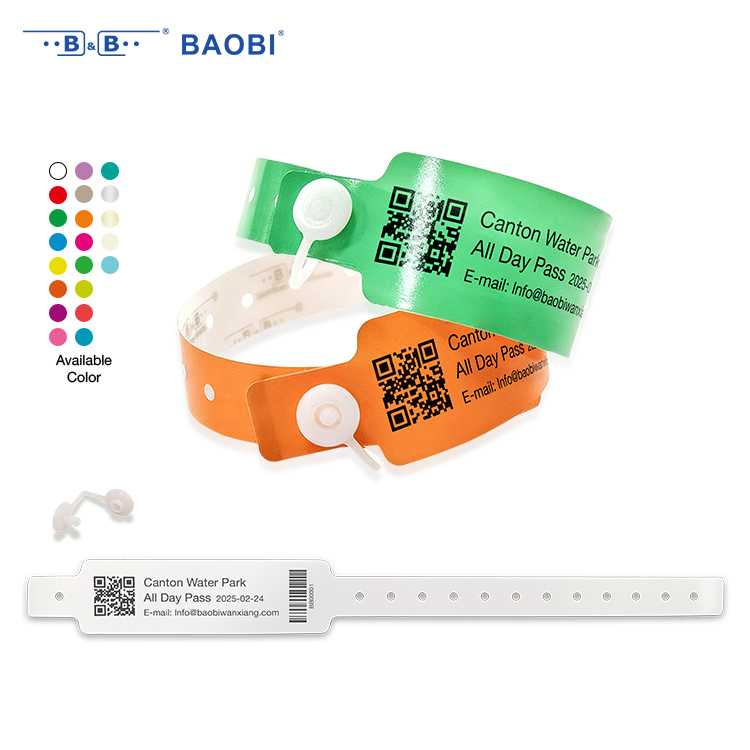
Traditional event registration often grinds to a halt when staff manually search for pre-printed wristbands or fumble with spreadsheets. On-demand printing flips this script: attendees simply provide their name or scan a QR code, and a custom wristband prints in seconds. This eliminates the chaotic pile-ups that frustrate guests and exhaust volunteers, turning a potential choke point into a fluid, welcoming moment.
The real magic happens as the line keeps moving. Instead of pre-sorting thousands of wristbands by type, date, or access level, each one is generated at the moment of check-in. This means staff never run out of a specific variant or waste time handing out the wrong band. It also allows for dynamic adjustments—upgrade a ticket on the fly and the wristband instantly reflects the change, without any back-and-forth.
Beyond speed, the process feels intuitive to modern attendees who expect instant, personalized service. There’s no awkward searching through boxes or apologizing for delays. The smooth rhythm builds early momentum for the event, setting a tone of efficiency and care that carries through the entire experience.
Boosting Patient Safety with Clear, Instant Wristband Identification
In fast-paced clinical environments, every second counts—but so does accuracy. A simple, scannable wristband transforms patient identification from a manual, error-prone process into an instant digital handshake. Nurses can verify a patient’s identity in one smooth motion, pulling up the correct electronic health record, medication list, or blood transfusion order without typing or cross-referencing paper charts. This instant clarity dramatically reduces the risk of “wrong patient” incidents, which continue to be a leading cause of preventable harm in hospitals worldwide.
Beyond the point-of-care scan, clear wristband identification creates a safety net that follows the patient everywhere—from the operating table to the radiology suite. Barcode or RFID tags ensure that even when a patient is sedated, nonverbal, or confused, their identity is never in doubt. This continuity closes dangerous communication gaps during handoffs, transports, and emergencies, effectively shielding patients from mislabeling, duplicate records, and near-miss events.
Implementing a reliable wristband system also empowers frontline staff to work more confidently. When identification is unambiguous and instantaneous, clinicians spend less mental energy double-checking details and more energy on direct patient care. The result isn’t just a safer hospital—it’s a calmer, more efficient one where safety becomes a natural byproduct of smart design, not an extra step.
A Single Wristband Solution for Multi-Day Festivals and Conferences
The modular design allows for effortless integration of access rights, cashless payments, and real-time crowd analytics. Instead of juggling multiple badges or tickets, attendees simply tap in and out of zones, purchase refreshments, or unlock exclusive experiences. The wristband's encrypted chip ensures data stays secure while keeping transactions instantaneous, even in areas with spotty connectivity. On the backend, organizers gain a live dashboard of footfall patterns and spending trends, all without relying on intrusive surveillance methods.
Durability is often overlooked in event accessories, but these wristbands are engineered to withstand sweat, rain, and the occasional slam during a mosh pit. The clasp mechanism keeps them snug without irritating the skin, while the material itself feels more like a premium accessory than a tech gadget. Attendees can forget they're wearing a data hub, and that's exactly the point. For conferences, the understated aesthetic avoids clashing with business attire, making it suitable for both keynote sessions and evening galas.
Post-event logistics become a breeze: wristbands can be re-collected and reset for the next gathering, cutting down on waste. The absence of paper tickets and plastic tokens reduces environmental impact, aligning with the growing demand for sustainable event practices. Meanwhile, the captured anonymized data feeds into predictive models that help organizers fine-tune future layouts, F&B offerings, and session schedules. It's a closed loop that benefits everyone, from the first check-in to the final encore.
Reducing Waste and Cost with Eco-Friendly Thermal Printing
Switching to eco-friendly thermal printing isn’t just about saving trees—it’s a direct path to slashing operational costs. Traditional printing setups guzzle ink cartridges and toners, which pile up in landfills and drain budgets with constant replacements. Modern thermal printers sidestep that entirely by using heat-activated paper, eliminating the need for single-use consumables. This shift can cut supply spending by up to 30% while keeping your workspace free from cartridge clutter and maintenance headaches.
What often gets overlooked is how much waste comes from misprints and label overruns. Eco-thermal printers, paired with smart software, print only what’s needed with precise, durable output—no more tearing off extra sheets or redoing smudged labels. That accuracy reduces paper waste and the hidden expense of rework, which can quietly eat into profits. Plus, many eco-thermal papers are now phenol-free and recyclable, so you’re not just cutting volume—you’re switching to materials that break down responsibly, without the toxic leftovers of older processes.
Beyond the hardware, the real momentum comes from integrating this into daily workflows. For instance, on-demand printing for logistics tags or retail price stickers removes the habit of batching large runs that become obsolete. Teams that embrace lean printing patterns often discover they can renegotiate vendor contracts, lower storage needs for supplies, and streamline inventory tracking—turning a hardware upgrade into a systems-wide cost advantage. The result is a quieter, cleaner operation that registers on both the balance sheet and the sustainability report.
Real-World Stories: From Emergency Rooms to Music Venues
It was 3:17 a.m. when the ambulance bay doors burst open, and a gurney carrying an unresponsive elderly man rolled in. His lips had taken on that unmistakable blue tint—the silent alarm of oxygen deprivation. A nurse sprinted alongside, one hand steadying a portable oxygen cylinder, its regulator hissing as she twisted the flowmeter. They didn’t need to speak; the choreography was ingrained. In the trauma room, the respiratory therapist swapped out the portable for a wall-mounted flowmeter connected to the central oxygen supply, a network of high-pressure cylinders hidden in the hospital basement. Those steel tanks, painted green and marked with hazard diamonds, were the quiet backbone of every code blue. By the time the man’s monitor beeped back to a steady rhythm, the cylinder had already done its job—invisible, uneventful, essential.
A thousand miles away, under a canopy of stage lights, a different kind of cylinder waited for its cue. The bassist stomped his pedal, and a thick plume of CO2 shot upward, catching purple and gold beams before cascading over the first row of screaming fans. It wasn’t just a visual effect; it was a carefully timed release from a tank that, minutes earlier, had been inspected by a stagehand with a flashlight and a spray bottle of soapy water, checking for the slightest leak. In that sweaty, pulsing venue, the gas wasn’t about saving lives—it was about creating a moment, a shared shiver as the cold fog rolled over bare arms. Backstage, leaning against a road case, the cylinder sat alongside the pyro cues and the drummer’s spare snare, a workhorse of spectacle that nobody in the crowd would ever think to trace back to the pressurized containers that also fill hospital manifolds, welding shops, and even the tanks nestled in the belly of a fishing boat to keep the catch fresh.
FAQ
Unlike traditional pre-printed options, these use heat-sensitive materials that let you print custom designs, visitor details, or barcodes on-demand with any direct thermal printer. That means no ink, no ribbons, and instant setup for last-minute changes.
Staff can scan a printed barcode or QR code to verify tickets in a split second, cutting entry queues by up to 70%. Because each band is unique and printed on the spot, it’s nearly impossible to duplicate, which helps prevent gatecrashing.
Hospitals print patient wristbands at admission with name, date of birth, and a scannable ID that integrates with electronic health records. This reduces medication errors and speeds up lab sample tracking, even when patients are transferred between wards.
Absolutely. Our thermal wristbands support full-color logos, variable data, barcodes, and even photos. You can design them using standard label software, and the print quality stays crisp even on narrow bands.
They’re built to last. The synthetic material resists water, sweat, and sunscreen, and the tamper-proof adhesive holds tight through swimming, showers, or a marathon. We’ve had users wear them for over a week without peeling.
You’ll get best results with a direct thermal printer, but our wristbands are compatible with most office printers too. For high-volume events, we offer industrial-grade models that churn out 10 bands per minute.
Yes—our latest line uses a latex-free, hypoallergenic face stock that’s gentle on sensitive skin, and we’re shifting toward recyclable topcoats. The adhesive is medical-grade, so it won’t cause irritation even with prolonged wear.
Conclusion
Thermal Printable Wristband Company has quietly reshaped how events manage crowds and how hospitals keep patients safe. Event organizers have been ditching traditional ticketing for thermal printable wristbands because they cut through the chaos at entry points. Instead of fumbling with paper tickets or scanning apps that lag, guests get a durable, waterproof wristband printed right at check-in. That on-demand printing is a game changer—no more pre-printed batches that limit last-minute changes or cause registration bottlenecks when a volunteer can’t find the right envelope. Staff simply pull up the attendee’s info, hit print, and within seconds a custom wristband is secured on the wrist. For multi-day festivals and conferences, a single wristband becomes an all-access pass, eliminating the hassle of daily re-verification and making it obvious who belongs where. Attendees love the hands-free convenience, and organizers gain real-time visibility into attendance without adding extra staff.
In healthcare, that same technology is boosting patient safety by generating clear, instant identification. Nurses scan a barcode and print a wristband right at the bedside, drastically reducing the risk of misidentification that plagues busy ERs. The bands withstand showers, sanitizers, and constant movement, keeping critical details legible for the entire stay. Meanwhile, the eco-friendly side of thermal printing surprises many: no ink cartridges, no ribbons, just recyclable materials and far less waste than laminated badges. One children’s hospital shared how they cut their wristband waste by half while preventing a near-miss medication error caught by a barcode scan. From a mud-soaked music venue where 30,000 wristbands held strong all weekend to a Level 1 trauma center using them to track blood samples, the real-world impact proves that a simple band can streamline operations and protect lives.
Contact Us
Contact Person: Bill Xu
Email: [email protected]
Tel/WhatsApp: 8618688898707
Website: https://www.baobitech.com/