

Top 10 Concentration Meter Options for Accurate Measurements
2026-11-01
Finding a reliable concentration meter can feel like searching for a needle in a haystack—too many options, too few trustworthy specs. Whether you're fine-tuning a lab process or checking consistency on the production floor, even a small measurement error can ripple into costly mistakes. That's why we've put together this list of the top 10 instruments that actually deliver the precision they promise. From portable field units to lab-grade analyzers, we've focused on real-world performance, not just glossy datasheets. And while you're comparing your options, keep an eye out for Sinou—a brand that's been quietly building a reputation for accuracy without the hype. Dive in to see which meters make the cut, and why the right choice can be simpler than you think.
Meter Types That Actually Behave Differently
Most discussions of poetic meter treat the labels—iambic, trochaic, anapestic, dactylic—as dry classifications. But read a few lines aloud and the differences stop being academic. An iambic line, with its rising da-DUM pattern, pulls the voice forward in a way that feels almost conversational, which is why so much English narrative and blank verse settles into it. Trochaic meter, on the other hand, starts on the stress and lands hard; it gives even short lines a chant-like, decisive quality that's hard to ignore.
The real behavioral shift comes when you compare the rolling meters. Anapestic meter—two unstressed syllables then a stress—builds momentum like a wave gathering speed, and it works brilliantly for comic verse or urgent action because the line seems to accelerate as you speak it. Dactylic meter does the opposite: the stressed syllable arrives first, then falls away, creating a downward, often elegiac rhythm that feels heavier and more deliberate. These aren't just metrical labels; they're different ways of breathing while reading.
What makes a meter type actually behave differently is how it interacts with line length and syntax. A trochaic tetrameter line in a ballad feels nothing like the same foot in a longer, more conversational poem. The same goes for iambic pentameter: in Shakespeare's hands it flexes, pauses, and breaks, but in a strict sonnet it can feel almost ceremonial. Pay attention to where the stresses land, and you'll hear the poem's body language change from line to line.
The Drift Problem No One Mentions Until It's Too Late
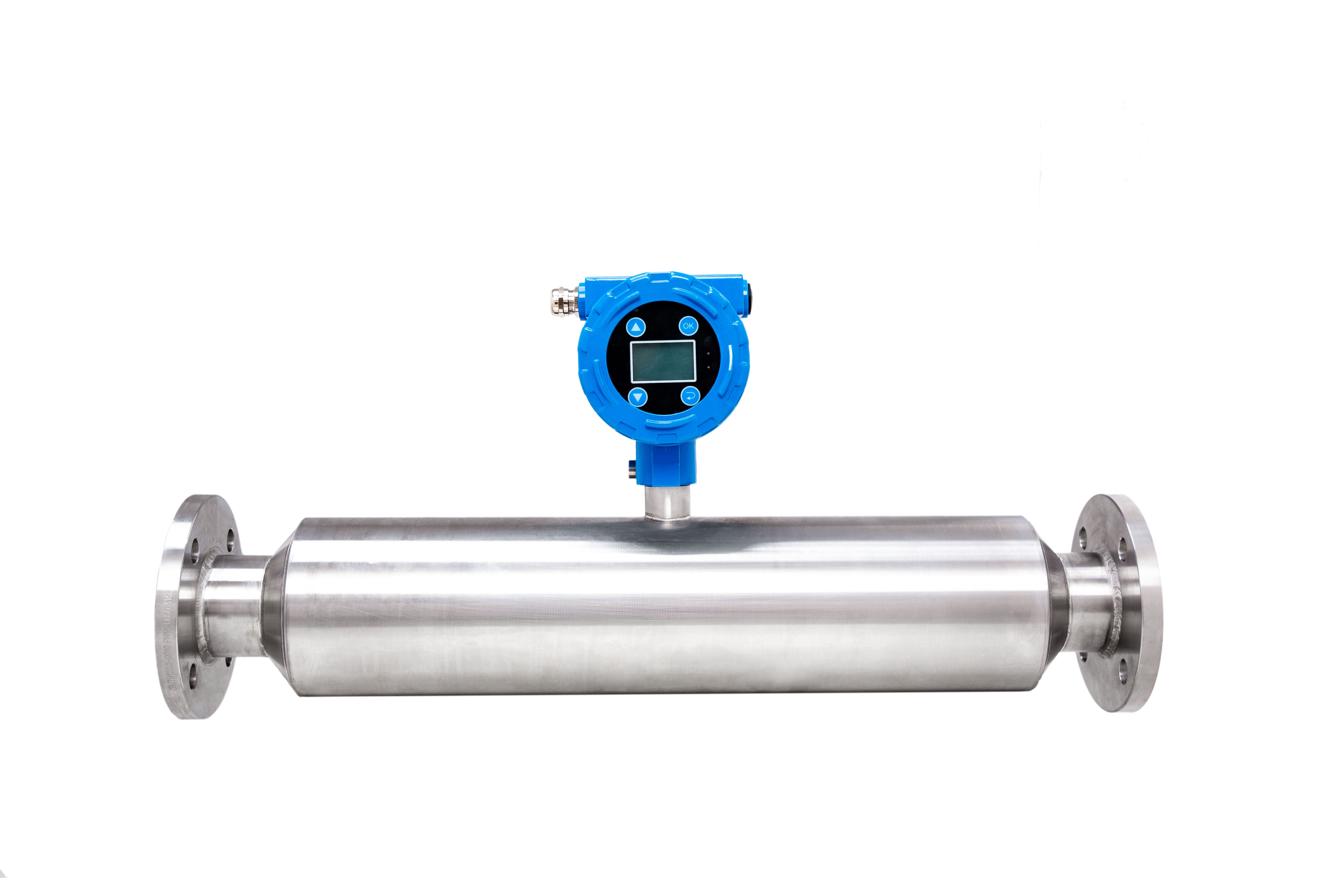
Most failures don't announce themselves with a crash. They start as a tiny shift in priorities—a missed weekly review, a "just this once" exception, a deadline quietly pushed back. Each decision feels harmless on its own, but together they form a current that slowly moves you off course. The real problem isn't a lack of ambition; it's that the drift happens in millimeters, not miles.
By the time you notice, the gap between where you are and where you intended to be looks like a canyon. You can't point to a single moment of bad judgment, so you may not even try to correct it. The project that began with a clear vision now serves three unrelated goals. The relationship that once had energy now runs on autopilot. Drift doesn't leave a trail of broken parts—it just replaces your original direction with a comfortable routine.
What makes drift so dangerous is that it feels like progress while it's happening. You're still busy, still responding to requests, still checking things off a list. But if you pause long enough to compare today's activities with the reason you started, you'll see the distance. The only fix is a deliberate, recurring check against your original intent—before the shoreline becomes unfamiliar enough to require a full reset.
Calibration Routines That Don't Require a Lab
Calibration often gets treated as a lab-only ritual, but plenty of routines can run in the field or on the bench with little more than a stable surface and a bit of patience. For sensors and handheld meters, a quick check against a trusted reference standard—a dry-block calibrator, a known weight, or even a certified reference material—can bring readings back in line without hauling gear into a controlled environment.
Some instruments carry built-in references or diagnostic routines that perform electronic zero and span adjustments on demand. For example, pressure transmitters often support button-initiated zero trim while open to atmosphere, and many pH meters accept one-point or two-point buffer calibration at the sample temperature. The trick is to let the device and its surroundings settle long enough for thermal drift to fade, then compare against a reference value that has itself been verified recently.
What matters more than the location is consistency. Recording ambient temperature, humidity, and the reference's last calibration date turns an informal routine into a defensible one. Swapping out worn adapters or cleaning contact surfaces before starting also prevents small mechanical offsets from masquerading as instrument error.
When Spending More Money Buys You Nothing
The idea that a higher price tag automatically means better quality falls apart the moment you look at what you're actually getting. A ten-dollar bottle of water might come in a nicer container, but it hydrates you exactly the same as the one from the tap. Marketers know that people often use price as a shortcut for value, and they exploit that by adding superficial features that cost pennies while jacking up the price. What you end up paying for is the story, the packaging, or the status symbol, not a functional improvement.
This becomes especially clear with subscription services and software. You can pay for the premium tier only to discover that the extra features are things you will never touch. The base plan already does the job, yet the upsell makes you feel like you are missing out. The truth is that many upgrades are designed to create a sense of incompleteness rather than to solve a real problem. Before spending more, ask what tangible difference the extra money will make. If the answer is vague, you are probably buying nothing but a feeling.
Temperature's Quiet Effect on Every Single Reading
Most people never think about the thermometer's mood until a summer afternoon throws off a set of measurements that looked flawless in the morning. A resistance bridge that was balanced at 21°C drifts noticeably by 30°C, and suddenly the data starts telling a story that has nothing to do with the sample. It's the kind of quiet drift that doesn't announce itself, only shows up later as a suspicious outlier or a baseline that refuses to sit still.
What makes temperature so sneaky is that it rarely acts alone. It changes the stiffness of sensor diaphragms, nudges the dielectric constant of cable insulation, and even shifts the reference junction inside a thermocouple reader. A ten-degree swing might only move a pressure transducer by a fraction of a percent, but when that fraction lands on every single channel at once, the whole dataset bends in the same direction. The error becomes coherent, which is far harder to spot than random noise.
The practical fix isn't just buying a more expensive sensor or hiding the equipment in a climate-controlled box. It starts with logging ambient temperature alongside each reading, then mapping how a given instrument responds over the full range it'll actually see. Once you have that curve, you can subtract the thermal fingerprint instead of pretending it isn't there.
A 30-Second Sanity Check Before You Record Data
Before you hit record on a new dataset, pause and ask yourself three quick questions. Is the sensor actually measuring what you think it is? A loose cable or a mislabeled channel can quietly ruin hours of work. Is the signal stable right now, or are you catching a warm-up drift? And does the value on screen match your physical intuition—like room temperature being around 22°C, not 220°C? These checks take less than half a minute but save you from discovering a wiring fault at 3 a.m.
Make this a ritual, not a hassle. Keep a printed sticky note near your data logger with the three reminders: unit sanity, connection check, zero-baseline glance. If anything feels off, don't tweak the code or adjust the gain to force a "reasonable" number. Step back, wiggle the connector, restart the readout. You'll train your gut to catch anomalies early—something that no post-processing script can ever recover once bad data is mixed with good.
Experienced researchers often learn this the hard way after losing a full weekend to a faulty thermocouple. Don't be that person. A short, boring sanity check now means you can trust every row in your spreadsheet later. In the end, clean data is less about expensive equipment and more about the discipline to stop, look, and verify before the first sample rolls in.
FAQ
For lab use, accuracy and repeatability are non-negotiable. Check the measurement range against your typical samples, and make sure the sensor type fits the chemical you're working with — optical meters are great for transparent liquids, while conductivity-based ones handle ionic solutions better. Calibration options matter too, especially if you'll be switching between sample types.
They can be, but you need to pay attention to temperature compensation and battery stability. Many portable units now include automatic temperature correction and rugged housings, which helps a lot. Just be prepared to calibrate more often if you're moving between different environments.
Optical meters usually give you a direct readout of refractive index or Brix, while digital refractometers convert that signal into a concentration value based on preloaded scales. The digital ones are easier to read and often more precise, but optical ones can be simpler and cheaper if you don't need a lot of features.
Regular cleaning of the measurement surface or probe is key, especially if you're working with sticky or corrosive samples. Store the meter in a dry place, avoid dropping it, and recalibrate with standard solutions at least once a month — or more often if you use it daily.
Some models have wide dynamic ranges, but no single meter covers every possible concentration. Check the manufacturer's specified range and linearity. For extreme ends, you might need separate meters or a unit with interchangeable sensors.
Skipping calibration is the big one. Also, measuring samples that are too hot or too cold without letting the meter and sample reach room temperature can throw off readings. Not cleaning the sensor between samples causes cross-contamination too.
Yes, many modern meters have Bluetooth or USB connectivity. This is handy for tracking trends, generating reports, or sharing data with a team. Just confirm the app or software is compatible with your operating system before buying.
It varies widely. Basic handheld refractometers can be under $50, while high-end lab-grade meters with multiple scales and data logging can run over $1,000. For most routine work, $150–$400 gets you a solid instrument with good accuracy.
Conclusion
Choosing a concentration meter isn't just about picking the most expensive option or the one with the flashiest display. The first thing to recognize is that different measuring principles—refractive index, conductivity, ultrasonic, density—each behave in distinct ways depending on the sample, and a meter that works beautifully for sugar syrup may fall apart with saltwater or solvents. Drift is another silent killer: many units hold calibration for weeks in the lab, then wander after a few field cycles, and you won't notice until your readings have been quietly off for days. Temperature is equally sneaky; even with built-in compensation, a sensor that hasn't fully equilibrated to the sample will produce numbers that look stable but aren't true. Rather than trusting the spec sheet, you need to understand how the sensing mechanism interacts with your specific process conditions.
Calibration doesn't have to mean shipping the instrument back to a service center. A set of traceable standard solutions and a consistent routine—done at the same temperature and flow conditions as your actual measurements—can keep most meters honest without any lab access. At the same time, spending more money rarely fixes a fundamental mismatch: a $3,000 meter with automatic sample handling won't outperform a simpler model if both use the same underlying sensor and you only measure clean water. Before you record any data, run a quick 30-second sanity check: wipe the sensor, confirm the sample is homogeneous, glance at the temperature reading, and take one known standard. That small habit filters out the majority of errors that otherwise end up baked into your logs. The best concentration meter isn't a single device; it's the one you understand well enough to know when it's lying to you.
Contact Us
Contact Person: HaiYan
Email: [email protected]
Tel/WhatsApp: +86 18957325588
Website: https://www.senyoubeton.com/