

Top Distillation Equipment for High-Purity Separation and Efficiency
2026-05-06
Distillation technology remains the backbone of high-purity separation across countless industries, yet not all equipment delivers the same level of precision and efficiency. Whether you're scaling up in pharmaceuticals, refining petrochemicals, or pushing the limits of solvent recovery, the right system can redefine your output. At DYE, we understand that peak performance comes from a blend of innovative design and meticulous engineering. This guide explores the top distillation solutions that consistently raise the bar for separation purity and energy savings—keeping you ahead in a competitive landscape.
Precision Distillation Systems for Ultra-Pure Solvents
Achieving solvents with impurity levels in the parts-per-billion range demands more than just off-the-shelf distillation hardware. Precision distillation systems for ultra-pure solvents are purpose-built to handle the exacting requirements of high-sensitivity applications, where even the faintest trace of metal ions or organic residues can compromise results. These systems often incorporate multi-stage fractionation, carefully engineered column internals, and advanced reflux control to isolate target solvent fractions with unprecedented purity. The difference lies in the meticulous attention to vapor-liquid equilibrium management — a slow, deliberate process that separates close-boiling contaminants without degrading the solvent itself.
Material compatibility is equally critical. Every surface the solvent touches — from the reboiler to the condenser and transfer lines — must resist corrosion and prevent leaching. For this reason, high-end units frequently use borosilicate glass, PTFE, or electropolished stainless steel, and may operate under an inert gas blanket to exclude moisture and atmospheric gases. Automation features, such as adaptive temperature ramp profiles and continuous in-line purity monitoring, allow operators to dial in separation parameters that a fixed recipe could never match. This real-time feedback loop turns what was once a skill-intensive craft into a reproducible, documented process.
In sectors like semiconductor fabrication, pharmaceutical research, and trace analysis, the payoff is immediate. A precision distillation unit can reliably deliver acetonitrile, hexane, or tetrahydrofuran with consistently low background noise, reducing the need for preparative chromatography or secondary purification steps. By treating solvent production not as a bulk operation but as a fine chemical synthesis in its own right, these systems support workflows where data integrity and product safety hinge on the cleanliness of every milliliter used.
Modular Distillation Units That Scale with Your Process
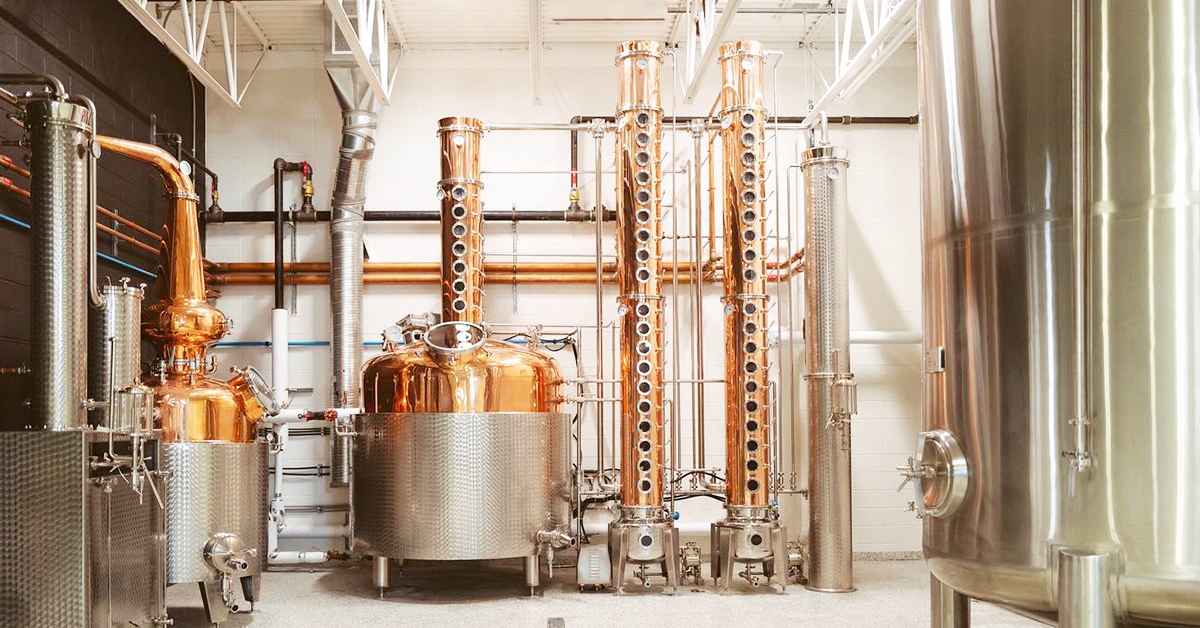
As your production needs evolve, rigid, oversized systems become a costly bottleneck. Our approach lets you add or reconfigure distillation modules without disrupting existing operations, gracefully handling everything from pilot batches to full-scale runs. Capacity grows with you, not ahead of you, keeping capital outlay aligned with actual throughput.
Each module operates as a self-contained unit with its own control architecture, yet seamlessly integrates into the broader process network. This plug-and-play style reduces engineering overhead and shortens installation timelines. Need a different separation spec? Swap in a specialized module instead of overhauling the entire line.
Beyond simple expansion, the architecture encourages process optimization. You can test new configurations on a single module before rolling them out plant-wide, turning your facility into a living laboratory. It’s a practical way to future-proof operations without betting on one fixed design.
Innovative Column Internals for Higher Throughput
Modern separation processes face relentless pressure to deliver more product without expanding plant footprints. The answer often lies beneath the surface—in the column internals that govern mass transfer and hydraulics. Traditional trays and random packing can become bottlenecks when throughput climbs, suffering from excessive pressure drop, flooding, or poor liquid distribution. Forward-thinking designs now incorporate angled baffles, dual-flow trays, and high-capacity structured packing that reshape flow paths to minimize resistance. By carefully managing the interplay between vapor and liquid, these internals unlock substantial capacity gains while actually reducing energy consumption per unit of output.
One standout approach involves fixed valve trays with venturi-shaped openings that accelerate vapor without sacrificing weeping stability. Combined with truncated downcomers that reclaim active area, columns routinely achieve 30–50% more throughput from the same vessel diameter. On the packed-bed side, corrugated sheets with textured surfaces and perforations create a balance of surface renewal and lower liquid hold-up, preventing flooding at high rates. Even liquid distributors have evolved: narrow trough designs with drip-tube calibration ensure uniform irrigation across wide turndown ranges. For revamp projects, replacing internals alone can debottleneck entire trains, sometimes paying back within months through avoided capital outlay.
Energy-Saving Distillation Technology for Cost-Conscious Labs
Labs running frequent distillations often see energy bills climb quietly in the background. A shift to vacuum-assisted setups can dramatically lower boiling points, cutting heating demands by nearly half compared to traditional methods. It's a straightforward change that pays for itself within months, not years.
Insulating columns and preheating feed streams with waste heat are two more practical moves that fly under the radar. These adjustments keep thermal energy where it belongs—inside the process—instead of bleeding into the lab environment. The result is a tighter, more predictable distillation cycle that doesn't keep the hoods working overtime.
For smaller institutions, the smartest savings often come from rethinking scale and scheduling. Consolidating batches to avoid frequent start-stop sequences and running at optimal capacity reduces per-unit energy use without any capital spend. Pair that with simple timers or basic automation to shut things down overnight, and the cumulative savings start to reshape the lab's operating budget.
Robust Short Path Distillation for Heat-Sensitive Compounds
Short path distillation offers a gentle separation technique ideally suited for heat-sensitive compounds that tend to degrade under prolonged thermal stress. By operating at reduced pressures, the boiling points of target substances are significantly lowered, allowing evaporation to occur well below their normal degradation thresholds. The short distance between the evaporating surface and the condenser—often just a few centimeters—minimizes the exposure time of the compound to high temperatures, preserving molecular integrity. This setup proves invaluable for purifying natural extracts, pharmaceutical intermediates, and delicate aromatics, where even minor thermal decomposition can compromise purity, potency, or sensory profile.
A robust implementation of this method requires careful control over critical process parameters: vacuum level, feed rate, and evaporator temperature must be precisely balanced to maintain a stable thin film on the heated surface. Thin-film or wiped-film variants of short path distillation further enhance efficiency by continuously renewing the liquid film, preventing hot spots and ensuring uniform heat transfer. The robustness of the system is often reflected in its ability to handle feeds with varying viscosities and impurity loads without clogging or throughput loss. Built-in features such as internal condensation and short residence time distribution make the process remarkably consistent, even when processing thermally labile substances that would quickly degrade in conventional distillation columns.
What sets robust short path distillation apart is its adaptability to continuous or semi-continuous operation, enabling scaled production of high-purity compounds without sacrificing gentleness. The modular design of modern units allows easy cleaning and rapid changeover between different product batches, reducing downtime and cross-contamination risks. Operators can tune the vacuum and temperature settings to achieve high distillate purity in a single pass, eliminating the need for repeated cycles that increase thermal stress. This process has become a mainstay in the production of omega-3 concentrates, CBD oils, and fragrance ingredients, where preserving the original chemical structure is just as crucial as meeting stringent purity standards.
Industrial Wiped Film Evaporators for Viscous Materials
Handling viscous materials in evaporation processes demands equipment that can maintain efficient heat transfer while avoiding fouling or degradation. Wiped film evaporators achieve this through a rotating wiper system that continuously spreads the feed into a thin, turbulent film along a heated cylindrical wall. This design is particularly effective for materials with viscosities reaching several thousand centipoise, where natural convection would otherwise stall. The short residence time—often just seconds—protects heat-sensitive compounds, making the technology a mainstay for polymer devolatilization, silicone concentration, and botanical extract refining.
The mechanical configuration of these evaporators is tailored to the rheology of the feed. Adjustable blade angles and clearance settings let operators fine-tune the film thickness and shear rate, which is critical when processing shear-thinning fluids like certain food pastes or pharmaceutical slurries. Unlike falling-film counterparts, the wiped variant doesn’t rely on gravity alone; the rotating action pushes viscous liquids downward, ensuring uniform distribution even with sticky or high-boiling-point substances. Materials like heavy waxes, adhesives, and heat-sensitive oils are routinely distilled in single-pass units without the thermal stress common in batch systems.
Selecting a wiped film evaporator for viscous duty involves looking beyond general specifications. Factors like wiper design—be it hinged blades, rollers, or rigid scrapers—impact both heat transfer coefficients and the handling of solids-laden streams. For polymerization mixtures, a short path configuration often pairs with internal condensation to minimize pressure drop and molecular residence time. Real-world setups might combine a wiped film stage with a downstream condenser to recover high-value monomers or fragrances. When scaled correctly, these systems run continuously for weeks, turning what would be a clog-prone, low-yield process into a streamlined operation.
FAQ
The most critical aspects are the column’s separation efficiency—often measured by HETP (height equivalent to a theoretical plate)—and the ability to tightly control process parameters. For high-purity separations, equipment like rotating packed beds or reactive distillation columns can outperform traditional designs by intensifying mass transfer. Materials of construction and surface finish also matter, as they minimize contamination risks. Even minor leaks or temperature fluctuations can compromise purity, so robust sealing and precision instrumentation are non-negotiable.
Structured packing offers a much higher surface area per volume while maintaining low pressure drop, which is crucial for vacuum distillation of sensitive compounds. Unlike random packing, structured sheets create predictable, uniform flow paths that reduce channeling and enhance mass transfer efficiency. This translates directly to sharper separations with fewer equivalent plates, making it ideal when target purities exceed 99.5%. Additionally, structured packing handles wide turndown ratios better, maintaining efficiency even at reduced throughput.
Advanced thermal management, such as falling film evaporators or jacketed glass columns with precise temperature gradients, prevents localized overheating that can degrade product quality. Some setups use heat pump or multi-effect distillation to recover latent heat, slashing energy costs without sacrificing separation sharpness. For heat-sensitive materials, rapid condensation with sub-ambient cooling loops stops product loss and keeps impurities in the residue. This thermal precision is what separates a good distillation from a great one in terms of purity and recovery rate.
Automation layers over basic PID control by integrating predictive models that adjust reflux ratio or pressure in real time based on feed composition variations. Smart sensors track parameters like reflux temperature and differential pressure, while automated fraction cutters ensure only the purest heart cuts are collected. This removes the variability of manual oversight and enables 24/7 operation with ppm-level impurity control. For GMP or fine chemical production, automation also provides data logging for compliance and traceability.
These techniques shine when conventional columns fail—specifically with viscous, high-boiling, or thermally labile mixtures. A short-path setup creates an extremely thin film on a heated wall, exposing the liquid to vacuum and heat for mere seconds, which prevents decomposition. Wiped-film units mechanically spread the feed, keeping film thickness uniform and enhancing mass transfer. They deliver high purities in a single pass, though throughput is lower than continuous columns, making them perfect for pharmaceutical intermediates or natural product isolation.
Scaling up isn’t just about bigger columns; it requires maintaining comparable fluid dynamics and residence time distributions. Using geometric similitude and keeping the same specific surface area in packings is a start, but you also need to adjust reboiler design and feed point location to avoid weeping or flooding. Pilot-scale trials with the same packing type and HETP data help predict industrial performance. Often, adding a preheater or using multi-stage condensation can compensate for efficiency losses that appear at larger diameters.
Conclusion
Achieving high-purity separation while maintaining energy efficiency demands more than just off-the-shelf solutions—it requires equipment engineered for the specific challenges of modern labs and production facilities. Precision distillation systems now routinely produce ultra-pure solvents with impurity levels in the low parts-per-billion range, thanks to carefully controlled reflux ratios and advanced temperature management. For processes that must adapt to changing volumes or new formulations, modular distillation units offer a practical pathway, letting operators reconfigure columns, add stages, or integrate auxiliary modules without replacing entire systems. These scalable designs harmonize with innovative column internals—such as structured packings and high-performance trays—that boost throughput by maximizing vapor-liquid contact area and minimizing pressure drop, effectively squeezing more productivity out of existing footprints.
The push for cost-conscious operation has spurred energy-saving technologies like heat-integrated distillation and vapor recompression, which slash utility bills without compromising separation sharpness. When dealing with heat-sensitive compounds, robust short path distillation rigs operate under deep vacuum and residence times measured in seconds, preserving delicate molecules that would degrade in conventional towers. For viscous, fouling-prone materials such as polymers or heavy oils, industrial wiped film evaporators spread the feed into a thin, continuously renewed film, ensuring consistent heat transfer and preventing hot-spot degradation. Together, these diverse technologies represent the top tier of distillation equipment—each optimized for its niche, yet unified by a common goal: delivering exceptional purity and throughput while keeping an eye on operational costs and process flexibility.
Contact Us
Contact Person: Ada Xu
Email: [email protected]
Tel/WhatsApp: 0577-86806088
Website: https://www.dayuwz.com/