

USB 3.2 Gen 2 Type-C Cable Factory Sourcing Essentials for Reliable Partners
2026-11-02
USB 3.2 Gen 2 Type-C cables are everywhere, but factories that deliver them without excuses are rare. Speed ratings look great on a datasheet until a batch fails because a supplier swapped shielding materials without telling you. This guide is for sourcing teams who’d rather avoid that phone call — and for those who want a partner like EBCYX that treats consistency as a non-negotiable.
Spotting a factory that treats USB-C cable quality as a default
Look past the polished spec sheet. A factory that treats USB-C cable quality as a baseline will usually let you tour the production floor without a scripted show. You'll see tensile testers, bend cycle machines, and E-marker programming stations placed close to the line, not tucked in a lab for show. Operators handle connectors with anti-static gloves by habit, and rejects go into clearly marked bins for teardown, not back into the batch.
Another tell is how they talk about failure. Ask about return rates and they won't just quote a vague "under one percent." They can show you the most common failure mode, whether it's a fractured solder joint or a worn latch, and explain what they changed in the last production run. That kind of traceability only comes from treating quality as routine, not as a certification to pass.
Also watch the cable itself. The strain relief should be molded tightly, not just glued on, and the braiding should resist twisting without kinking. But the factory-level signal is consistency: if you pull samples from three different cartons and the shield termination, solder wetting, and pin alignment look identical, you're likely dealing with a line that has quality baked into its standard process.
What the production floor reveals about long-term reliability
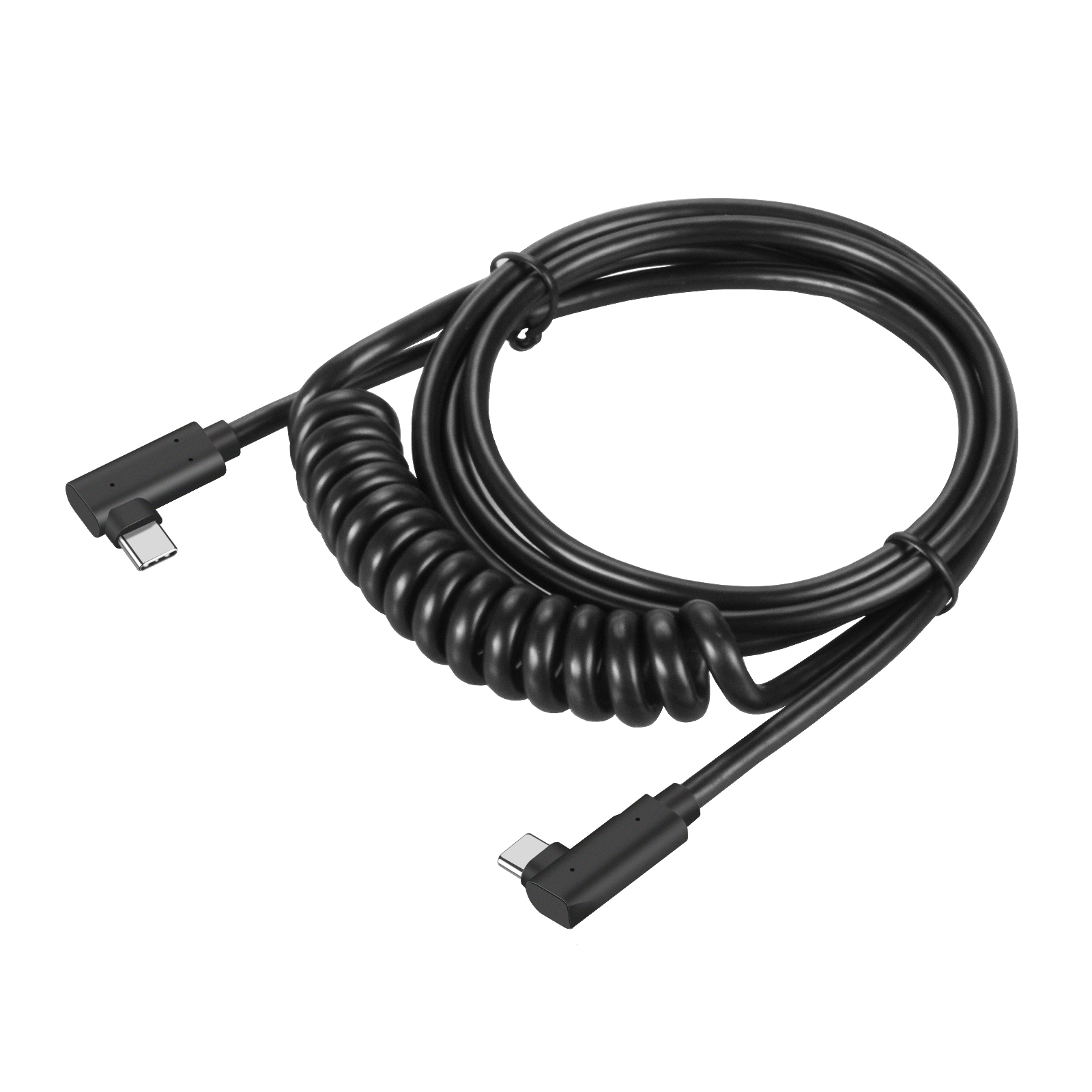
Walk any production floor long enough and you stop looking at spec sheets. You start watching how a machine handles the unglamorous moments—the slight misalignment on a Monday morning, the rushed changeover between shifts, the occasional overworked sensor that nobody remembers to recalibrate. These aren't the failures that make headlines. They're the quiet tells that separate equipment built to survive ten years from equipment that merely survives the warranty period.
Long-term reliability rarely announces itself through dramatic breakdowns. It accumulates in the way cable trays are routed away from coolant splash zones, in the choice of stainless steel fasteners where zinc-plated would have passed a visual inspection, in the deliberate spacing of components so that heat doesn't pool around a critical board. Operators notice these things without always articulating them. A line that runs clean for months, where maintenance is predictable rather than reactive, is the real proof of design intent.
The production floor also exposes what lab testing cannot: the entropy of human interaction. A well-designed system anticipates that someone will lean on a panel, that a tool will be dropped near a connector, that dust will find its way into every gap. Reliability, in the end, is not a number on a test report. It's the accumulated evidence of thoughtful margins and honest material choices, visible to anyone who spends enough time watching machines age in real conditions.
Why some suppliers struggle with Gen 2 speeds and how to avoid them
Many suppliers hit a wall when trying to deliver true Gen 2 throughput because they overlook signal integrity at the board level. Running 10 Gbps over copper requires tightly controlled impedance on every trace, via, and connector transition. A slight mismatch in the differential pair routing, an unoptimized return path, or even a poorly placed decoupling capacitor can introduce enough jitter and insertion loss to force the link to fall back to slower speeds. Component choice matters just as much: using a low-grade connector or cable assembly that barely meets the spec on paper often fails under real-world temperature and flex conditions.
Another common pitfall is treating Gen 2 validation as an afterthought. Some teams rely on basic continuity tests or eye diagrams captured only at room temperature with short cables. But real devices operate in hot enclosures, next to noisy power regulators, and with user-supplied cables of varying quality. Without comprehensive compliance testing across voltage and temperature corners—including receiver sensitivity and transmitter pre-emphasis tuning—a product can ship with intermittent disconnects or silent downgrades. Avoiding this means building test fixtures that replicate worst-case insertion loss and crosstalk, then iterating on the PHY settings until the link stays rock solid across all margins.
Finally, firmware and driver interactions often sabotage Gen 2 performance even when the hardware is capable. Some suppliers hard-code link training parameters that work for one cable but fail with another, or they enable aggressive power saving that drops the link speed without user awareness. To prevent this, implement dynamic equalization that adapts to the actual channel, monitor link status in real time, and provide firmware updates that can adjust transmitter drive strength and receiver gain based on field diagnostics. Pairing robust hardware with intelligent link management is the only reliable way to keep Gen 2 speeds from stalling in the hands of customers.
The overlooked details in cable assembly that affect your brand
When a cable fails in the field, customers rarely blame the connector vendor or the harness shop—they remember the product it was attached to. Small manufacturing choices, like whether strain relief is molded or heat-shrunk, or whether the jacket is allowed to twist near the exit point, show up later as intermittent connections or cracked insulation. These failures erode trust quietly, and by the time they surface, the damage to your reputation is already done.
Details such as consistent labeling orientation, the exact durometer of the overmold, and how tightly the conductors are bundled inside the jacket are often skipped in final inspection. A cable that feels too stiff can make installation frustrating; a label that fades or peels makes maintenance teams question overall quality. Even the way cables are coiled for shipping matters—kinked or crushed shipping loops can introduce hidden stress that only appears weeks after installation.
The finish of a cable assembly is also a handshake between your product and the customer. If the connector shells have uneven plating, if the locking tab feels weak, or if the color of the jacket drifts slightly between batches, it signals a lack of control. These small variances may never trigger a formal rejection, but they shape perception. Overlooking them means handing competitors an easy way to appear more polished, while you absorb the slow cost of lost repeat business.
How to build a sourcing relationship that survives order spikes
Order spikes are where most sourcing partnerships quietly fall apart. The mistake is assuming your supplier can just "scale up" when demand hits. Instead, start by mapping your vendor's own constraints: their raw material lead times, labor flexibility, and warehousing capacity. If you don't know these, a sudden 3x order will force them into triage mode, and you'll be the one cut first.
Move away from rigid purchase orders toward rolling forecasts with agreed flex bands. For example, commit to a baseline volume but give the supplier visibility into a 30-day upside range, with a shared agreement on how overtime or expedited shipping costs get split. Better yet, co-invest in buffer stock for your top three SKUs during calm periods, so that when a spike hits, the product is already staged and not being scrambled for.
Finally, treat the relationship like a mutual insurance policy. Pay invoices early when you can, give honest feedback on their performance, and introduce them to other buyers in non-competing categories. When the next spike comes—and it will—your supplier will remember who helped them survive the last one, and they'll prioritize your POs over a faceless new account.
Questions worth asking before signing a supply agreement
A supply agreement can lock you into terms that are hard to unwind once production starts. Before putting pen to paper, it pays to slow down and ask pointed questions about capacity, lead times, and what happens when demand shifts. Many buyers focus only on price and later discover that the supplier cannot scale with them or that minimum order quantities are far higher than expected. Dig into the supplier’s own supply chain, their backup plans for raw materials, and whether they have the flexibility to adjust volumes without penalty.
Equally important are the less obvious clauses around intellectual property, quality control, and termination. Who owns any custom tooling or design modifications? How are defects handled beyond a simple replacement credit? What triggers a right to exit without being trapped in a long notice period and costly exit fees? Ask for concrete examples of how the supplier has handled disputes or late deliveries before, not just their polished references. A supplier that hesitates to share this detail is often signalling that the agreement will protect them more than you.
Finally, look at the commercial terms beyond the headline unit price. Payment schedules, currency exposure, delivery terms, and liability caps can quietly shift risk onto the buyer. If the agreement includes exclusivity or volume commitments, test them against realistic worst-case scenarios. A well-negotiated supply agreement should feel boring in its clarity, not exciting in its promises.
FAQ
A dependable factory invests in high-frequency test equipment like network analyzers and TDR machines, not just continuity testers. They can show impedance plots and eye diagrams for 10Gbps lanes, and they keep batch records that trace every reel of raw cable and connector housing. Basic shops often only check pinouts and leave signal validation to the buyer.
Ask for pre-production samples tested with a certified USB4/Gen 2 compliance tool. Have them include a test report showing insertion loss, return loss, and crosstalk across the full 10Gbps frequency range. Then run the same samples through your own host-device transfer tests with large files or an error-rate tester. If the factory hesitates to share raw plots, treat that as a warning.
Look beyond CE and RoHS. For USB Type-C, USB-IF certification for the specific cable model matters, but not every good factory has it due to cost. At minimum, demand UL 2725 or equivalent safety certification, HDMI/DP Alt Mode validation if the cable supports video, and ISO 9001 for process control. A strong partner will offer to share the certification scope and list of approved connector suppliers.
The e-marker chip must be genuine and programmed for 10Gbps and 5A current if the cable supports 100W charging. Copper conductor gauge, shielding braid density, and the type of insulation material all shift high-frequency performance. Reliable factories document the exact supplier part numbers for connectors, wire, and e-markers, rather than just saying 'high quality copper.' Ask for the material datasheet and compare with the sample's measured resistance.
Request a live video walkthrough of the production floor focusing on their cable test stations and rework area. Ask them to show the last three months of first-pass yield data and a corrective action report for a recent defect. You can also send a golden sample and ask them to return a detailed inspection report with measured dimensions, continuity, and high-speed test results. A factory that pushes back on video evidence or only shows a showroom likely hides process gaps.
Frequent changes in e-marker supplier without a documented qualification, no in-house high-frequency test capability, or a reliance on visual inspection for soldering and shielding. Also watch for unusually low pricing that undercuts raw material cost for certified connectors. If they cannot explain how they control impedance variations along the cable length, expect random field failures.
For custom USB 3.2 Gen 2 Type-C cables with branded overmolding, typical MOQs range from 1,000 to 3,000 units per SKU. Lead time usually spans 4 to 7 weeks after sample approval, depending on e-marker chip availability and connector lead times. If a factory offers 500 units with a one-week turnaround, double-check whether they are actually building to spec or just repackaging generic stock.
Insist on a documented warranty covering field failures related to data transfer or charging, with a clear replacement or credit process. The factory should provide batch-level test data for each shipment, not just a certificate of conformance. Also agree on a containment procedure: if a defect is found, the factory should respond with root cause analysis within 10 business days and ship replacement stock without waiting for dispute resolution.
Conclusion
Factories that treat USB 3.2 Gen 2 Type-C cable quality as a default rather than a negotiation point are rare, but they set the baseline for any durable partnership. Walking the production floor reveals more than a spec sheet ever will: soldering consistency, shielding termination, and strain relief molding all point to whether a cable will survive daily use or fail within months. Many suppliers stumble specifically on Gen 2 speeds because they cut corners on impedance matching or use borderline connectors that cannot hold 10 Gbps signaling under real-world interference. The details that quietly protect your brand often live in assembly choices—overmold geometry, braid coverage, and even the way wires are dressed before soldering. A partner worth keeping shows you these processes without prompting and explains how they control variation from batch to batch.
A sourcing relationship that survives order spikes is built long before the first urgent email arrives. It starts with suppliers who share capacity forecasts, hold safety stock on critical components, and keep tooling calibrated for quick changeovers. Before signing any supply agreement, ask pointed questions: What is the failure rate on Gen 2 speed compliance testing? How do you trace a returned cable back to its production lot? What happens when demand doubles in three weeks? The answers should feel specific, not rehearsed. If a factory can discuss its weaknesses as openly as its strengths, you have found more than a vendor—you have a partner who understands that your brand reputation travels through every cable that leaves their dock.
Contact Us
Contact Person: David Yang
Email: [email protected]
Tel/WhatsApp: 8615814734054
Website: https://www.ebcyx.com/