

Woven Geotextile Company Guide to Selecting Durable Geotextiles for Your Project
2026-10-18
Choosing the right woven geotextile can make or break your project’s longevity—yet many guides overlook the real-world factors that lead to premature failure. In this article, we cut through the technical noise to show you how fabric weight, weave pattern, and UV resistance interact under load. Whether you're stabilizing a haul road or reinforcing a retaining wall, you'll learn which specifications matter and which are just marketing fluff. For projects where stone and geotextile must work as one, WEN FENG STONE pairs proven geotextile selection with aggregate compatibility to keep your subgrade intact season after season.
Match Woven Geotextile Strength to Actual Subgrade Movement
Specifying a woven geotextile purely by grab tensile strength or a standard classification often misses what actually happens under a pavement or embankment. The starting point is a realistic assessment of subgrade movement—how much horizontal or vertical displacement the soil is expected to undergo during wet-dry cycles, freeze-thaw, or long-term consolidation. Site borings, drainage patterns, and local performance history give a better picture than a generic assumption. Once you know the likely strain range, you can look for a geotextile whose stress-strain curve stays within a safe working zone for that specific movement.
A geotextile that is too stiff for the actual movement may tear at seams or rupture locally before it can mobilize full reinforcement. On the other hand, a geotextile with excessive elongation may allow the subgrade to deform enough to crack the overlying layer. The goal is to match the geotextile's modulus and tensile strength so it reaches a meaningful fraction of its ultimate capacity at the expected strain, not at some arbitrary lab condition. This means comparing published wide-width tensile curves and choosing a product that provides reinforcement without overstressing the yarns at the project's maximum anticipated movement.
Field verification also helps. If monitoring shows that subgrade movement is lower than design assumptions, a lighter grade may be adequate; if movement is higher, a stronger or lower-elongation geotextile may prevent premature distress. Installation damage, seam efficiency, and long-term creep should be factored in as reductions to the laboratory strength. By tying the selection directly to measured or carefully estimated subgrade movement, you avoid both overdesign and underperformance, and you get a geotextile that actually behaves as intended over the life of the road or structure.
Let Your Native Soil Choose the Pore Size, Not a Generic Chart
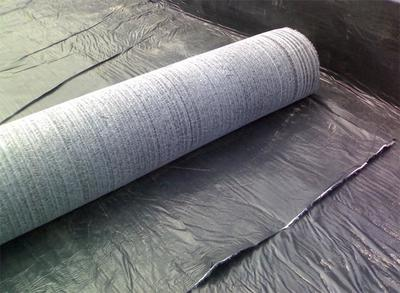
Every soil tells a story through its texture, and that story should dictate how you size the pores in any drainage or filtration design. A generic chart might lump together everything from sandy loam to silty clay under one sweeping recommendation, but the field rarely reads like a textbook. If you grab a handful of soil and it crumbles through your fingers, you already know it behaves nothing like the dense, sticky mass you’d pull from a clay-heavy plot. Why would you force both to work with the same opening size?
The smarter approach is to let the native material set the baseline. Take a few samples from the exact depth you’ll be working in—not from a nearby borrow pit or a vague regional map. Feel how the soil packs, watch how water moves through a small test column, and note the size of the fines that stay suspended. That on-site behavior gives you a far more honest number than any manufacturer’s table, because it accounts for the quirks of your specific ground: the odd lens of gravel, the faint trace of organic matter, the way the particles have settled over decades. Once you understand what the soil actually does, the pore size becomes a consequence, not a guess.
Designing around the native soil also saves you from the classic trap of over-filtering or under-draining. If the pores are too small for a silty site, they clog within a season and turn a simple system into a maintenance headache. Too large on a sandy site, and the fine particles slip right through, defeating the purpose. When you start with the soil in your hands, the right opening size almost announces itself—no chart required, just a little patient observation and a willingness to trust what the ground is already telling you.
Read UV Exposure Windows Beyond the Printed Spec Sheet
Printed datasheets love to quote a single UV exposure window, often measured under a clean xenon arc or fluorescent tube at a fixed temperature. Real-world sunlight rarely behaves that politely. A polymer that survives 1,000 hours in a lab chamber can fail in six months on a south-facing rooftop because the UV dose fluctuates with ozone levels, cloud cover, and even the angle of the mounting surface. Before trusting that number, check whether the test used ASTM G154, G155, or something entirely in-house—those differences alone can shift the result by a factor of two or more.
One practical trick is to run a side-by-side outdoor exposure trial with a known reference material. If your current film starts showing micro-cracks or a 5% loss of gloss while the datasheet still promises 2,000 hours of stability, you have your answer: the printed window was too optimistic for your specific UV spectrum. Keep a simple log of color shift and surface hardness, not just elapsed time. Humidity and thermal cycling often amplify UV damage, so a material rated for dry Arizona may degrade much faster in coastal Florida even at the same total UV dose.
Also pay attention to wavelength weighting. Many spec sheets only give a total energy figure, like 500 MJ/m2, without specifying the UVA/UVB ratio. If your application sits behind window glass, most UVB gets filtered out, but UVA still drives photodegradation. Read beyond the headline number and ask for spectral power distribution data or a test report from a third-party lab. That single request can expose whether the exposure window was built on cherry-picked conditions or representative ones.
Calculate Seam Overlap for High-Flow Areas Before Installation
Measure the width of any high-flow zone, such as a main walkway or a frequently used entryway, before cutting your flooring material. Add at least four to six inches to the planned seam overlap in these areas, since foot traffic and rolling loads will push the edges apart over time. If the subfloor shows minor unevenness, increase the overlap by an extra inch or two to keep the seam from opening up under stress.
For rooms with multiple high-flow paths that cross each other, map out the intersection points on a quick sketch. At each crossing, double-check that the overlapping piece extends far enough beyond the meeting line to prevent curling or lifting. A simple tape measure and a straightedge are enough to mark the extra width, but always re-measure after dry-fitting the first few rows to confirm the seam stays tight.
After installation, run a hand or a soft roller along the overlapped seam to press it flat, then inspect the area from a low angle to catch any raised edges. If the material shifts slightly during the first week, a small trim with a sharp utility knife can restore a clean line without reducing the necessary overlap. Keeping a record of the final measurements will help when the next section of flooring is added later.
Use Grab Strength and Elongation to Spot Underperforming Weaves
Most fabric buyers only check the obvious specs—weight, width, weave pattern—but that's a sure way to miss weaves that will fail in the field. Two numbers tell you far more about a weave's real-world durability: grab strength and elongation. Grab strength measures the force needed to rip a fabric when a clamped section is pulled, which directly reflects how well the interlaced yarns share the load. A weave with high tensile strength on paper can still have lousy grab strength if the weave structure lets stress concentrate at a few crossover points. When a batch shows a sudden drop in grab strength compared to the mill's usual baseline, it's rarely the fiber—it's usually a subtle weave defect like skipped ends, uneven tension, or a distorted count that doesn't show up in a normal visual inspection.
Elongation is the quieter warning sign. A fabric that stretches too much under load may feel tough in your hand, but it's actually absorbing energy poorly and will permanently deform under repeated stress. On the flip side, very low elongation means the weave is brittle—it will hold its shape brilliantly until one day it tears without warning. Smart quality teams plot grab strength against elongation for every incoming lot and compare it to a control chart built from known-good weaves. When a lot drifts outside the normal oval, that's your cue to pull the sample and inspect the weave under a low-power microscope. You'll often find the root cause in less than ten minutes: a threading error on the loom, a misaligned reed, or a batch of yarn with higher twist than specified.
The real advantage comes from treating these two measurements as a paired dataset, not separate pass/fail numbers. A weave that loses 5% grab strength but gains 3% elongation might be acceptable for a soft-geometry garment, while a 5% loss paired with 2% lower elongation is a red flag for anything load-bearing. Write the combined result directly on the inspection tag and require your supplier to explain any lot that falls outside the house envelope. Over time, you'll build a fingerprint for each weave construction, and underperforming lots will stand out before they ever reach the cutting table.
Compare Replacement Cycles in Wet-Dry Conditions Before Buying
Wet environments push rubber and metal components toward earlier failure than dry ones, but the gap isn't always obvious in marketing materials. Before buying, pull up the replacement interval chart and look at how hours or mileage shift when moisture, condensation, or direct water exposure is constant. A part rated for 12 months in dry air might realistically need replacement at 8 or 9 months once humidity stays above 70 percent. That difference compounds on equipment with multiple wear items, so a cheaper upfront option can end up costing more if its wet-weather cycle is half as long as a competitor's.
Dry, dusty conditions create their own accelerated wear pattern, mainly through abrasive particles getting past seals and into moving surfaces. Compare the stated replacement cycle for dry, high-dust use against the wet cycle rather than assuming one is always worse. Some components handle moisture well but fail quickly when fine grit collects in bearings or filters load up. If the product lists only a single replacement interval, ask for test data or owner-reported lifespans in both conditions. That side-by-side comparison usually reveals which design actually holds up where you will use it.
FAQ
Woven fabrics rely on interlacing yarns, which gives them higher tensile strength at lower elongation. That matters when you need to hold aggregate in place under repeated traffic loads or stabilize soft subgrades without excessive stretching. Nonwovens are great for drainage and filtration, but they generally can't match the load-carrying capacity of a woven structure in reinforcement scenarios.
Start with the expected wheel loads or embankment heights, then look at the required factor of safety against rupture. For a temporary haul road, a medium-strength woven with an ultimate tensile strength around 40 to 60 kN/m may work. Permanent structures or heavy mining traffic often demand values above 100 kN/m. Always compare the manufacturer's tested strengths in both machine and cross-machine directions, because site stresses rarely line up with just one axis.
The weave controls how stress is distributed across the fabric. Tighter weaves with balanced yarn spacing resist tear propagation better and keep aggregate from punching through. A loose or uneven weave can create weak points that fail under dynamic loading, even if the published tensile strength looks fine. Ask for wide-width tensile and puncture resistance data before committing.
Yes, and that dual function is often the reason engineers choose them. A woven geotextile placed between soft subgrade and a stone base keeps the two materials from mixing while also carrying tensile stress from traffic. The key is selecting a product with enough strength for the reinforcement role and an opening size that still allows water to pass without letting fine soil migrate.
Most woven geotextiles are not meant to sit in direct sunlight for months. If your schedule includes extended exposure, look for products with UV-stabilized yarns or plan a covering layer within a few weeks. Installation damage is just as important: sharp angular stone can tear a fabric that passes lab tests. Specify a product with a high installation survivability rating or use a heavier weight than the minimum design calls for.
Slit film wovens are made from flat, tape-like yarns and have very low permeability, which can cause water to pond behind the fabric in fine-grained soils. Monofilament wovens use round, individual filaments that create a more open structure, allowing better water flow while still providing separation. For drainage-critical applications, a monofilament or hybrid weave is usually the safer choice.
If you are building over very soft soils, using taller reinforced slopes, or dealing with heavy, repetitive loads like port container traffic, the extra tensile capacity often replaces thicker aggregate layers or reduces long-term maintenance. In those cases, spending more on the geotextile can lower the total project cost. For light-duty driveways or temporary access, a standard grade is usually enough.
Sharp, angular rock backfill is the biggest cause of early tearing, especially during compaction. Poor drainage that keeps the fabric saturated in aggressive chemical environments can also weaken polymer yarns over time. To avoid these problems, use a cushion layer of sand or fine gravel between the stone and the fabric, confirm the polymer type matches the soil chemistry, and follow the manufacturer's recommended cover depth before allowing heavy equipment on the surface.
Conclusion
When a woven geotextile fails early, it is rarely because the fabric was weak on paper. More often, the spec sheet said one thing and the subgrade did another. Start by matching the geotextile's tensile strength to how much your soil actually moves—if the ground shifts under load, a stiff, high-strength weave may simply tear at the seams while a more forgiving elongation keeps the system intact. Similarly, pore size should never come from a generic chart. Let your native soil dictate the opening size: sandy soils need a tighter weave to prevent fines from pumping through, while clay-heavy ground can clog a fabric that is too fine. And do not trust the printed UV exposure rating alone. A roll stored on the sunny side of the site for six weeks may have lost far more strength than the datasheet suggests, so inspect the actual material condition before installation.
In high-flow areas, seam overlap is where most failures begin. Calculate the overlap based on expected water velocity and turbulence, not just a default 12 inches—too little overlap lets soil migrate through the seam, while too much wastes material and creates a stiff ridge. When comparing weaves, use grab strength and elongation together: a fabric with high grab strength but very low elongation may be brittle under dynamic loads, so look for a balance that matches your project's movement. Finally, if your site sees repeated wet-dry cycles, ask for replacement cycle data, not just initial performance. Some weaves degrade faster when they shrink and swell with moisture changes, leading to premature failure. Choose the fabric that survives the same number of cycles your project will actually experience, not the one that looks best in a lab test.
Contact Us
Contact Person: Jennifer LEE
Email: [email protected]
Tel/WhatsApp: 8618553418999
Website: https://vip.e-baixing.com/wenfengshitong