
Yunnan Dongba Culture: Discover Lijiang's Ancient Naxi Traditions
2026-08-08
Tucked away in the misty foothills of Jade Dragon Snow Mountain, Lijiang's Dongba culture remains one of the world's most enigmatic living traditions. At Jade Water Village, you don't just observe this ancient Naxi heritage—you step into it. Here, shamanic rituals still whisper through pine forests, pictographic scripts adorn weathered stone, and every cobblestone seems to hold a story older than memory. Whether you're tracing the origins of the last surviving hieroglyphic language or listening to a grizzled Dongba priest chant skyward, this is where the soul of Yunnan quietly reveals itself. Ready to wander beyond the postcard views?
The Living Script: How Dongba Pictographs Endure
Carved into the rhythms of daily life, Dongba pictographs refuse to become museum pieces. In the foothills of the Himalayas, Naxi shamans still scratch sacred symbols onto bark paper with bamboo pens, their hands tracing the same lines that once mapped conversations between gods and mortals. These glyphs aren't just remembered—they're breathed into ceremonies for harvests, funerals, and healing, chanted aloud in a language that has outlived dynasties. Each stroke carries a pact: as long as the rituals survive, the script will too. Tourists snap photos, but the real endurance happens behind closed doors, where elder priests teach children not through textbooks but through song and smoke, embedding meaning deeper than ink.
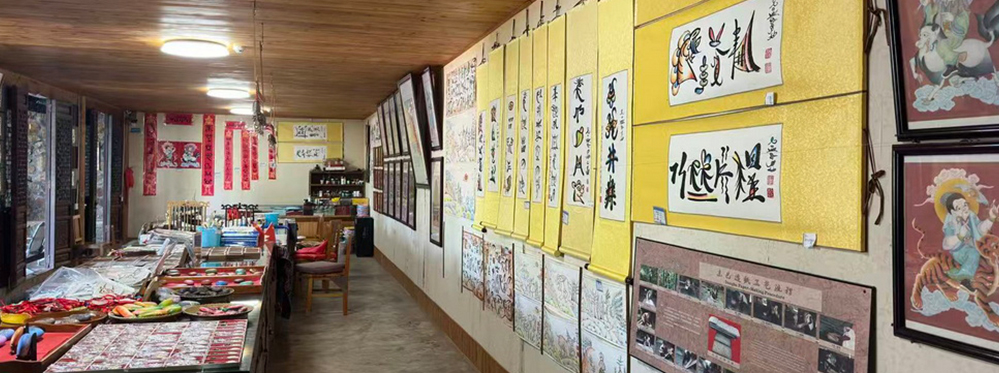
The secret to their longevity lies in adaptability. While ancient scripts often fossilize, Dongba characters have quietly slipped into modern crevices—etched onto jewelry sold in Lijiang's alleys, stitched into smartphone cases, even painted as murals in local cafes. This isn't commercialization for its own sake; it's a quiet rebellion against extinction. Young Naxi designers now blend a deer-headed glyph with contemporary fashion, and musicians weave pictographs into music videos that rack up views on Chinese streaming platforms. The symbols morph but never break: a sun remains a sun, whether it's glowing on a temple wall or a coffee mug. This fluidity keeps them relevant, a living bridge between yak-butter lamps and LED screens.
Perhaps most crucially, the Dongba script endures because it tells stories that still need telling. Unlike alphabets that dissect sounds, these pictographs capture whole ideas—a mountain isn't spelled out but drawn with a peak touching the sky, a notion that resonates in a region where nature is still fierce and holy. Environmentalists have seized on this, using the glyphs to advocate for watershed protection in a language that predates modern ecology. Farmers consult the symbols for planting seasons, finding in ancient rain-cloud characters the same weather patterns their grandparents watched. As long as there are rivers to revere, ancestors to honor, and storms to outlast, the Dongba script will keep speaking—not as a relic, but as a voice that refuses to be silenced.
Rituals and Realms: Naxi Ceremonies in Everyday Life
Walking through a Naxi village in the foothills of the Himalayas, you might notice smoke curling from a courtyard fire, or hear the low chant of a dongba priest reciting ancient texts. These are not staged performances for tourists; they are living threads of a spiritual fabric that weaves the mundane and the sacred into a single, unbroken tapestry. For the Naxi people, ritual is not a separate event but an extension of daily awareness—a way of negotiating with the unseen forces that inhabit mountains, rivers, and ancestral memories.
Many ceremonies revolve around the life cycle, marking birth, marriage, and death with intricate offerings and symbolic acts. A child’s first steps might be blessed with grains and pine needles, while a newlywed couple circles the hearth to receive the protection of household deities. Even seemingly small moments, like the morning lighting of incense at the family altar, reaffirm a bond between the living and their forebears. These acts are quietly transformative, embedding a sense of continuity that modern life often rushes past.
Beyond the domestic sphere, seasonal rites connect communities to the agricultural rhythms and the spirit world. During the Sanduo Festival, the Naxi honor their warrior god with dances and feasts, blending exuberance with deep reverence. In the autumn harvest ceremonies, gratitude is paid not just to the earth but to the invisible guardians of weather and water. Such traditions persist not out of nostalgia but because they answer a human need to belong—to a family, a landscape, and a cosmos that listens.
Masters of the Sacred: The Role of the Dongba Priest
In the mountain villages of the Naxi people, the Dongba priest is far more than a religious figure—he is the keeper of a civilization that has no written history of its own, only the memory of symbols scratched onto sheets of plant paper. When a child falls ill or a harvest fails, it is the Dongba who is summoned, not simply to recite prayers, but to interpret the hidden language of spirits and stars, to dance the patterns that restore balance between the living and the ancestors. His voice is the bridge, chanting from manuscripts no outsider can fully decipher, a voice that carries the weight of centuries yet adapts to the urgency of the moment.
Beyond ritual, the Dongba acts as doctor, historian, and moral compass. He knows which herbs ease fever and which incantations guide the soul safely across the river of death. In wedding ceremonies, his narratives trace the lineage of two families back to mythic beginnings, weaving their union into the fabric of a shared cosmos. Even the land itself responds to his call: through the ritual of "Shu" worship, he negotiates with the nature spirits, pleading for springs to keep flowing and soils to stay fertile in a world of vanishing reciprocity. His authority does not come from institutions or texts alone, but from a lived demonstration that every rock and breeze is conscious, and that reciprocity is the only law.
Today, the Dongba priest stands between two worlds. Young Naxi often migrate to cities, and the old parchment manuscripts grow brittle in museum cabinets. Yet a handful of priests still train apprentices in the open air, teaching them the pictographs for "sky" and "fear" and "blessing" while cicadas drone in the background. They are not clinging to the past; they are translating an ecological wisdom that the modern world has nearly forgotten—a knowledge that sees human crisis as a tear in a vast spiritual web that only a master of the sacred can mend.
Beyond the Old Town: Villages Keeping Naxi Traditions Alive
Stray just a few miles north of Lijiang’s cobbled tourist lanes, and the Naxi world transforms entirely. In villages like Baisha and Yuhu, stone houses still bear hand-carved window lattices, and the clatter of a wooden loom often drifts from an open doorway. Here, elders speak the ancient Dongba language with a casual fluency that no museum can replicate, while younger generations learn ritual chants not from textbooks but by standing at their grandparents’ elbows. The pace is unhurried; life follows the rhythm of sun over Jade Dragon Snow Mountain and the seasonal dance of barley planting and harvest.
These communities don’t just preserve traditions—they improvise around them, threading old ways into the fabric of daily existence. At a courtyard feast, you might find spicy Naxi cured pork served on enamel plates beside a Bluetooth speaker quietly humming a folk melody, a reminder that heritage isn’t static. In Baoshan Stone Town, perched above the Jinsha River, families still use centuries-old irrigation channels but have added solar panels to rooftops, blending resilience with quiet innovation. The villages offer something the old town has largely lost: traditions worn lightly, like a familiar shawl, still shaping mornings, markets, and the stories passed down at dusk.
From Paper to Performance: Dongba Art in Motion
The Dongba script, etched onto handmade paper for centuries by the Naxi people of southwest China, is often celebrated as the world's last living pictographic writing system. Its intricate symbols—drawn from nature, myth, and daily life—have long been studied as static artifacts in museums or academic texts. Yet when these paper-borne images step off the page, they reveal an entirely different energy. In the villages and temples where Dongba culture still breathes, the script is not just read; it is danced, chanted, and woven into rituals that transform ink and fiber into a visceral, living performance.
This dynamic shift from paper to performance comes alive during ceremonies where Dongba priests, or dongba, draw the very characters they are about to embody. A symbol for “wind” might be sketched in the air with a sword before the priest whirls into a spinning dance, his robes billowing in mimicry of the brushstroke. The drumming and chanting that accompany the movements are themselves rhythmic extensions of the glyphs—each beat a dot, each drawn-out syllable a line. In this context, the script ceases to be a mere recording system; it becomes a choreographic score, with every curve and cross-hatch dictating the arc of a gesture or the pitch of a voice.
What emerges is an art form that refuses to be confined to paper—a moving calligraphy where the body becomes the brush. Contemporary artists and cultural practitioners are now reinterpreting this tradition, staging performances that blend ancient Dongba motifs with modern dance and multimedia. These works do not simply preserve a dying script; they propel it into a new realm where ink is sweat, parchment is the stage, and the pictographs themselves are set in perpetual motion.
Threads of Identity: Naxi Costumes and Textile Heritage
Draped in indigo and embroidered with starlight, Naxi garments do more than clothe the body—they map a lineage. Each pleat, each stitch of the seven-star sheepskin cape whispers stories of migration, resilience, and a cosmos woven into daily life. The women’s iconic cape, with its sun-and-moon discs, mirrors the heavens on their shoulders, turning every step into a quiet ritual of belonging. It’s a wearable narrative that defies time, binding the wearer to ancestors who first felt the Lijiang winds.
Beneath the dye lies a deeper art: the hum of backstrap looms, the rhythm of hands coaxing hemp and wool into meaning. Naxi textile heritage isn’t preserved under glass—it breathes in home workshops, in the hands of elders teaching grandchildren to card and spin. Patterns drawn from snow-capped mountains, leaping deer, and the Dongba script emerge not as decoration but as language. This tactile knowledge survives erasure because it’s lived, not merely remembered. Every knot in a sash is a refusal to let go of a tactile dialect.
Today, young Naxi designers weave ancestral threads into contemporary silhouettes, pairing indigo-dyed tunics with urban shapes. The clothes become bridges—worn at markets in Shuhe and galleries abroad, they challenge the notion that tradition is static. Identity isn’t fixed; it’s stitches being pulled through time, gathering new edges. In a world hungry for the handmade, these garments whisper a quiet insistence: that cloth can carry a living pulse, a thread of self that resists being unspooled.
FAQ
The Dongba script, used by the Naxi people, is the only surviving pictographic writing system still in use today. Unlike other scripts that evolved into abstract symbols, Dongba characters retain vivid pictorial forms—depicting animals, plants, and daily life. This allows them to convey complex religious and cultural ideas through a visual language that bridges art and writing. It’s a living window into how early humans expressed thoughts through images.
Preservation happens through both ritual practice and community efforts. Dongba priests memorize and recite lengthy epics like 'The Creation of the World' during ceremonies, passing them down orally for thousands of years. Meanwhile, cultural centers in Lijiang run workshops where elders teach the younger generation these verses. Digital archives also record these recitations, ensuring that the epics survive even as spoken traditions face pressures from modern life.
It centers on the belief that all natural phenomena—mountains, rivers, winds—possess spirits. Naxi ancestors worshipped hundreds of gods and spirits, with Dongba priests acting as mediators between the human and spirit realms through chants and sacrifices. The rituals aim to restore harmony when imbalance causes illness or misfortune. This deep nature-worship reflects an ancient worldview where humans and nature are inseparable.
While modern Naxi have integrated into contemporary society, traditional rituals persist in key life events. For example, weddings often include a Dongba blessing to honor ancestors and nature spirits. Funerals strictly follow ancient rites to guide the soul back to the ancestral land. Even in cities, families might invite a Dongba priest to perform cleansing rituals when building a new home, subtly weaving the sacred into everyday life.
The sacred Jade Dragon Snow Mountain is central to Naxi identity—it’s believed to be the home of the love-protector deity. The alpine environment shaped their folklore, music, and lifestyle. For instance, the Naxi ancient music incorporates sounds mimicking mountain winds and flowing streams. Agricultural cycles depend on mountain water, so traditional festivals align with nature’s rhythms, reinforcing a bond between the land and cultural expression.
Tourism has been a double-edged sword. On one hand, it spurred a revival of Dongba culture by creating demand for performances and handicrafts, encouraging locals to relearn forgotten arts. On the other hand, commercialization sometimes dilutes sacred rituals into mere shows. Yet, many practitioners now consciously separate 'display' culture from genuine spiritual practice, preserving the core while sharing the surface. It has also funded documentation and educational programs.
Baisha Fine Music is a classical orchestral tradition from the 13th century, blending Han, Tibetan, and Naxi elements. It’s solemn, often described as 'living fossil' music. Played at funerals and rituals, it’s believed to calm spirits and connect the living with ancestors. The pieces are passed down strictly by memory, with no written scores—thus each performance carries subtle variations and the personal touch of the musician, keeping the tradition alive in a fluid form.
While both coexist harmoniously, Dongba culture is indigenous to the Naxi and predates Buddhism’s arrival. It’s shamanistic, focusing on nature spirits and ancestral worship, without a formal monastic structure. Tibetan Buddhism, introduced later, features lamas, monasteries, and scriptural study. Integration occurs: some Naxi attend Buddhist temples for blessings, but still rely on Dongba priests for life-cycle rituals. This syncretism shows the Naxi’s pragmatic spiritual approach.
Conclusion
The Naxi people of Lijiang have nurtured one of the world’s last living pictographic scripts—the Dongba script. Unlike dead languages, it remains in active use, scribbled on coarse paper to record ceremonies that bridge the mundane and the divine. Daily life in Naxi villages is punctuated by rites where Dongba priests chant and dance, inviting spirits into their midst. These masters of the sacred don elaborate headdresses and wield swords, drums, and bells to maintain cosmic balance, their knowledge passed orally through generations.
Away from the tourist-thronged Old Town, remote hamlets still pulse with tradition. Here, Dongba art leaps off pages and into vibrant performances: paper cutouts become silhouettes in shadow plays, while masked dancers reenact mythic battles. Even clothing tells a story—women’s attire features layered capes embroidered with stars and frogs, symbols of a creation myth. From handwoven hemp to indigo-dyed skirts, textiles carry a cultural memory that refuses to fade. Together, these threads weave a vivid portrait of a culture defiantly alive.
Contact Us
Contact Person: Changhong He
Email: [email protected]
Tel/WhatsApp: 086-0888-5190152
Website: https://vip.e-baixing.com/ysh